Am I Shadow Banned in Call of Duty? A Comprehensive Guide
Fast answer first. Then use the tabs or video for more detail.
- Watch the video explanation below for a faster overview.
- Game mechanics may change with updates or patches.
- Use this block to get the short answer without scrolling the whole page.
- Read the FAQ section if the article has one.
- Use the table of contents to jump straight to the detailed section you need.
- Watch the video first, then skim the article for specifics.
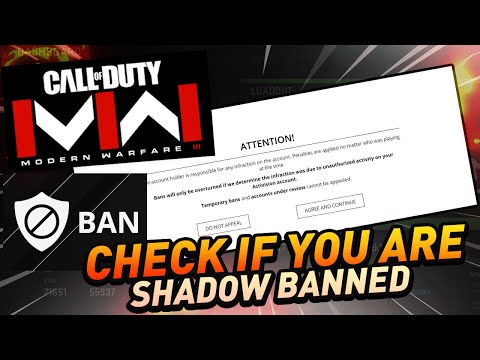
Are you experiencing unusual matchmaking issues in Call of Duty, encountering suspiciously skilled opponents, or finding your lobbies are eerily quiet? You might be wondering, “Am I shadow banned in COD?” The short answer is: possibly, yes. Shadow bans in Call of Duty are a frustrating reality for many players, often stemming from suspected rule violations, though sometimes unjustly. This article will delve deep into the world of Call of Duty shadow bans, explaining how to identify them, what causes them, and crucially, how to navigate the murky waters of being placed in a shadow-banned lobby.
How to Tell if You’ve Been Shadow Banned in Call of Duty
Unlike a full ban that outright prevents you from accessing the game, a shadow ban is a more subtle restriction. Activision doesn’t directly inform you that you’ve been shadow banned; instead, they place you into special lobbies with other suspected cheaters or players under review. This makes detection a little tricky. Here are the primary indicators you might be shadow-banned in Call of Duty:
- Unusually Long Matchmaking Times: If you find yourself waiting extended periods to find a match, especially in game modes that are normally popular, this could be a sign.
- “Suspicious” Lobby Opponents: You may start noticing a disproportionate amount of opponents who are displaying behavior consistent with cheating (e.g., extremely accurate aiming, following you through walls, instantly snapping between targets). These aren’t necessarily cheaters; they’re also players who’ve had reports filed against them and may be under review.
- “Under Review” Status on the Activision Website: This is perhaps the most concrete method of determining if you have a shadow ban. By logging into the Activision Ban Appeal website with your username and password, you can check your account status. If the site displays “Under Review” below your account details, you are likely shadow-banned. It’s critical to understand that the website will not use the term “shadow-ban”, instead the status will display “Under Review”.
- Sudden and Drastic Changes in Match Quality: You might notice a stark shift in the overall quality of your matches. A sudden influx of questionable opponents combined with unusually long match times should raise suspicion.
Why Am I Shadow Banned?
Understanding why shadow bans occur is important, even if you are not cheating. Activision maintains a zero-tolerance policy against cheating, and their security team constantly monitors gameplay to ensure fair play. Here are some of the common causes of shadow bans:
- High Volume of Player Reports: If other players frequently report you for suspected cheating (even if the claims are unfounded), it can trigger a review. Multiple reports within a short timeframe are more likely to lead to a shadow ban.
- Suspicious Gameplay Patterns: The game’s anti-cheat system might automatically flag your account based on gameplay patterns that mimic cheating. This can be triggered by behaviors like unusually high accuracy or rapid target acquisition, even if you’re just a skilled player.
- Use of Unauthorized Software or Hardware: Using unauthorized third-party software, or modified controllers (like the Cronus devices) can result in a shadow ban. These are often detected by the system as an attempt to gain an unfair advantage.
- Infractions on Your Account: It is also important to note that the account holder is responsible for any infraction on the account. Penalties are applied no matter who was playing at the time.
It is important to note that shadow bans are automatic and sometimes can happen even if you’re not cheating. The system is not perfect and can be triggered by false positives.
What To Do If You Are Shadow Banned
If you believe you have been shadow banned in Call of Duty, it’s important to stay calm and follow these steps:
- Check Your Account Status: The first and most important step is to check the Activision Ban Appeal website. It’s the most reliable method for confirming if your account is under review.
- Wait Out the Review Period: Shadow bans typically last between 7-10 days while Activision reviews the flagged accounts. During this time, you’ll be placed in those special lobbies.
- Do NOT Play During the “Under Review” Period: While it can be frustrating not to be able to play, it is suggested that you take a break and do not enter any matches while you are showing “Under Review” on the Activision Website.
- Avoid Playing Immediately After the Review Period: After your account shows the “No Ban Detected” status, it is suggested that you wait for a full week before playing the game again. This helps to ensure that you are fully out of the shadow ban system and lowers the possibility of another ban.
- Use the Activision Ban Appeal System (If Necessary): While not always guaranteed to work, you can use the appeal system on the website to submit a formal appeal for the ban. Use this if you believe the shadow ban was unjustly applied. Be clear and concise in your explanation and provide any evidence you can to support your case.
Avoiding Future Shadow Bans
Here are some strategies to avoid future shadow bans:
- Play Fair: Avoid using any third-party software or hardware that could be interpreted as cheating. This ensures your gameplay aligns with the rules.
- Avoid Getting Reported Excessively: Be aware that any action that gets you flagged by other users could contribute to being flagged for review.
- Be Patient With the Process: Once you have been shadow banned it is important to wait out the review and not enter any matches for the required time.
Frequently Asked Questions (FAQs)
1. What does a shadow ban actually mean in Call of Duty?
A shadow ban in Call of Duty is a temporary restriction where players suspected of cheating are placed into special lobbies with other suspected rule-breakers while Activision reviews their account. This is a temporary measure, not a permanent ban.
2. How long does a shadow ban in COD last?
Generally, a shadow ban in Call of Duty lasts about 7-10 days while Activision conducts a review.
3. Can I still play Warzone if I’m shadowbanned?
Yes, you can technically still play Warzone when you’re shadowbanned, but you will be matched with other players under review or suspected of cheating. This means longer wait times and questionable opponents.
4. Can I be shadow banned for being too good at the game?
While it is not common, a high volume of player reports combined with exceptionally skillful play can be falsely flagged by the system, resulting in a shadow ban. This is more common if you have recently dramatically increased your skill or accuracy.
5. How do I know if someone is cheating in my lobby?
Signs of cheating include players locking onto targets through walls, snapping rapidly between targets to obtain headshots, and an unusually high kill per death ratio or accuracy. If they show any of these behaviours consistently it might be a sign of cheating.
6. Are Cronus controllers banned in COD?
Yes, devices like Cronus controllers that provide unfair advantages are banned in Call of Duty. Using these devices may result in a shadow ban or a full account ban.
7. How many cheaters have been banned in MW2 and Warzone?
Activision has taken action against a significant amount of cheaters, banning over 14,000 accounts in a single day, to show commitment to eliminating cheating from their games.
8. Is there an anti-cheat system in MW2?
Yes, Modern Warfare 2 and Warzone utilize Activision’s anti-cheat system, which monitors player actions and flags suspected cheaters for review and possible penalties.
9. Can I get un-shadowbanned early?
It is important to take a break from playing the game when you are shadow banned. If you keep playing your account will likely stay under review longer. It is best to wait and let the system reset itself and apply any reviews.
10. What is the difference between a shadow ban and a normal ban?
A shadow ban allows you to still play the game but with other suspected cheaters or players under review. A normal ban completely prevents you from accessing the game.
11. Can a shadow ban be permanent?
While a shadow ban is intended to be temporary, repeated offenses or continuous triggers that get your account flagged may result in a longer review period.
12. Can I appeal a shadow ban?
Yes, you can use the Activision Ban Appeal system, but it is not always guaranteed to resolve the ban early. If you truly believe that it was wrongfully applied, you can appeal the ban by using the link on the website.
13. Is my account at risk of a permanent ban if I get shadow banned?
A shadow ban is a temporary review and is not the same as a full account ban. However, if you repeatedly trigger the system, it may result in a permanent ban.
14. How long should I take a break after my shadow ban is lifted?
It is suggested that you take a full week off after your account shows “No Ban Detected” to ensure that your account is fully out of the shadow ban system.
15. How do I check my account status to see if I am under review?
You can check your account status on the Activision Ban Appeal website. This is the best method to see if you are under review and it will state “Under Review” if you are shadow banned, or “No Ban Detected” if your account is not currently being reviewed.
In conclusion, while frustrating, a shadow ban in Call of Duty is not the end of the world. Understanding how they work, what causes them, and what to do when you are affected can help you navigate the situation effectively. By playing fair, staying patient, and utilizing the resources available, you can overcome a shadow ban and get back to enjoying Call of Duty.