Are All Living Creatures Considered Animals?
Fast answer first. Then use the tabs or video for more detail.
- Watch the video explanation below for a faster overview.
- Game mechanics may change with updates or patches.
- Use this block to get the short answer without scrolling the whole page.
- Read the FAQ section if the article has one.
- Use the table of contents to jump straight to the detailed section you need.
- Watch the video first, then skim the article for specifics.
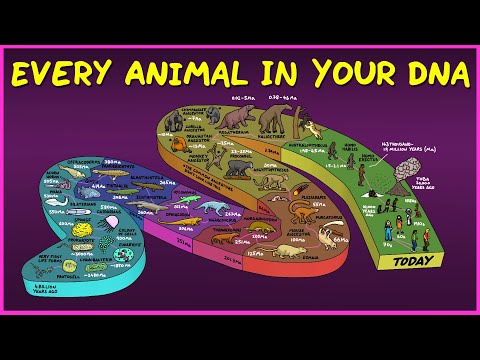
No, not all living creatures are considered animals. The term “animal” has a specific scientific meaning within the classification of life. While all animals are indeed living creatures, the realm of life extends far beyond the animal kingdom.
Understanding the Kingdoms of Life
To truly understand why not all living things are animals, we need to delve into the classification system used by scientists to organize the vast diversity of life on Earth. This system is hierarchical, with broad categories becoming progressively more specific. The most fundamental level of classification is the Kingdom.
Historically, life was broadly divided into two kingdoms: Plants and Animals. However, as our understanding of biology deepened, particularly with the advent of microscopy, it became clear that this simple division was insufficient. Today, the most widely accepted system recognizes five kingdoms:
-
Animalia (Animals): This kingdom includes multicellular, heterotrophic organisms that obtain nutrients by ingestion. They are generally motile and possess specialized tissues such as nerve and muscle tissue.
-
Plantae (Plants): This kingdom consists of multicellular, autotrophic organisms that produce their own food through photosynthesis. They are typically non-motile and possess cell walls made of cellulose.
-
Fungi (Fungi): This kingdom includes both unicellular and multicellular, heterotrophic organisms that obtain nutrients by absorption. Examples include mushrooms, molds, and yeasts. They have cell walls made of chitin.
-
Protista (Protists): This kingdom is a diverse group of primarily unicellular, eukaryotic organisms. They can be autotrophic or heterotrophic and exhibit a wide range of characteristics. Examples include amoebas, paramecia, and algae (though some algae are now classified as plants).
-
Monera (Bacteria and Archaea): This kingdom (often divided into two separate domains, Bacteria and Archaea) encompasses all prokaryotic organisms. These are unicellular organisms that lack a membrane-bound nucleus and other complex organelles.
Therefore, while animals are a crucial part of the living world, they represent only one branch on the tree of life. Bacteria, fungi, plants, and protists are all living creatures, but they are not animals.
Defining the Animal Kingdom
So, what exactly defines an animal? Several key characteristics distinguish animals from other living organisms:
-
Multicellularity: Animals are composed of many cells organized into tissues and organs.
-
Heterotrophy: Animals obtain their nutrition by consuming other organisms.
-
Motility: Most animals are capable of movement at some point in their life cycle.
-
Lack of Cell Walls: Animal cells do not have rigid cell walls like plants and fungi.
-
Sexual Reproduction: Most animals reproduce sexually, involving the fusion of gametes (sperm and egg).
These characteristics, taken together, help to define the boundaries of the animal kingdom.
The Importance of Classification
The classification of living things isn’t just an academic exercise. It has practical implications for many areas of science, including:
-
Understanding Evolutionary Relationships: The classification system reflects the evolutionary history of life, showing how different groups of organisms are related to each other. This is a key focus for research supported by organizations like the Games Learning Society which focuses on innovative educational approaches.
-
Predicting Biological Properties: Knowing the classification of an organism can help predict its characteristics and behavior.
-
Conserving Biodiversity: By understanding the diversity of life, we can better protect it.
Frequently Asked Questions (FAQs)
Here are some frequently asked questions related to the distinction between animals and other living creatures:
1. Is every living creature an animal?
No. As explained above, life is classified into multiple kingdoms, and animals represent only one of them. Plants, fungi, protists, and bacteria are all living creatures, but they are not animals.
2. What is technically not an animal?
Technically, any living organism that doesn’t meet the criteria for belonging to the kingdom Animalia is not an animal. This includes plants, fungi, protists, and bacteria.
3. Is a creature the same as an animal?
The word “creature” is often used in a more general sense than “animal.” It can refer to any living thing, especially one that is unfamiliar or unusual. However, in scientific terms, “animal” has a specific meaning.
4. What creatures are classified as animals?
Creatures classified as animals include mammals, birds, reptiles, amphibians, fish, insects, and a vast array of invertebrates.
5. Do bugs count as animals?
Yes, insects (bugs) are animals. They belong to the phylum Arthropoda within the animal kingdom.
6. Are humans animals or creatures?
Humans are both animals and creatures. Humans belong to the animal kingdom because they share the characteristics that define animals, such as multicellularity, heterotrophy, and motility.
7. Is a fish an animal or a creature?
A fish is both an animal and a creature. Fish are vertebrate animals that live in water and have gills.
8. Can you call an animal a thing?
While colloquially you might hear animals referred to as “things,” it’s important to remember that animals are living beings with sentience and needs.
9. What creatures are not considered animals?
Bacteria, archaea, protists, fungi, and plants are all creatures that are not considered animals.
10. What is a living thing but not an animal?
Examples of living things that are not animals include trees, mushrooms, algae, and bacteria.
11. What is every living creature called?
Every living creature is called an organism.
12. What makes something a living creature?
Living creatures share key characteristics, including order, sensitivity, reproduction, adaptation, growth, homeostasis, energy processing, and evolution.
13. Do plants count as animals?
No, plants do not count as animals. They belong to the kingdom Plantae.
14. Is a salmon an animal?
Yes, a salmon is an animal. It is a type of fish, and fish are classified as animals.
15. Are chickens an animal?
Yes, chickens are animals. They are birds, and birds are classified as animals.
Conclusion
The classification of life into distinct kingdoms, including Animalia, Plantae, Fungi, Protista, and Monera, highlights the incredible diversity of the living world. While all animals are living creatures, the reverse is not true. Many other types of organisms exist that are not classified as animals. Understanding these distinctions is fundamental to studying biology and appreciating the interconnectedness of all life on Earth. Organizations such as the GamesLearningSociety.org continue to find new and innovative ways to teach these fundamental principles.