Untangling the Ultra Beast Enigma: Are They All Legendary Pokémon?
Fast answer first. Then use the tabs or video for more detail.
- Watch the video explanation below for a faster overview.
- Game mechanics may change with updates or patches.
- Use this block to get the short answer without scrolling the whole page.
- Read the FAQ section if the article has one.
- Use the table of contents to jump straight to the detailed section you need.
- Watch the video first, then skim the article for specifics.
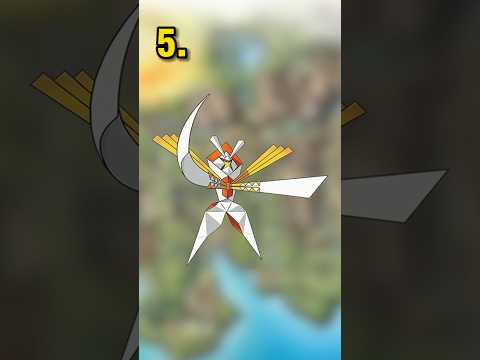
No, not all Ultra Beasts are considered Legendary Pokémon, though the distinction is nuanced and often debated within the Pokémon community. While they possess power comparable to some Legendaries and Mythicals, and share some similarities such as not being able to breed with Pokémon, they’re officially classified separately. The Ultra Beasts, hailing from alternate dimensions, occupy a unique space in the Pokémon world, existing outside the traditional Legendary/Mythical categorization, often referred to as Sub-Legends.
Understanding the Pokémon Hierarchy: Legendary, Mythical, and Ultra Beasts
The Pokémon world is filled with powerful and rare creatures, but not all are created equal. Let’s break down the common classifications and where Ultra Beasts fit in.
Legendary Pokémon: The Guardians and Protectors
These Pokémon are typically incredibly rare, often associated with myths and legends, and possess immense power. They usually play a significant role in the lore of their respective regions. Examples include Articuno, Zapdos, Moltres, Lugia, Ho-Oh, and the Legendary Titans. They often serve as guardians or have a direct influence on the environment. They can be found in the wild.
Mythical Pokémon: The Elusive Enigmas
Mythical Pokémon are even rarer than Legendary Pokémon, often obtainable only through special events or distributions. They are shrouded in mystery and are generally unobtainable through normal gameplay. Examples include Mew, Celebi, Jirachi, Deoxys, and Arceus. Their existence is often questioned within the Pokémon world itself, adding to their mystique.
Ultra Beasts: Extradimensional Anomalies
Ultra Beasts (UBs) are Pokémon-like creatures that originate from Ultra Space, a different dimension from the Pokémon world. They debuted in Pokémon Sun and Moon and play a crucial role in the games’ storylines. These Pokémon are typically very powerful and pose a threat to the natural order due to their alien nature. While incredibly rare in the Pokémon world, the information suggests in their home dimension, Ultra Beasts are common, which goes against the classification of “legendary”. Examples include Nihilego, Buzzwole, Pheromosa, Xurkitree, Celesteela, Kartana, Guzzlord, and Poipole (and its evolutions Naganadel and Stakataka).
Why the Confusion? The Case for Sub-Legends
The debate surrounding the Legendary status of Ultra Beasts stems from several factors:
-
Rarity: Ultra Beasts are undeniably rare within the Pokémon world, often encountered only during specific events in the games.
-
Power: Many Ultra Beasts possess base stats comparable to Legendary Pokémon, making them formidable opponents in battles.
-
Gameplay Mechanics: Ultra Beasts are often encountered in a similar manner to Legendary Pokémon, through static encounters that can be shiny hunted via soft resetting.
-
Previous game code: Though not canon, some previous game code categorizes them alongside the legends.
Despite these similarities, Ultra Beasts are not officially categorized as Legendary Pokémon by The Pokémon Company. They possess their own Pokédex numbering and are often treated as a separate entity within the game’s narrative. The term “Sub-Legendary” has emerged as a fan-made classification to describe Pokémon like Ultra Beasts, the Tapu guardians of Alola, and other powerful but not explicitly Legendary creatures.
Distinguishing Factors: The Ultra Beast Identity
Here’s what sets Ultra Beasts apart from traditional Legendary Pokémon:
- Origin: Ultra Beasts originate from Ultra Space, not the Pokémon world.
- Ecology: They are considered common in their home dimension, which goes against the classification of “legendary.”
- Narrative Role: While some Legendaries serve as guardians or protectors, Ultra Beasts are often portrayed as threats or invasive species due to their alien nature.
Ultra Beasts in Modern Pokémon Games
The appearance of Ultra Beasts has varied across different Pokémon games. In Pokémon Scarlet and Violet, there are hints of the existence of these Pokémon in future DLCs. It seems these are considered a part of the current generation. Their continued inclusion highlights their significant role in the evolving Pokémon universe.
Frequently Asked Questions (FAQs) About Ultra Beasts
1. Are Ultra Beasts able to breed?
No, Ultra Beasts are unable to breed with any Pokémon, a trait they share with Legendary and Mythical Pokémon. This reproductive isolation reinforces their unique status.
2. Is Type: Null considered an Ultra Beast?
No, Type: Null is not an Ultra Beast. It is a man-made Pokémon created to mimic the power of Legendary Pokémon. Its ability to evolve further distinguishes it from most Legendary Pokémon.
3. Can Ultra Beasts be shiny?
Yes, Ultra Beasts can be shiny. Players can soft reset their games to encounter shiny Ultra Beasts, just like with other static encounter Pokémon. The odds of encountering a shiny Ultra Beast are the same as the base shiny odds in the games: 1/4096.
4. Is Deoxys an Ultra Beast?
No, Deoxys is not an Ultra Beast. Deoxys is a Pokémon that originated from space, but it is not from Ultra Space. The article also suggests Unown is a more likely UB candidate, not Deoxys.
5. Which Ultra Beast is the strongest?
The perceived “strongest” Ultra Beast is subjective and depends on various factors, but Buzzwole is often considered the strongest in terms of raw physical power.
6. Which Ultra Beast is the weakest?
Guzzlord is generally considered the weakest Ultra Beast due to its poor typing and stats, particularly its vulnerability to Fairy-type attacks.
7. Is Guzzlord a Dragon-type?
Yes, Guzzlord is a dual-type Dark/Dragon Pokémon.
8. Are Ultra Beasts related to Mew?
The article states that the Ultra Beasts are not related to Mew, or cannot breed.
9. Is Zeraora an Ultra Beast?
No, Zeraora is not an Ultra Beast. Zeraora is a Mythical Pokémon introduced in Generation VII.
10. Did Ash Ketchum catch an Ultra Beast?
Yes, Ash Ketchum caught the Ultra Beast Naganadel during his adventures in Alola as a member of the Ultra Guardians.
11. What is the weakest “God” Pokémon?
Cosmog is considered the weakest “God” Pokémon due to its extremely low stats and limited movepool. The article says Cosmog is the “worst Pokemon in the franchise”.
12. Is there a Ghost-type Ultra Beast?
Yes, Blacephalon is a dual-type Fire/Ghost Ultra Beast.
13. Which is the best Mythical Pokémon?
The “best” Mythical Pokémon is subjective, but Mew is often considered one of the best due to its versatility and historical significance. Other strong choices include Arceus, Celebi, and Hoopa.
14. Is Buzzwole an alien?
Yes, Buzzwole is an alien to the Pokémon world, originating from Ultra Space.
15. What inspired the design of Guzzlord?
Guzzlord’s creator, James Turner, drew inspiration from the creature designs of H.P. Lovecraft and Agrajag from Hitchhiker’s Guide to the Galaxy.
Conclusion: Appreciating the Complexity of Ultra Beasts
While Ultra Beasts may not fit neatly into the traditional categories of Legendary or Mythical Pokémon, their unique status adds depth and intrigue to the Pokémon universe. They represent a fascinating exploration of extradimensional beings and their impact on the established world. Understanding their distinct characteristics allows us to appreciate their role in the broader Pokémon mythos.
For more insights into the intersection of gaming and learning, visit the Games Learning Society website: https://www.gameslearningsociety.org/. You can also learn more about how games can be used for educational purposes at GamesLearningSociety.org.