Are Copied Spells Tokens? Untangling Magic: The Gathering’s Copy Conundrum
Fast answer first. Then use the tabs or video for more detail.
- Watch the video explanation below for a faster overview.
- Game mechanics may change with updates or patches.
- Use this block to get the short answer without scrolling the whole page.
- Read the FAQ section if the article has one.
- Use the table of contents to jump straight to the detailed section you need.
- Watch the video first, then skim the article for specifics.
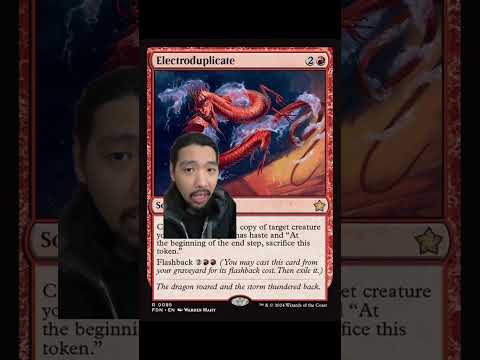
No, copied spells themselves are NOT tokens. However, a crucial distinction exists: while a copy of a permanent spell becomes a token as it resolves, the copy on the stack is still considered a spell. This seemingly small difference has massive implications for how these copies interact with other cards and abilities within the intricate ecosystem of Magic: The Gathering (MTG).
The core concept revolves around the difference between a spell on the stack (the zone where spells wait to resolve) and a permanent on the battlefield (where resolved permanents reside). Copying a spell creates a new spell on the stack with identical characteristics to the original. It’s a separate entity, subject to countering, re-copying, or other spell-targeting effects. Only when a permanent spell (like a creature, artifact, enchantment, or planeswalker) resolves from the stack does its copy transform into a token permanent on the battlefield.
Think of it this way: the copy is like a blueprint for the token. The blueprint is a plan, a concept. The token is the actual, realized structure built from that plan.
Let’s delve deeper and address some of the frequently asked questions surrounding copied spells and tokens in MTG:
Frequently Asked Questions (FAQs)
Q1: What happens when I copy a creature spell? Does it create a token immediately?
No. The copy of the creature spell is placed on the stack, just like any other spell. It can be countered, targeted by other spells and abilities, or even copied again! Once that copy resolves, it enters the battlefield as a token creature with all the characteristics of the original spell.
Q2: If a card says “Create a token that’s a copy of…” what exactly is being created?
The card is instructing you to create a token directly on the battlefield. This token will have all the copiable values of the object being copied. It bypasses the stack entirely; it’s not a spell and cannot be countered as such. The token appears directly on the battlefield.
Q3: Does copying a spell count as casting a spell?
Absolutely not. This is a crucial point. Copies of spells are not cast. This has significant implications for cards that trigger when you cast a spell, such as Storm cards or enchantments like Swarm Intelligence. These effects will not trigger when you play a copied spell because it wasn’t cast. No mana was spent to “cast” it either.
Q4: Are the copiable values of a token different from a card?
Yes and no. When a token is created as a copy of something, it starts with the copiable values of the original. However, unlike cards, tokens cannot become cards. An object with an actual Magic card back is considered a card. A token will always be a token, regardless of what it’s copying.
Q5: If I copy a kicked spell, is the copy also kicked?
Yes, the copy will also be kicked. Kicker costs are copiable values. If the original spell was kicked, the copy will enter the stack as a kicked spell, paying any associated additional costs is not needed for the copy since no casting takes place.
Q6: If I copy a spell with mana value X in its cost, does the copy also have X?
Yes, mana costs are copiable values. The copy will inherit the mana cost, including any variable mana costs represented by “X”, from the original spell.
Q7: If a token copies a creature with an enters-the-battlefield trigger, does the copied token trigger that ability?
Yes, when the copy of the permanent spell becomes a token on the battlefield, it enters the battlefield and may trigger abilities that are triggered as the permanent enters the battlefield.
Q8: Can I counter a copy of a spell?
Yes. Because the copied spell exists on the stack, it is a legal target for counterspells or other abilities that affect spells on the stack.
Q9: If I copy a spell that was copied before, what am I copying?
You’re copying the most recent version of the spell on the stack. If someone modifies the original before you copy it, you are copying the modified spell.
Q10: Does copying a spell trigger abilities that trigger when a player activates an ability?
No. Copying a spell is not an activated ability or casting a spell, therefore, abilities that trigger when a player activates an ability will not trigger.
Q11: If I copy an Epic spell, what happens?
If you copy an Epic spell, you get an additional copy every turn. These copies are also spells, but they are not cast. This can be a powerful engine if you can survive the initial casting of the Epic spell.
Q12: How does copying a spell interact with effects that refer to creating a token?
Copying a permanent spell that then resolves into a token does NOT count as “creating a token” for the purposes of triggered abilities or replacement effects that specifically refer to creating a token. You are creating a copy of a spell that later becomes a token.
Q13: If I copy a spell from my graveyard, is it still considered to be cast from the graveyard?
No, copying a spell is considered to be cast directly from your hand.
Q14: Can I use a card like [[Isochron Scepter]] to copy a spell?
If it says something like “Copy the exiled Card” (ie. [[Isochron Scepter]]), you are not Copying a Spell. You are Copying a Card. Then, the Scepter allows you to Cast the Card-Copy.
Q15: Where can I learn more about the intricate rules of Magic: The Gathering?
Understanding the intricate rules and nuances of Magic: The Gathering can greatly enhance your enjoyment and skill. The Games Learning Society provides a wonderful resource for learning and engagement with games. Visit GamesLearningSociety.org to explore more about the intersection of games, learning, and education.