Are Ghost Pokémon Undead? Unraveling the Mystery of the Spectral Realm
Fast answer first. Then use the tabs or video for more detail.
- Watch the video explanation below for a faster overview.
- Game mechanics may change with updates or patches.
- Use this block to get the short answer without scrolling the whole page.
- Read the FAQ section if the article has one.
- Use the table of contents to jump straight to the detailed section you need.
- Watch the video first, then skim the article for specifics.
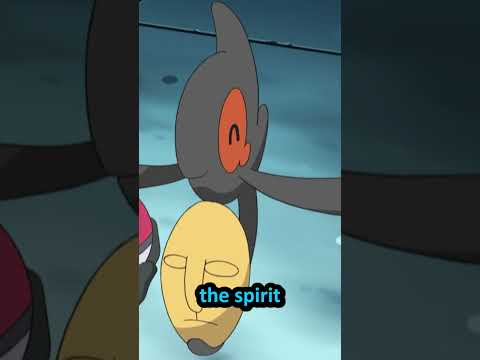
The question of whether Ghost Pokémon are truly undead is a fascinating one, delving into the core essence of what constitutes life, death, and the spectral plane within the Pokémon universe. The short answer is: it’s complicated. While many Ghost-type Pokémon exhibit characteristics associated with the undead – a connection to the afterlife, an ethereal presence, and often, origins rooted in death – the category isn’t a simple blanket statement. Some Ghost Pokémon are definitively spirits of the deceased, while others gain their Ghost typing through other means, such as potent spiritual energy or a connection to the concept of fear and the unknown. Therefore, while the spirit of the undead permeates many Ghost Pokémon, not all are literally reanimated corpses or lingering souls.
Exploring the Spectrum of Spectral Existence
The Ghost type in Pokémon is multifaceted, encompassing a range of entities that blur the lines between life and death. Understanding the nuances requires examining the different ways a Pokémon can become a Ghost type.
The Undeniably Deceased: Revenants and Restless Spirits
Certain Ghost Pokémon are explicitly stated in the Pokédex entries and lore to be remnants of the deceased. Yamask, for instance, is described as a Pokémon born from the spirit of a deceased human, carrying a mask that is the face it wore in life. Similarly, Cofagrigus is said to be a sarcophagus that consumes those who get too close, potentially imprisoning their souls within its gilded shell. These Pokémon are firmly rooted in the concept of the undead, representing souls that haven’t moved on and are interacting with the physical world in spectral forms.
Spectral Energy and the Essence of Fear: Ghosts by Association
Not all Ghost Pokémon are explicitly dead. Some gain their Ghost typing through potent spiritual energy, a connection to the afterlife without necessarily being spirits themselves, or embodiment of fear and darkness. Think of Misdreavus, a mischievous Pokémon that enjoys startling people with its cries. Its Ghost typing seems more linked to its unsettling aura and playful haunting behavior than any explicit connection to death. Similarly, the Sableye, while residing in dark caves and having a spooky aesthetic, seems more related to the darkness.
Inanimate Objects with Supernatural Properties: A Question of Sentience
Further complicating matters are Ghost Pokémon that originated as inanimate objects. Litwick, Lampent, and Chandelure are prime examples, starting as a candle, lamp, and chandelier respectively, and gaining life (or unlife) through absorbing souls. These Pokémon present a unique challenge to the undead classification because their origin isn’t necessarily in death, but in the accumulation of spectral energy within an object.
The Mimicry of Life: Ghosts that Play with Perception
Mimikyu is a poignant example of a Pokémon whose Ghost typing is intertwined with its desire for connection. It wears a Pikachu costume to resemble the popular electric type, hoping to be loved and accepted. Its Ghost typing comes from its true, unseen form, which is said to be terrifying to behold, and it’s the need to hide that form that likely causes this categorization.
The Influence of Game Mechanics and Type Interactions
The Ghost type’s role in Pokémon battles also sheds light on its nature. Dark-type moves are super effective against Ghost types, reflecting the vulnerability of spectral beings to darkness and shadow. Conversely, Ghost types are immune to Normal and Fighting-type moves, highlighting their insubstantial nature. These interactions reinforce the idea that Ghost Pokémon operate outside the typical rules of the physical world, further blurring the lines between life and death.
The world of Pokémon and its mechanics can be a valuable tool in educational environments. Resources like those offered by the Games Learning Society at GamesLearningSociety.org, can help educators leverage the engagement potential of gaming in the classroom. Games Learning Society highlights games as viable sources to teach children soft skills and hard knowledge.
Frequently Asked Questions (FAQs) About Ghost Pokémon and the Undead
Here are some frequently asked questions that help address the complexities of Ghost Pokémon:
1. Are all Ghost Pokémon dead?
No, not all Ghost Pokémon are explicitly dead. Some gain their Ghost typing through other means, such as potent spiritual energy or a connection to the concept of fear and the unknown.
2. Are Ghost Pokémon human spirits?
Some Ghost Pokémon are implied to be human spirits, such as Yamask, which is said to have been formed from the spirits of deceased humans. However, others have different origins.
3. Are Ghost Pokémon immortal?
Ghost-type Pokémon are technically dead or spectral, so they exist outside the typical life cycle, suggesting a form of immortality. However, they can still be defeated in battle and potentially cease to exist.
4. What type is strong against Ghost Pokémon?
Dark-type Pokémon and moves are super effective against Ghost types. This reflects the vulnerability of spectral beings to darkness and shadow.
5. What makes a Pokémon a Ghost type?
Ghost typing can be attributed to several factors, including a connection to death, potent spiritual energy, the embodiment of fear, or an origin as an object infused with spectral power.
6. Why does the Ghost type exist in Pokémon?
The Ghost type adds an element of mystery, the supernatural, and fear to the Pokémon world. It also provides unique type matchups and strategic opportunities in battles.
7. What are some examples of pure Ghost-type Pokémon?
Examples of pure Ghost types include Misdreavus, Duskull, and Spectrier, which showcase the diverse range of forms and abilities within the type.
8. What type is immune to Ghost-type moves?
Normal and Fighting types are immune to Ghost-type moves. This highlights the insubstantial nature of Ghost Pokémon and their inability to interact with the physical world in a conventional way.
9. Who is considered the strongest Ghost Pokémon?
Determining the “strongest” Ghost Pokémon is subjective and depends on the context (competitive battling, lore, etc.). Pokémon like Aegislash, Dragapult, and Mega Gengar are often cited due to their high stats and unique abilities.
10. Why were early Ghost Pokémon also Poison type?
In Generation I, Gastly, Haunter, and Gengar were Ghost/Poison types due to technical limitations and design choices. It doesn’t necessarily mean all Ghosts have poisoning abilities.
11. What happens when a Ghost Pokémon “dies”?
The concept of a Ghost Pokémon “dying” is ambiguous. As spectral beings, their existence is already beyond the traditional life cycle. Defeating them in battle might banish them back to the spirit world or cause them to dissipate temporarily.
12. Are Gastly dead Cloyster?
The theory that Gastly are derived from dead Cloyster is interesting, but unconfirmed, and most likely just a fun headcanon.
13. Did Gengar used to be a human?
The lore surrounding Gengar suggests that it enjoys mischief and causing fear, but there’s no concrete evidence that it was once a human. This is a popular fan theory.
14. Who is the “god” of Ghost Pokémon?
Giratina, the Renegade Pokémon, is often considered the closest thing to a god of the Ghost type. It rules the Distortion World, a realm between dimensions, and embodies the darker aspects of the Pokémon world.
15. Why is Ghost weak to Dark?
Ghost’s weakness to Dark comes from the contrast in visibility. The darker the surroundings, the more invisible and weakened the ghost is.
Conclusion: The Ethereal Enigma of Ghost Pokémon
In conclusion, the classification of Ghost Pokémon as undead is not straightforward. While some are undoubtedly spirits of the deceased, others gain their Ghost typing through various means, from potent spiritual energy to the embodiment of fear. The Ghost type represents a realm of mystery and the supernatural within the Pokémon world, challenging our understanding of life, death, and what lies beyond. Their ambiguous nature is what makes them so captivating and an integral part of the rich tapestry of the Pokémon universe.