Are Holy Knights Above Celestial Dragons in One Piece? Unraveling the Hierarchy
Fast answer first. Then use the tabs or video for more detail.
- Watch the video explanation below for a faster overview.
- Game mechanics may change with updates or patches.
- Use this block to get the short answer without scrolling the whole page.
- Read the FAQ section if the article has one.
- Use the table of contents to jump straight to the detailed section you need.
- Watch the video first, then skim the article for specifics.
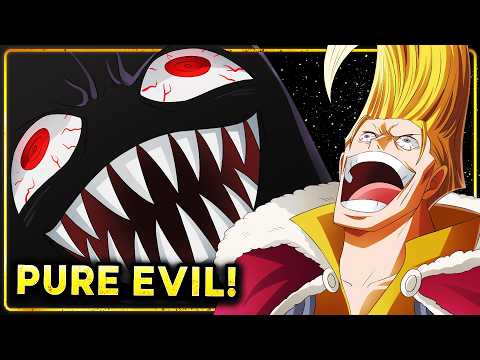
No, the Holy Knights are not above Celestial Dragons in the absolute sense of social standing or birthright within the World Government. However, the situation is nuanced. While Celestial Dragons hold the highest social status due to their lineage as descendants of the original twenty kings who founded the World Government, the Holy Knights appear to hold a unique position of authority, potentially including limited authority over Celestial Dragons, particularly in matters of maintaining order and adjudicating disputes between them.
This stems from the information we currently have: the Holy Knights are under the direct control of the Celestial Dragons yet seem to function independently, almost as an internal affairs or secret service division for the nobility. Furthermore, the fact that the Holy Knights seemingly have authority over disputes between Celestial Dragons suggests they possess a power that trumps individual Celestial Dragon status. It’s more accurate to view their power dynamic as situational; in everyday life, a Celestial Dragon’s whim is law. But when a Celestial Dragon violates the already warped “laws” governing their behavior, the Holy Knights are there to step in.
Consider it this way: Imagine a royal family with its own internal guard. While the princes and princesses outrank the guards socially, the guards still have the authority to arrest or restrain a royal if they are endangering others. The Holy Knights seem to serve a similar purpose, acting as a check on the unchecked power of the Celestial Dragons, which they wield at the behest of the Gorosei or Imu. The Holy Knights do not overrule the Celestial Dragons in general, rather they police them. The Celestial Dragons have the World Government in their clutches. In extension, they also have command over the Marines. The Marines’ fleet admiral can’t defy their orders, and the three admirals are nothing more than aides to them — and all this is achieved due to their bloodline.
In essence, it’s a complex hierarchy: Imu at the top, followed by the Gorosei, then the Celestial Dragons, and finally the Holy Knights. The Holy Knights operate under the directives of the higher authorities (Gorosei), serving as a specialized force to maintain the stability of the World Government, even if that means temporarily curtailing the excesses of the Celestial Dragons.
Understanding the One Piece Power Structure
The power structure in One Piece is far from straightforward. It’s a delicate web of social status, political influence, and raw strength. To fully understand the relationship between the Holy Knights and Celestial Dragons, it’s essential to consider the broader context of the World Government’s hierarchy. The Gorosei are the highest authoritative figures within the World Government after Imu. In order to keep Imu’s identity a secret, the Five Elders have gone to great lengths.
Who Holds the Real Power?
Ultimately, the true power rests with Imu. The Celestial Dragons and the Holy Knights serve as Imu’s instruments, each with their designated roles. This leads us to believe that ultimately, the Holy Knights are under the direct control of the Celestial Dragons.
Frequently Asked Questions (FAQs)
Here are some frequently asked questions to further clarify the roles and relationships within the World Government:
1. What exactly are the Holy Knights?
The Holy Knights are an elite group, likely composed of extremely powerful individuals, who serve as a specialized force for the World Government. Their main objectives appear to be investigation, threat neutralization, and maintaining order among the Celestial Dragons themselves.
2. Are the Holy Knights all Celestial Dragons?
It is possible that some Holy Knights are Celestial Dragons, especially given that they have authority over the disputes between Celestial Dragons. But it is more likely that they are elite warriors from powerful backgrounds selected to serve the World Government.
3. Are Celestial Dragons above Admirals in the Marines?
Yes, Celestial Dragons are above Admirals. Admirals, including the Fleet Admiral, are essentially servants of the World Government, which the Celestial Dragons control. An Admiral cannot directly defy a Celestial Dragon’s order without risking severe consequences.
4. Are the Gorosei above Celestial Dragons?
Yes, the Gorosei outrank the Celestial Dragons. They serve as the primary political and military leaders of the World Government, answering only to Imu. While Celestial Dragons enjoy immense social privilege, the Gorosei wield the actual governing power. The Five Elders are among the strongest fighters in One Piece, but they are not invincible.
5. Who is Imu?
Imu is the sovereign of the World Government and the hidden ruler of the world. Their existence is a closely guarded secret, and they hold authority over even the Gorosei.
6. Is Shanks a Celestial Dragon or a Holy Knight?
Shanks’ lineage is heavily implied to be tied to the Celestial Dragons, specifically the Figarland family. He has not been confirmed as a Holy Knight, and his position as an Emperor of the Sea suggests he operates outside the direct control of the World Government.
7. Could a Holy Knight defeat an Admiral?
It’s difficult to say definitively without more information. Given the Holy Knights’ specialized role and likely high level of skill, it is likely that God’s Knights and the Gorosei can be above the Admirals and the Power Balance can still make sense.
8. What would happen if someone killed a Celestial Dragon?
Killing a Celestial Dragon is considered an act of war against the World Government. The Marines would immediately mobilize, and potentially even higher authorities like the Gorosei or Holy Knights would become involved.
9. Why are Celestial Dragons considered so important?
Celestial Dragons are revered and feared because of their lineage. As descendants of the founding kings, they are seen as inherently superior to the rest of the world’s population.
10. Do all Celestial Dragons behave the same way?
No, while many Celestial Dragons are depicted as arrogant and entitled, there are exceptions. Some, like Donquixote Rosinante, reject their privileged lifestyle and work against the World Government’s corruption.
11. What is the Holy Land of Mariejois?
Mariejois is the capital of the World Government and the home of the Celestial Dragons. It is located at the top of the Red Line, above Fish-Man Island.
12. Are there any former Celestial Dragons?
Yes, the most prominent example is the Donquixote Family. Doflamingo and his brother, Rosinante, were both born Celestial Dragons but lost their status after their father renounced it.
13. What is the Will of D?
The Will of D is a mysterious force or characteristic shared by certain individuals in the One Piece world. Those with the “D” in their name are often seen as enemies of the Celestial Dragons and the World Government.
14. How does Haki play into the World Government’s power structure?
Haki, especially Conqueror’s Haki, is a significant factor in determining strength and influence. Individuals with powerful Haki are more likely to rise to positions of authority, including within the Marines, the Holy Knights, and even among the Celestial Dragons.
15. What are some examples of strong Holy Knights?
As of now, we don’t have specific names or rankings for individual Holy Knights within the One Piece canon.
Understanding the nuances of the World Government’s power dynamics adds depth to the One Piece story. Exploring the intricacies of such systems, and how they affect decision making and conflict, can be mirrored and analyzed in other complex systems. This approach aligns well with the research conducted by the Games Learning Society, which explores how games can be used to understand and improve learning and social systems. See more at GamesLearningSociety.org.