Are Katanas For Slashing or Stabbing? The Definitive Answer
Fast answer first. Then use the tabs or video for more detail.
- Watch the video explanation below for a faster overview.
- Game mechanics may change with updates or patches.
- Use this block to get the short answer without scrolling the whole page.
- Read the FAQ section if the article has one.
- Use the table of contents to jump straight to the detailed section you need.
- Watch the video first, then skim the article for specifics.
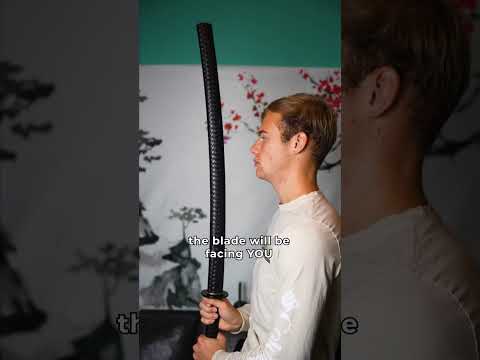
The katana, romanticized and often misunderstood, is primarily a slashing weapon. Its curved blade and single edge are optimized for delivering powerful, sweeping cuts. While it can be used for stabbing, this was a secondary function, not its core design purpose. The curvature allows for a longer cutting surface to come into contact with the target during a swing, maximizing the damage.
Katana Design and Intended Use
The design of the katana is a testament to its slashing prowess. The subtle curve, the razor-sharp edge, and the weight distribution all contribute to its effectiveness as a cutting weapon. Think of it like this: a chef’s knife is designed for slicing, not thrusting. While you could stab someone with it, that’s not what it’s meant for. The katana follows a similar principle.
The Blade’s Geometry
The differential hardening process (creating a hard edge and a softer spine) further enhanced the katana’s cutting ability. This process allows the blade to flex without breaking, making it ideal for delivering powerful cuts.
One-Handed vs. Two-Handed Usage
While some schools of swordsmanship utilized the katana with two hands for powerful cuts, other styles focused on the one-handed draw and cut technique, known as iaijutsu. In this case, stabbing would have been a less favorable action because the weapon was less stable when wielding it with one hand. This emphasizes the katana’s primary function as a slashing weapon, even in scenarios where one hand is free.
Historical Context and Fighting Styles
The samurai didn’t just rely on the katana; they were trained in various weapons, including the spear (yari), bow (yumi), and naginata (a polearm with a curved blade). The katana was primarily used in close-quarters combat, often after other weapons had failed or were no longer suitable. Many fighting styles focused on drawing the blade and delivering a swift, decisive cut. For example, iaido is an art dedicated to drawing the katana and immediately executing a killing strike.
Why the Misconception?
The misconception that katanas are equally effective for stabbing likely stems from a few factors:
- Hollywood and pop culture: Movies often depict samurai stabbing with their katanas, even though this isn’t historically accurate.
- The nature of swords: All swords can be used to stab, but that doesn’t mean they are designed for it.
- Confusion with other Japanese blades: Shorter swords like the tanto were designed for stabbing, potentially blurring the lines.
In Summary
The katana is, without a doubt, primarily a slashing weapon. While it could be used for stabbing in certain situations, its design, historical usage, and fighting styles all point to its role as a cutting implement. The katana’s curved blade, differential hardening, and the emphasis on drawing and cutting techniques solidify its place in history as one of the finest cutting weapons ever made.
Frequently Asked Questions (FAQs) about Katanas
Here are 15 frequently asked questions (FAQs) that will help clarify the role, design, and history surrounding the katana.
1. Can a katana cut through bone?
Yes, a katana can cut through bone, especially if it is very sharp. However, doing so can damage the blade, and skilled swordsmen would generally avoid hitting bone directly unless necessary.
2. Is a katana a slashing weapon or a piercing weapon?
As stated above, a katana is primarily a slashing weapon. While it can pierce, its curved blade and single edge are optimized for cutting.
3. Why is the katana curved?
The curve of the katana allows for a longer cutting surface to come into contact with the target during a swing, maximizing the damage. The curve creates momentum and also enhances the drawing motion from the scabbard.
4. What is the difference between a katana and a tachi?
The tachi is an older sword which predates the katana. The katana came to the battlefield much later. The tachi is longer and more curved than the katana and was primarily used by mounted samurai. It was designed to be worn suspended edge-down from the belt, while the katana is worn edge-up.
5. How sharp is a katana?
A properly made katana is incredibly sharp, capable of cutting through soft targets with minimal effort. This sharpness is achieved through the differential hardening process and meticulous polishing.
6. Are katanas fragile?
Compared to some other swords, katanas can be more fragile. Their hardness and sharpness come at the cost of some flexibility. Improper use, such as blocking with the blade’s edge, can lead to damage. Japan’s access to iron mines were not the highest quality, and they had to adapt accordingly.
7. What is the purpose of the katana’s handle?
The katana’s handle (tsuka) provides a secure grip and helps to balance the blade. The length of the tang (nakago), and the two pins (mekugi) that secures it to the tsuka, contribute to the balance.
8. Can a katana cut through armor?
While katanas can cut through light armor, they are not designed to defeat heavy plate armor. Their primary function was to cut through unarmored or lightly armored opponents.
9. What is iaido?
Iaido is a Japanese martial art that focuses on drawing the katana and executing a killing strike in a single, fluid motion. It emphasizes precision, speed, and awareness.
10. Were katanas used on the battlefield?
Yes, katanas were used on the battlefield, but often as a secondary weapon for close-quarters combat. Other weapons like spears and bows were more common in large-scale battles.
11. What is tamahagane?
Tamahagane is a type of steel used to make katanas. It is produced through a traditional smelting process and is known for its purity and unique properties.
12. How are katanas made?
Katanas are made through a complex process involving folding, hammering, and differential hardening. The process requires great skill and experience. A sword composed simply of one kind of steel or the other would either dull too quickly or be too brittle.
13. Are katanas legal to own?
In many places, katanas are legal to own, but there may be restrictions on carrying them in public. Laws vary by location, so it is important to check local regulations. In the US, katanas fall under the same legal category as knives.
14. What is the best way to care for a katana?
Proper care for a katana involves regular cleaning, oiling, and storage in a dry environment. This helps to prevent rust and maintain the blade’s sharpness.
15. Are katanas bulletproof?
No, a katana is not bulletproof. It is designed to cut through flesh and bone, not to withstand the force of a bullet.
Interested in further exploration of how games and learning intersect with cultural artifacts like the katana? Be sure to visit Games Learning Society for insights on education and game design. You can find out more at GamesLearningSociety.org.