Are Moonbows Real? Unveiling the Secrets of Lunar Rainbows
Fast answer first. Then use the tabs or video for more detail.
- Watch the video explanation below for a faster overview.
- Game mechanics may change with updates or patches.
- Use this block to get the short answer without scrolling the whole page.
- Read the FAQ section if the article has one.
- Use the table of contents to jump straight to the detailed section you need.
- Watch the video first, then skim the article for specifics.
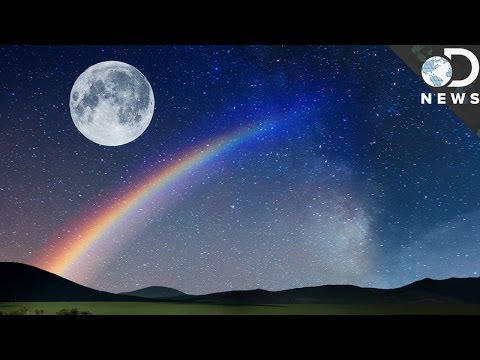
Yes, moonbows are absolutely real. They are a legitimate and fascinating optical phenomenon, just like their daytime counterparts, rainbows. The key difference lies in the source of light: rainbows are formed by sunlight, while moonbows, also known as lunar rainbows, are created by moonlight. Because moonlight is significantly fainter than sunlight, moonbows are much rarer, fainter, and harder to spot. But their existence is confirmed through observation, photography, and scientific understanding of light refraction.
Understanding the Science Behind Moonbows
How Moonbows Form
The formation of a moonbow mirrors the process of rainbow formation. It requires three essential elements:
- A Light Source: In the case of a moonbow, this is the moon, ideally a full moon because that’s when the moon is at its brightest.
- Water Droplets: Like rainbows, moonbows are formed when light passes through water droplets in the air. This can be rain, mist from a waterfall, or even spray from a wave.
- An Observer: You, the viewer, must be positioned with the moon behind you and the water droplets in front.
The Role of Refraction and Reflection
When moonlight encounters a water droplet, it undergoes two key processes:
- Refraction: As the light enters the droplet, it bends, or refracts. Different wavelengths of light bend at slightly different angles.
- Reflection: The refracted light then reflects off the back of the water droplet.
- Refraction (Again): As the light exits the droplet, it refracts again, further separating the different wavelengths.
This separation of light creates the spectrum of colors that we see in both rainbows and moonbows. However, because moonlight is much weaker, the colors in a moonbow are often very faint, appearing almost white or silvery to the naked eye. Long exposure photography, though, can often capture the faint colors.
Why Are Moonbows So Rare?
Several factors contribute to the rarity of moonbows:
- Limited Moonlight: The full moon provides the brightest light, making it the optimal time to spot a moonbow. However, even a full moon provides far less light than the sun.
- Dark Skies: A very dark sky is crucial. Light pollution from cities can easily wash out the faint light of a moonbow.
- Specific Weather Conditions: The presence of water droplets is essential, but not all rainy or misty nights will produce a moonbow. The droplets need to be the right size and density.
- Moon Position: The moon needs to be low in the sky, ideally less than 42 degrees above the horizon. This positioning provides the optimal angle for the light to refract through the water droplets.
Where to Find Moonbows
While rare, moonbows can be seen in certain locations known for their waterfalls and consistent mist:
- Cumberland Falls, Kentucky, USA: Known as the “Niagara of the South,” Cumberland Falls is famous for its moonbows, which are regularly visible on clear nights with a full moon.
- Yosemite National Park, California, USA: Yosemite Falls and other waterfalls in the park can produce moonbows, especially during the spring when water flow is high.
- Niagara Falls, New York/Ontario, Canada: The massive volume of water at Niagara Falls sometimes generates moonbows, though light pollution can be a challenge.
- Victoria Falls, Zambia/Zimbabwe: This magnificent waterfall on the border of Zambia and Zimbabwe is another well-known location for seeing moonbows, particularly in the months following the rainy season.
- Waimea, Hawaii: Waimea is also a hot spot for moonbows, known as ‘Anuenue Kau Po.’
Tips for Spotting and Photographing Moonbows
- Plan Ahead: Check the lunar calendar and plan your visit around the full moon.
- Find a Dark Location: Escape the light pollution of cities and towns.
- Be Patient: Moonbows can be fleeting, so be prepared to wait and watch.
- Use a Camera: Even if the moonbow appears white to the naked eye, a camera with a long exposure can often capture its subtle colors.
- Use Proper Camera Settings: Use a wide-angle lens between 16-35mm with a wide aperture of f2.8 or f4. You will need long shutter speeds which may increase the likelihood of mist accumulating on the lens.
Learn and Grow!
Understanding the science behind natural phenomena like moonbows enhances our appreciation of the world around us. For more on how games and interactive learning can inspire curiosity and discovery, visit the Games Learning Society at GamesLearningSociety.org.
Frequently Asked Questions (FAQs) About Moonbows
1. What is the difference between a rainbow and a moonbow?
The primary difference is the source of light. Rainbows are caused by sunlight refracting through water droplets, while moonbows are caused by moonlight. Because moonlight is much fainter, moonbows are significantly rarer and fainter.
2. How often do moonbows occur?
Moonbows occur less than 10% as often as regular rainbows, according to Astronomy.com. Their rarity is due to the specific conditions required: a full moon, dark skies, and the presence of water droplets.
3. What is the best time to see a moonbow?
The best time to see a moonbow is around the full moon, on a clear night, in a location with minimal light pollution, and in the presence of water droplets (rain or mist).
4. Do moonbows have colors like rainbows?
Yes, moonbows do have colors, but they are often much fainter and harder to see with the naked eye. They may appear almost white or silvery. Long-exposure photography can often reveal the subtle colors.
5. Can you see a moonbow with a half-moon?
It is highly unlikely to see a moonbow with a half-moon. A full moon provides the brightest and most concentrated light, which is necessary to create a visible moonbow.
6. Is a moonbow also called a lunar rainbow?
Yes, a moonbow is also commonly referred to as a lunar rainbow. These terms are used interchangeably.
7. What are the best places in the world to see moonbows?
Some of the best places to see moonbows include Cumberland Falls (Kentucky, USA), Yosemite National Park (California, USA), Niagara Falls (New York/Ontario), and Victoria Falls (Zambia/Zimbabwe).
8. How high does the moon have to be to see a moonbow?
The moon needs to be low in the sky, ideally less than 42 degrees above the horizon, for the optimal angle of light refraction through the water droplets.
9. Can you predict when a moonbow will occur?
While you can’t predict the exact occurrence of a moonbow, you can increase your chances by planning your visit around the full moon and checking the weather forecast for clear skies and rain or mist in areas known for moonbows.
10. What equipment do I need to photograph a moonbow?
To photograph a moonbow, you will need a camera with manual settings, a wide-angle lens (16-35mm), a wide aperture (f/2.8 or f/4), a sturdy tripod, and a remote shutter release.
11. Are moonbows more common in certain seasons?
Moonbows may be more common in certain seasons depending on the location and its weather patterns. For example, in Yosemite National Park, they are often seen during the spring when the waterfalls are at their peak flow due to snowmelt.
12. Is it possible to see a double moonbow?
Yes, it is possible to see a double moonbow, although even rarer than a single moonbow. Double rainbows occur when light is reflected twice inside the water droplets.
13. Can you see a moonbow during the day?
No, moonbows are exclusively a nighttime phenomenon. The sunlight is too bright during the day for the faint moonlight to create a visible bow.
14. Are moonbows considered good luck?
In some cultures, rainbows (including moonbows) are considered symbols of hope, good fortune, and new beginnings.
15. What causes a purple moon, and is it related to moonbows?
A “purple moon” is not a scientific term and usually refers to a moon that appears reddish due to atmospheric conditions, like dust or smoke. It’s not directly related to moonbows, which are caused by refraction through water droplets.