Are Warlocks a Good Class in 5e? A Comprehensive Guide
Fast answer first. Then use the tabs or video for more detail.
- Watch the video explanation below for a faster overview.
- Game mechanics may change with updates or patches.
- Use this block to get the short answer without scrolling the whole page.
- Read the FAQ section if the article has one.
- Use the table of contents to jump straight to the detailed section you need.
- Watch the video first, then skim the article for specifics.
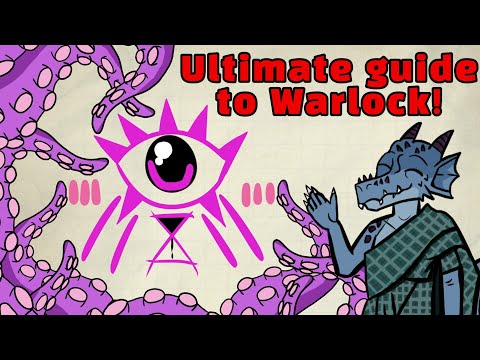
Absolutely! Warlocks are a fantastic class in Dungeons and Dragons 5th Edition, offering a unique blend of powerful spellcasting, customization options, and roleplaying potential. They stand out from other spellcasters due to their reliance on a limited number of potent spell slots that recharge on a short rest, as well as their iconic Eldritch Blast cantrip, often enhanced by invocations for significant damage output. They’re more than just “Eldritch Blast machines,” providing versatile utility and control.
Why Choose a Warlock?
Warlocks offer a compelling alternative to traditional spellcasters like Wizards and Sorcerers. Here’s what makes them shine:
Unique Spellcasting Mechanic
Unlike Wizards who have a vast arsenal of spells but limited high-level slots, Warlocks have few spell slots. But, these spell slots are always cast at the highest possible level. Plus, they recharge on a short rest, giving you access to your most potent spells more frequently than other casters. This mechanic promotes tactical spell usage and resource management. You’re incentivized to make every spell count.
Eldritch Blast Dominance
Eldritch Blast is not just any cantrip; it’s the Warlock’s signature move. With the Agonizing Blast invocation, it adds your Charisma modifier to the damage, making it a reliable and scaling source of damage throughout your campaign. The Repelling Blast invocation lets you push creatures away from you, providing crowd control and tactical advantages. This combination makes the Warlock a formidable ranged damage dealer.
Invocations: Customization is Key
Invocations are special abilities that allow you to customize your Warlock, making them adaptable to various playstyles and party compositions. Some invocations enhance Eldritch Blast, while others grant access to spells, rituals, or even utility features like seeing in magical darkness. This level of customization is unmatched by almost any other class.
Pact Boons: Your Patron’s Gift
At 3rd level, you choose a Pact Boon, further defining your Warlock. These boons offer distinct advantages:
- Pact of the Blade: Enhances your martial capabilities, allowing you to summon a magical weapon and become a competent melee combatant. This boon makes you less reliant on your spells for damage, particularly if your campaign setting is sparse on rests.
- Pact of the Chain: Grants you a powerful familiar with unique abilities. These familiars are much more potent than those conjured by Find Familiar, and are very useful in reconnaissance and gaining advantage on attacks.
- Pact of the Tome: Provides access to a wider range of rituals, offering utility and support options. In addition, you gain 3 extra cantrips from any class!
- Pact of the Talisman: Grants you a talisman that can protect you and your allies. The Talisman is most effective when given to allies to aid their saving throws.
Charisma-Focused
Warlocks use Charisma as their spellcasting ability, making them excellent party faces. Charisma is also crucial for skills like Deception, Intimidation, and Persuasion, allowing you to excel in social interactions and roleplaying scenarios.
Versatile Roleplaying
The Warlock’s relationship with their patron provides ample opportunities for compelling roleplaying. This connection can be a source of conflict, guidance, or even dark humor, depending on your patron and your approach to the relationship.
Common Misconceptions about Warlocks
Some players dismiss Warlocks as being too reliant on Eldritch Blast or too limited by their spell slots. However, a well-played Warlock is far more than the sum of these perceived limitations. They are adaptable, strategic, and capable of delivering both devastating damage and crucial utility.
Optimizing Your Warlock
To make the most of your Warlock, consider the following:
- Choose the Right Patron: Each patron offers a different set of spells and abilities, so select one that complements your desired playstyle.
- Select Invocations Carefully: Prioritize invocations that enhance your strengths and address your weaknesses. Agonizing Blast and Repelling Blast are practically mandatory.
- Manage Your Spell Slots: Plan your spell usage strategically, saving your high-level spells for critical moments.
- Consider Multiclassing: Warlock is a popular class for multiclassing, especially with Paladin, Sorcerer, or Bard.
Conclusion
Warlocks are a powerful and versatile class in D&D 5e. Their unique spellcasting mechanics, customizable invocations, and compelling roleplaying opportunities make them a rewarding choice for both new and experienced players. So, the next time you’re creating a character, consider making a pact with a powerful entity and embracing the arcane power of the Warlock. You won’t be disappointed! Check out GamesLearningSociety.org for more information on the educational aspects of gaming.
Frequently Asked Questions (FAQs) About Warlocks in 5e
1. Is Warlock the best class 5e?
There’s no objectively “best” class in 5e, as each class excels in different areas. However, Warlocks are consistently rated highly due to their strong damage output (especially with Eldritch Blast), customization options, and unique resource management. They are definitely among the best.
2. Is Warlock worth playing in 5e?
Absolutely! If you enjoy playing a charismatic spellcaster with a distinctive flavor and a strong connection to a powerful entity, the Warlock is an excellent choice. Their flexibility allows for various playstyles, from ranged damage dealers to pact-bound melee fighters.
3. Is Warlock a weak class in 5e?
Definitely not! While they might appear weaker at first glance due to their limited spell slots, their potent spells and the consistent damage from Eldritch Blast make them surprisingly durable and effective. Their customization through invocations also provides adaptability.
4. Is Warlock better than Wizard in 5e?
“Better” depends on your playstyle. Wizards offer immense versatility and a vast spell list, while Warlocks excel at consistent damage and frequent access to high-level spells. Warlocks also have higher potential AC than wizards. Warlocks typically have better survivability in the early game, while Wizards can dominate the late game if properly supported.
5. What race is good for Warlock 5e?
Races with a bonus to Charisma are ideal. Tieflings are a classic choice, but Satyrs (from Mythic Odysseys of Theros) and Custom Lineage are also excellent options. Half-elves and Changelings also provide flexibility with ability score bonuses.
6. Are Warlocks easy to play 5e?
Yes, especially for new players. Their limited spell slots simplify spell management, and Eldritch Blast provides a reliable fallback option. The mechanics of Pact Magic are generally easier to grasp than the spell slot systems of other casters.
7. Are Warlocks good for beginners?
Warlocks are often recommended as a good beginner class because they are easy to learn but hard to master. They have consistent reliable damage, and high level spells. In addition, they get their spells back on short rests.
8. What classes go well with Warlock?
Warlocks multiclass well with several classes. The most common combinations include:
- Paladin: For melee builds focused on burst damage.
- Sorcerer: For extra spell slots and metamagic.
- Bard: For social skills and support abilities.
9. What is the best multiclass for Warlock 5e?
Paladin is often considered the strongest, especially for Hexblade Warlocks, as it provides martial prowess and divine smites that synergize well with the Warlock’s limited spell slots.
10. What language is best for Warlock 5e?
There’s no objectively “best” language, but Infernal and Celestial are thematically appropriate for Warlocks dealing with fiendish or celestial patrons, respectively. Draconic is also a popular choice.
11. Should I play Sorcerer or Warlock?
Choose Sorcerer if you want more flexibility in spellcasting, a wider range of spells, and the ability to manipulate your spells with metamagic. Choose Warlock if you prefer consistent damage, frequent access to high-level spells, and a strong roleplaying connection to your patron.
12. How do you make an overpowered Warlock?
Focus on maximizing your Eldritch Blast damage with invocations like Agonizing Blast and Repelling Blast. Combine it with feats like Spell Sniper and War Caster for further optimization. Multiclassing into Sorcerer for metamagic is another powerful option.
13. Do Warlocks need Strength?
Generally, no. Unless you’re building a Pact of the Blade Warlock focused on melee combat, Strength is typically your lowest priority stat. However, it is still a requirement for multiclassing into Paladin or Fighter.
14. What proficiencies should a Warlock have?
Prioritize skills that utilize Charisma, such as Deception, Intimidation, and Persuasion. Arcana, Investigation, Nature, and Religion can also be useful, depending on your character’s background and interests.
15. What is a female Warlock called?
While “warlock” is gender-neutral, the term witch is commonly used as the female equivalent. However, “warlock” is perfectly acceptable for both male and female characters.