Can a Druid Wild Shape While Polymorphed? The Definitive Guide
Fast answer first. Then use the tabs or video for more detail.
- Watch the video explanation below for a faster overview.
- Game mechanics may change with updates or patches.
- Use this block to get the short answer without scrolling the whole page.
- Read the FAQ section if the article has one.
- Use the table of contents to jump straight to the detailed section you need.
- Watch the video first, then skim the article for specifics.
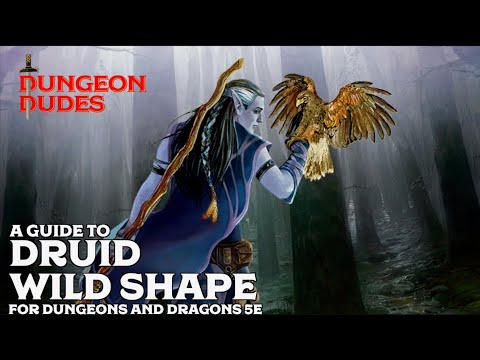
No, a Druid cannot use their Wild Shape ability while under the effects of the Polymorph spell (or any similar spell or effect that transforms them into another creature). The core reason lies in the fact that Polymorph explicitly replaces your statistics, including class features like Wild Shape, with those of the new form. Let’s delve into the complexities and nuances of this interaction, exploring why this is the case and what alternatives a clever Druid might consider.
Why Wild Shape and Polymorph Don’t Mix
The conflict arises from the fundamental mechanics of both Wild Shape and Polymorph.
The Nature of Wild Shape
Wild Shape, a key class feature of the Druid, allows them to magically assume the shape of a beast. However, it doesn’t completely obliterate the Druid’s identity. A Druid retains their mental statistics (Intelligence, Wisdom, and Charisma), personality, and alignment. Critically, they retain their class features, though they may be limited by their new form.
The Nature of Polymorph
Polymorph, on the other hand, is a powerful transmutation spell that turns a creature into a completely different creature. The target’s statistics, including mental statistics in many cases (depending on the new form’s Intelligence), are replaced by the statistics of the new form. Crucially, this includes any class features, unless explicitly stated otherwise in the spell description.
The Overriding Rule: Spell Effects
The general rule in D&D 5e is that specific trumps general. Polymorph, being a spell effect that replaces your existing statistics (including class features), takes precedence over the Druid’s ability to retain class features while Wild Shaped. When Polymorphed, you are essentially no longer a Druid in terms of available abilities. You are the creature you have been Polymorphed into.
Implications of this Restriction
Understanding this limitation has significant implications for Druid gameplay. If a Druid is Polymorphed, they lose access to:
- Wild Shape: The cornerstone of many Druid builds.
- Spellcasting: Unless the new form allows for it (rare).
- Other Class Features: Such as Circle abilities, depending on the specific Druid Circle.
This makes Druids particularly vulnerable to Polymorph and similar effects, turning their strength into a potential weakness.
Alternative Strategies for Druids
While a Druid can’t Wild Shape while Polymorphed, they can consider other options:
- Counterspell: The best defense is a good offense. Prevent the Polymorph spell from ever taking effect.
- Dispel Magic: If already Polymorphed, attempt to end the effect. This requires concentration, which may be difficult in a vulnerable form.
- Focus on Non-Concentration Spells: Buff allies or debuff enemies with spells that don’t require concentration, minimizing the impact of potentially losing concentration.
- Choose Forms Carefully: If you suspect Polymorph is a threat, consider Wild Shaping into a form that is difficult to Polymorph or that would retain some combat effectiveness if Polymorphed (e.g., a Dire Wolf might be preferable to a mouse).
- Magic Items: Invest in magic items that grant resistance to spells or advantage on saving throws against spells.
- Communicate with Allies: Let your party members know that Polymorph is a significant threat, and coordinate strategies to protect you.
Frequently Asked Questions (FAQs)
Here are 15 frequently asked questions about Druids, Wild Shape, and Polymorph:
1. What happens if a creature Polymorphed into a Druid tries to Wild Shape?
The creature would not be able to Wild Shape. Polymorph grants the statistics of the creature the target is changed into, but it does not grant class features. A creature Polymorphed into a humanoid who then takes a level in Druid could potentially Wild Shape, but that would be an extremely unusual and likely inefficient scenario.
2. Can a Druid use other class features while Polymorphed (not just Wild Shape)?
Generally, no. Polymorph replaces all of your statistics, including access to class features. The only exceptions would be features that explicitly state they function even when the Druid is incapacitated or transformed.
3. If a Druid is Wild Shaped, can they be Polymorphed back into their original form?
Yes. Polymorph can target any creature, regardless of its current form, unless specified otherwise in the spell description.
4. What happens to a Druid’s concentration if they are Polymorphed while concentrating on a spell?
The Druid must make a Constitution saving throw to maintain concentration, as with any form of damage or distracting effect.
5. Is there any way for a Druid to Wild Shape while Polymorphed?
Not through standard rules. A generous DM might allow a very specific and story-driven exception, but RAW (Rules As Written) strictly prohibit it.
6. Can a Druid Wild Shape into a creature that can then cast Polymorph?
Yes. A Druid can Wild Shape into a creature that naturally has the ability to cast Polymorph. However, the Druid would need to be able to use that creature’s innate abilities which is allowed in the wild shape feature.
7. Does being Polymorphed remove ongoing spell effects on the Druid?
It depends on the spell. Some spells might end immediately because the Druid’s statistics have changed, while others might persist if they affect the creature in general.
8. Can a Druid willingly fail a saving throw against Polymorph?
Yes. A creature can always choose to willingly fail a saving throw, unless the effect states otherwise.
9. What is the best strategy for a Druid to avoid being Polymorphed?
Increasing Wisdom (for better saving throws), acquiring advantage on saving throws against spells, and communicating with allies for protection are all good strategies.
10. Can a Druid Wild Shape before being Polymorphed to mitigate the effects?
Yes, Wild Shaping beforehand can be a good strategy. While the Polymorph will still replace your Wild Shaped statistics, it might be preferable to being Polymorphed into a harmless creature while in your humanoid form.
11. Does Wild Shaping break Polymorph?
No. Wild Shape cannot automatically end a Polymorph spell or effect. Only specific spells or abilities can do that.
12. If a Druid is in Wild Shape, does the new form’s size affect the potential Polymorph options?
Yes. The Polymorph spell typically limits the available forms to those of a similar size category. A Large bear will have different Polymorph options compared to a Tiny spider.
13. Can a Druid use their action surge, from a multiclass fighter, while in wild shape or polymorphed?
Yes, if the character retains their class features. A druid in wild shape retains their fighter class feature. A character polymorphed does not.
14. Are there any feats that would allow a Druid to resist or negate Polymorph?
There isn’t a specific feat designed to counter Polymorph directly. However, feats that grant advantage on saving throws against spells (e.g., Resilient (Wisdom)) or that provide resistance to certain types of damage could indirectly help.
15. How does the Moon Druid’s Wild Shape interact with Polymorph differently (if at all) compared to other Druid circles?
The basic rule applies to all Druids: Polymorph overrides Wild Shape, regardless of the Druid Circle. However, a Moon Druid’s more potent Wild Shape forms might make them a slightly more challenging target to effectively Polymorph. It might be harder to find a suitable Polymorph form that weakens a Moon Druid in a dire bear form as much as it would weaken a standard humanoid Druid. The core mechanic remains the same.
In conclusion, while the interaction between Wild Shape and Polymorph can be frustrating for Druid players, understanding the rules and developing alternative strategies is key to navigating these challenges. A well-prepared Druid remains a powerful force, even when facing the threat of transmutation.