Can a Scimitar Be Dual Wielded? A Deep Dive into Blades and Combat
Fast answer first. Then use the tabs or video for more detail.
- Watch the video explanation below for a faster overview.
- Game mechanics may change with updates or patches.
- Use this block to get the short answer without scrolling the whole page.
- Read the FAQ section if the article has one.
- Use the table of contents to jump straight to the detailed section you need.
- Watch the video first, then skim the article for specifics.
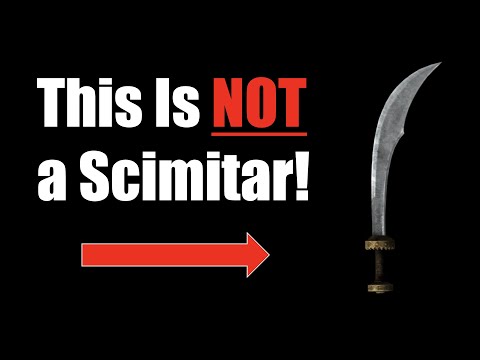
The short answer is yes, a scimitar can be dual wielded, depending on the context and the specific rules being applied. In many fantasy settings, particularly those influenced by tabletop role-playing games like Dungeons & Dragons, scimitars are often categorized as “light” weapons, which makes them eligible for dual wielding. However, the practicality and effectiveness of dual wielding scimitars, or any weapon for that matter, is a more nuanced discussion that we’ll explore in depth.
Understanding the Scimitar
Before delving into the dual-wielding aspect, let’s first establish what a scimitar is. The scimitar is a single-edged sword with a curved blade. This curvature is what distinguishes it from straight swords like longswords or broadswords. Historically, scimitars were prevalent in the Middle East, South Asia, and North Africa. Their design facilitated powerful slashing and cutting motions, especially from horseback. The curve allowed for a longer cutting edge relative to the overall length of the sword.
Different variations of the scimitar exist across different cultures. The Turkish kilij, the Persian shamshir, and the Afghan pulwar are all types of scimitars. These swords were prized for their agility, speed, and effectiveness in mounted combat. The weight and balance of the scimitar typically made it a one-handed weapon, though some longer, heavier versions required two hands.
Dual Wielding: A Fantasy Trope and Its Realities
Dual wielding is a popular trope in fantasy literature, movies, and games. It often depicts characters wielding two weapons simultaneously, unleashing a whirlwind of steel upon their enemies. While visually appealing, the reality of dual wielding is complex.
Historically, true dual wielding was uncommon for several reasons:
- Lack of Defense: Wielding two weapons typically meant sacrificing the use of a shield, which offered crucial protection against attacks.
- Coordination: Effectively using two weapons simultaneously requires exceptional skill and coordination. It’s not simply a matter of swinging two blades; it’s about using them in a synchronized and efficient manner.
- Practicality: In many combat scenarios, a single well-placed strike is more effective than two poorly executed ones. The complexity of dual wielding can hinder reaction time and precision.
Despite these limitations, there are some historical examples of dual weapon techniques. Certain schools of Japanese martial arts included dual-wielding styles, such as the Niten Ichi-ryū, founded by Miyamoto Musashi, which involved wielding a katana and a wakizashi simultaneously. However, even in these styles, dual wielding was a specialized skill practiced by a minority of warriors.
Dual Wielding in Games and Fantasy
In fantasy settings, the rules are often bent to enhance the excitement and spectacle of combat. Many games allow characters to dual wield weapons, including scimitars, often with specific advantages and disadvantages. For instance:
- Damage Output: Dual wielding might increase the overall damage output, allowing for more attacks per round.
- Attack Speed: Characters might be able to attack faster with two weapons than with one.
- Penalties: There are also tradeoffs. Dual wielding often incurs penalties to accuracy or defense. The character might be more vulnerable to attacks or less likely to hit their targets.
- Feats and Abilities: Some games require specific skills, feats, or abilities to effectively dual wield certain types of weapons. This could involve increasing strength, dexterity, or weapon proficiency. The article mentioned, “at least, you need a feat at a higher level.”
Is a Scimitar Suitable for Dual Wielding?
Given the characteristics of the scimitar, its suitability for dual wielding depends on several factors:
- Weight and Balance: The scimitar’s relatively light weight and curved design make it more manageable than heavier, straighter swords. This makes it easier to wield in one hand, which is a prerequisite for dual wielding.
- Length: Shorter scimitars are better suited for dual wielding than longer ones. A shorter blade allows for greater maneuverability and reduces the risk of the weapons colliding.
- Skill: The wielder’s skill is paramount. Dual wielding requires extensive training and practice to master. Without proper technique, the wielder is more likely to hinder themselves than to gain an advantage.
Other Weapon Combinations
The article mentions several other dual wielding combinations:
- Sword and Dagger: This is a more practical and common combination. The sword provides offensive power and reach, while the dagger can be used for parrying, quick strikes, or utility purposes.
- Tomahawk and Bowie Knife: Reflects combinations used with more utilitarian tools with self defense in mind.
- Cutlass and Pistol: Common in naval and pirate settings, the cutlass allowed for close-quarters combat, while the pistol offered ranged firepower.
Frequently Asked Questions (FAQs)
Here are some frequently asked questions related to scimitars and dual wielding:
1. Is a scimitar a one-handed or two-handed weapon?
Generally, a scimitar is a one-handed weapon. Its design emphasizes agility and speed, making it suitable for use in one hand, particularly from horseback. However, some larger versions might be wielded with two hands for greater power.
2. What is a double scimitar?
A double scimitar is a fictional weapon, most famously featured in the Eberron campaign setting of Dungeons & Dragons. It consists of a long haft with a scimitar blade attached to each end, and is wielded with two hands.
3. Can any sword be dual wielded?
In most cases, no. Typically, only lighter weapons can be dual wielded effectively. Attempting to dual wield heavy swords like greatswords would be impractical and cumbersome. Games and fantasy settings often have specific rules regarding which weapons can be dual wielded.
4. Is dual wielding effective in real combat?
The effectiveness of dual wielding is debated. While it can provide an offensive advantage in certain situations, it often comes at the cost of defensive capabilities. A shield is generally considered more valuable in a real combat scenario.
5. What is the best weapon combination for dual wielding?
There is no single “best” combination. It depends on the fighting style, the opponent, and the environment. A sword and dagger combination is often considered practical, offering both offensive and defensive capabilities.
6. Is a scimitar a katana?
No, a scimitar is not a katana. While both are curved, single-edged swords, they originate from different cultures and have different designs. The scimitar is typically associated with the Middle East and South Asia, while the katana is a Japanese sword.
7. What is a pirate sword called?
A pirate sword is commonly called a cutlass. It’s a short, broad sabre designed for close-quarters combat, particularly on ships.
8. Is a scimitar a rapier?
No, a scimitar is not a rapier. The scimitar is a curved, slashing weapon, while the rapier is a long, slender thrusting weapon. They are designed for different fighting styles and combat scenarios.
9. Is a sabre the same as a scimitar?
A sabre is a broader category of weapon, and a scimitar can be considered a type of sabre. A sabre is a curved sword with a single cutting edge, but the term encompasses a wide range of variations.
10. What swords are used in pairs?
While not always considered dual wielding in the traditional sense, the Japanese daishō, consisting of a katana and a wakizashi, were often carried together by samurai. In Chinese martial arts, hook swords are typically used as a pair.
11. Why is dual wielding often considered ineffective?
Dual wielding can be ineffective because it limits blocking capabilities and requires exceptional coordination. It can also be less efficient than using a single weapon in conjunction with a shield.
12. What are dual swords called?
There isn’t a single term for dual swords. They are simply referred to as “dual swords” or “two swords.” The daishō is one example, but this term refers to a specific pair of swords carried by samurai.
13. Why did samurai carry two swords?
Samurai carried the katana and wakizashi as a badge of rank and status. The daishō signified their position in society and was a symbol of their authority.
14. What is a two-handed broadsword called?
A two-handed broadsword is often called a claymore, particularly in the context of Scottish history.
15. What is a two-handed curved sword called?
There isn’t one specific term for a two-handed curved sword, as many different cultures developed curved swords for both one-handed and two-handed use. Examples include the Odachi (O-Katana) and the Swiss Sabre which some of the more common examples.
Conclusion
So, can a scimitar be dual wielded? Yes, but with caveats. Its light weight and curved design make it a more suitable candidate than heavier, straighter swords. However, the effectiveness of dual wielding depends on the skill of the wielder, the specific rules being applied (in games), and the context of the combat situation. The Games Learning Society (GamesLearningSociety.org) may even study such intricacies of games. While dual wielding might be a visually impressive trope in fantasy, the realities of combat often favor a more balanced approach, prioritizing defense and precision over sheer offensive output. Remember that the dual-wielding is an advanced technique that requires dedication, training, and a healthy dose of realism.