Can Druids Turn Into Monstrosities? Unlocking the Secrets of Wild Shape
Fast answer first. Then use the tabs or video for more detail.
- Watch the video explanation below for a faster overview.
- Game mechanics may change with updates or patches.
- Use this block to get the short answer without scrolling the whole page.
- Read the FAQ section if the article has one.
- Use the table of contents to jump straight to the detailed section you need.
- Watch the video first, then skim the article for specifics.
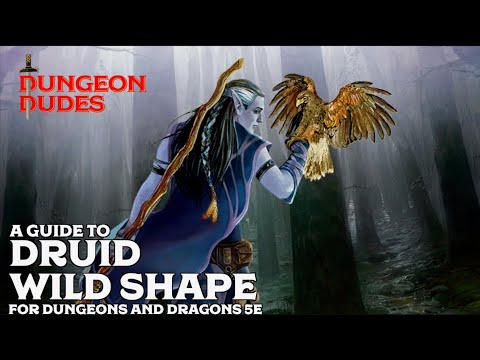
The short answer is: it’s complicated, but generally, no, Druids in Dungeons & Dragons 5th Edition (5e) cannot typically use their Wild Shape ability to transform into monstrosities. The core mechanic of Wild Shape specifically limits the forms a Druid can take to beasts that they have seen before. However, the game is full of exceptions, and the rule is slightly different in Baldur’s Gate 3. Let’s delve into the nuances of this topic to fully understand the restrictions and potential workarounds.
Understanding the Limitations of Wild Shape
The Wild Shape ability, a cornerstone of the Druid class, allows a Druid to magically transform into a beast. The key word here is “beast.” The game categorizes creatures into different types, such as beasts, monstrosities, humanoids, and more. The Wild Shape ability, as described in the Player’s Handbook, is explicitly limited to beasts.
Why Beasts and Not Monstrosities?
The distinction is rooted in the lore and design philosophy of D&D. Beasts are considered natural creatures, part of the ecological order. Druids, as guardians of nature, are thematically aligned with these creatures. Monstrosities, on the other hand, are often unnatural, twisted, or magically created beings, like the Owlbear. Allowing Druids to readily transform into these creatures would dilute their class identity and potentially disrupt game balance.
The Circle of the Moon Exception
The Circle of the Moon Druid subclass is designed to be more potent in Wild Shape, gaining access to higher challenge rating (CR) forms earlier than other Druids. However, even Moon Druids are restricted to beasts. They can’t simply ignore the beast limitation entirely.
Workarounds and Alternative Transformations
While Wild Shape itself is limited, Druids have other avenues to potentially assume monstrous forms:
- Polymorph Spells: Druids have access to spells like Polymorph and Shapechange. These spells allow them to transform into any creature, including monstrosities, provided they meet the spell’s CR limitations.
- Shapechange: This high-level spell (9th level) grants tremendous flexibility, allowing a Druid to transform into any creature with a CR equal to or less than their level. At level 17, a Druid could use Shapechange to become a Giant, a Dragon, or even a Tarrasque (if one were lower than CR 17, but usually these are CR 30).
Baldur’s Gate 3 Exception
In the video game Baldur’s Gate 3, based on D&D 5e, Larian Studios has made some changes to the rules. Namely, Circle of the Moon Druids can transform into the Owlbear form. This is a specific exception within the game and does not reflect the standard rules of D&D 5e tabletop game. This exception appears to be for balance and fun purposes to make playing the Circle of the Moon subclass more fun.
Frequently Asked Questions (FAQs)
1. Can a Druid Wild Shape into an Owlbear in D&D 5e?
According to the core rules of D&D 5e, no. Owlbears are classified as monstrosities, not beasts, making them ineligible for Wild Shape.
2. What about other monstrous creatures? Can a Druid become a Mind Flayer or a Beholder?
Absolutely not with Wild Shape. These creatures are far removed from the natural world that Druids draw their power from. Even with spells like Polymorph or Shapechange, the CR limitations and duration of the transformation would make these options very situational and temporary.
3. Does the “Monster Shape” feature change the rules for Wild Shape?
There is no officially recognized “Monster Shape” feature within the standard D&D 5e ruleset. This might be a homebrew rule or a feature from a different edition of the game. If it does exist in your game, it is a direct variance from the established rules.
4. If a Druid uses Polymorph, do they retain their class abilities?
No. When a creature is transformed by the Polymorph spell, they lose access to their class abilities, including spellcasting. They gain the statistics and abilities of the new form, but none of their original class features.
5. Can a Druid transform into an Elemental?
Regular Druids can not transform into elementals. Circle of the Moon Druids, at 10th level, gain the ability to use Wild Shape to transform into an air elemental, earth elemental, fire elemental, or water elemental. Note the limitations on only these types of elementals.
6. What’s the most powerful beast a Druid can Wild Shape into?
The most powerful beasts a Druid can transform into depend on their level and subclass. Circle of the Moon Druids can transform into more powerful creatures earlier than other Druids. Some strong options include the Giant Constrictor Snake and Dire Wolf at lower levels, and the Giant Scorpion and Killer Whale at higher levels.
7. Can a Druid Wild Shape into a Unicorn?
While some might wish for it, RAW (Rules As Written) states that the ability to transform into a Unicorn is not allowed. Unicorns are classified as celestials, and the ability Wild Shape only works on beasts.
8. What are the limitations on swimming and flying speeds when using Wild Shape?
The Wild Shape feature specifies that you must abide by the limitations on flight and swimming speeds outlined in the Beast Shapes table. If a beast form doesn’t have a swim or fly speed, you can’t use Wild Shape to transform into it if you’re trying to swim or fly, respectively.
9. How do Druids generally feel about monstrosities?
There’s no single answer. Some Druids might view monstrosities as aberrations or corruptions of nature, while others might recognize them as part of the broader ecosystem, albeit a potentially dangerous one. It depends on the Druid’s individual philosophy and experiences. Some Druids might even revere them.
10. Can a Druid transform into a T-Rex?
Not with Wild Shape, unless a homebrew rule is in place. However, a high-level Druid could potentially use Shapechange to assume the form of a T-Rex, provided they meet the CR requirements of the spell.
11. What happens if a Druid in Wild Shape is targeted by a Polymorph spell?
The effects of the Polymorph spell would take precedence. The Druid would be forced into a new form dictated by the Polymorph spell, overriding their Wild Shape transformation.
12. Does Wild Shape have a time limit?
Yes. Wild Shape lasts for a number of hours equal to half the Druid’s level (rounded down). It ends early if the Druid is reduced to 0 hit points, uses a bonus action to dismiss it, or becomes incapacitated or dies.
13. Can a Druid transform into a Tiny beast and infiltrate a secure location?
Yes, this is a common and effective tactic. Druids can transform into Tiny beasts like rats or spiders to gain access to areas that would otherwise be inaccessible. Just be aware that if the Druid gets hurt, the transformation ends!
14. Can you tame an Owlbear?
This is a Dungeon Master (DM) dependent issue. By RAW, Owlbears are extremely difficult to tame, but not impossible. It would require a dedicated effort, likely involving skill checks and roleplaying, and the outcome is not guaranteed. Owlbears are not unintelligent, however, making taming them a challenge.
15. Are there any official D&D adventures that feature Druids transforming into monstrosities?
No official D&D adventures that strictly adhere to RAW feature Druids using Wild Shape to transform into monstrosities. However, a DM can always create their own scenarios and modify the rules to fit their campaign.
Conclusion
While the core rules of D&D 5e limit Druids’ Wild Shape ability to beasts, there are exceptions and alternative methods for assuming other forms, including monstrosities, especially at higher levels. The key lies in understanding the nuances of the rules and the creative use of spells like Polymorph and Shapechange. Always remember to consult with your Dungeon Master (DM) for clarification and to ensure that any homebrew rules are clearly defined. Furthermore, in some cases, specific titles based off of Dungeons and Dragons, such as Baldur’s Gate 3, create exceptions to these rules for better balance and more fun.
For more information on D&D and related topics, consider exploring resources such as the Games Learning Society website at https://www.gameslearningsociety.org/. It can provide insights into the educational and social aspects of gaming.