Can You Become a Vampire in The Witcher 3: Blood and Wine?
Fast answer first. Then use the tabs or video for more detail.
- Watch the video explanation below for a faster overview.
- Game mechanics may change with updates or patches.
- Use this block to get the short answer without scrolling the whole page.
- Read the FAQ section if the article has one.
- Use the table of contents to jump straight to the detailed section you need.
- Watch the video first, then skim the article for specifics.
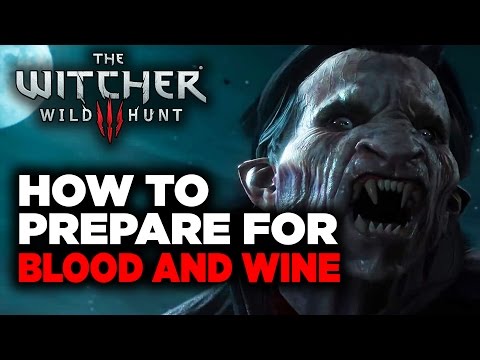
The definitive answer, delivered with the unwavering certainty of a seasoned Witcher: No, you cannot become a vampire in The Witcher 3, including the Blood and Wine expansion. This holds true for Geralt of Rivia and any other character in the game. The Witcher universe operates under specific rules, and vampirism isn’t a contagious condition like in many other fantasy settings. Vampires are a distinct species with their own origins and biology, completely separate from humans and other races. Understanding this fundamental difference is key to appreciating the lore and narrative nuances of the game.
Understanding Vampires in The Witcher Universe
In The Witcher universe, vampires aren’t simply humans transformed by a bite or curse. They are a separate species that arrived on the Continent during the Conjunction of the Spheres, a cataclysmic event that merged different worlds and brought various monsters and races to Geralt’s world. This crucial detail distinguishes them from the common trope of vampires as “undead” or transformed humans.
The Nature of Higher Vampires
Within the vampire hierarchy, higher vampires are the most powerful and complex. They possess incredible strength, agility, and resilience, often defying death itself. These ancient beings can regenerate from almost any wound, making them nearly immortal. Higher vampires can also consume human drinks like wine and vodka. Moreover, their appearance closely resembles humans, making them capable of blending seamlessly into society. This distinguishes them from the more monstrous, lower vampire forms.
Characters like Regis and Dettlaff in Blood and Wine exemplify the complexity of higher vampires. They have their own motivations, desires, and moral codes, demonstrating that not all vampires are inherently evil. This nuanced portrayal is a hallmark of The Witcher’s storytelling.
Blood and Wine and the Vampire Lore
The Blood and Wine expansion delves deeply into the history and culture of vampires, particularly those residing in the duchy of Toussaint. The main story quest La Cage au Fou reveals that vampires descend from three ancient tribes that arrived on the Continent during the Conjunction of the Spheres. The Unseen Elder is an ancient vampire that guards the gate.
While Geralt interacts extensively with vampires throughout the expansion, forming alliances and battling against them, the option to become one is never presented. The game consistently reinforces the idea that vampirism is a defining characteristic of a separate species, not a state of being that can be acquired.
Why Becoming a Vampire Isn’t Possible
Several factors contribute to the impossibility of becoming a vampire in The Witcher 3:
- Biological Difference: Vampires possess a fundamentally different biology than humans. Their physiology is unique, enabling their abilities like regeneration and superhuman strength. This difference isn’t something that can be artificially induced.
- Lore Consistency: The established lore of The Witcher universe consistently portrays vampires as a distinct species. Allowing Geralt or any other human character to transform into a vampire would contradict this core element of the world-building.
- Narrative Implications: Introducing vampirism as a transformable state would have significant narrative implications. It would alter Geralt’s character arc, potentially turning him into a being driven by bloodlust and fundamentally changing his relationship with the world around him.
Geralt remains a Witcher, a monster hunter bound by his code and his humanity. The decision to keep him firmly rooted in this identity is a deliberate choice by the game developers, ensuring the integrity of the character and the consistency of the lore. Understanding the lore of the Witcher universe can be found through various sources, including those provided by the Games Learning Society.
Frequently Asked Questions (FAQs)
Here are 15 frequently asked questions to provide additional valuable information:
-
Can Geralt acquire any vampire-like abilities in The Witcher 3? No, Geralt cannot acquire any vampire-like abilities. He can use potions like Black Blood to harm vampires who attack him, but he doesn’t gain any vampire traits himself.
-
Is there any way to become a monster in The Witcher 3? No, there is no way to become a monster. Geralt always stays as a Witcher.
-
Are there any quests in Blood and Wine that offer a choice to become a vampire? No, there are no quests that offer the option to become a vampire. The narrative focuses on Geralt’s interactions with vampires as an outsider, not on transforming him into one.
-
Can you play as a vampire in any Witcher game? No, you cannot play as a vampire in any official Witcher game. The focus remains on playing as Geralt, the Witcher.
-
What is the closest thing to being a vampire in The Witcher 3? The closest thing to being a vampire is interacting with them through quests and understanding their lore. Geralt’s deep involvement in vampire affairs in Blood and Wine provides a close perspective, without actually transforming him.
-
Who is the most powerful vampire Geralt fights in the game? Dettlaff is widely considered the most powerful vampire Geralt fights, particularly in the Blood and Wine DLC. His strength and agility make him a formidable opponent.
-
Are all vampires hostile in The Witcher 3? No, not all vampires are hostile. Characters like Regis demonstrate that vampires can possess complex motivations and even be allies to humans. However, some, like the Unseen Elder, are villains.
-
What is the “worst” ending in Blood and Wine involving vampires? The “worst” ending involves Geralt being forced to kill Dettlaff, with both Syanna and Anna Henrietta also dying. It represents a complete breakdown of peace and understanding between humans and vampires.
-
Can higher vampires be permanently killed? While higher vampires are incredibly resilient, they can be killed by another higher vampire. Their regeneration is nearly unmatched, but not invulnerable to the powers of their own kind.
-
How do you effectively fight vampires in The Witcher 3? To effectively fight vampires, use damage-over-time (DOT) effects like Poison, Burn, and Bleed to disable their regeneration. The Black Blood potion can also damage vampires that attack Geralt.
-
Who is Syanna in Blood and Wine? Syanna, or Sylvia Anna, is the main antagonist of the Blood and Wine expansion. Her actions and motivations drive the central conflict in Toussaint.
-
What level should I be to start Blood and Wine? It is recommended to be at least level 34 to start Blood and Wine. The enemies and quests are designed for characters at that level. You may also check the GamesLearningSociety.org to know more about the level design in video games.
-
Is Regis a higher vampire? Yes, Regis is a higher vampire and an important ally to Geralt in Blood and Wine. He is a complex character with a rich history and unique perspective.
-
What is the best ending in Blood and Wine? The “best” ending is subjective, but generally, the one where Syanna and Anna Henrietta reconcile, avoiding further bloodshed, is considered the most positive outcome. Dettlaff still dies, but the overall resolution is more peaceful.
-
What is the purpose of the Blood and Wine expansion? Blood and Wine serves as a fitting conclusion to Geralt’s story, allowing players to explore the vibrant new region of Toussaint while unraveling a complex mystery involving vampires, betrayal, and political intrigue. It offers a compelling narrative, engaging quests, and a beautiful open world to explore.
In conclusion, while the world of The Witcher is full of dark creatures and tempting powers, becoming a vampire is not one of the options available to Geralt. The game firmly establishes vampires as a separate species, ensuring the integrity of the lore and maintaining Geralt’s identity as a monster hunter, not a monster himself.