Mastering the Shadows: Choosing When to Sneak Attack in D&D 5e
Fast answer first. Then use the tabs or video for more detail.
- Watch the video explanation below for a faster overview.
- Game mechanics may change with updates or patches.
- Use this block to get the short answer without scrolling the whole page.
- Read the FAQ section if the article has one.
- Use the table of contents to jump straight to the detailed section you need.
- Watch the video first, then skim the article for specifics.
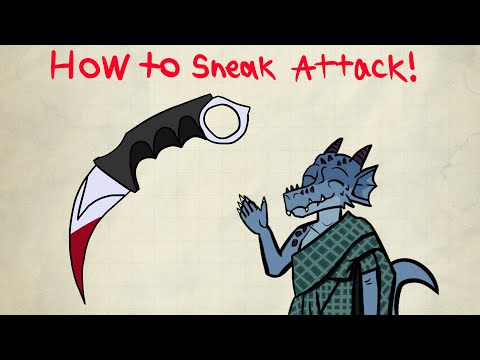
Yes, you can choose when to apply sneak attack damage, but with caveats. It’s not automatically applied on the first hit simply because you meet the conditions. The rogue decides which qualifying attack to enhance with this potent ability, making tactical awareness crucial.
Understanding the Rogue’s Deceptive Power: Sneak Attack Explained
The sneak attack is the defining feature of the rogue class in Dungeons and Dragons 5th Edition. It allows rogues to deal substantial bonus damage, often turning the tide of battle with a single, well-placed strike. However, understanding when and how to use sneak attack effectively is key to truly mastering this class. Many players wonder if they can choose when to apply this extra damage, and the answer, while yes, is nuanced and relies on understanding the specific requirements and limitations.
The core rule is: Once per turn, you can deal extra damage to one creature you hit with an attack if you meet certain conditions. These conditions are centered on either having advantage on the attack roll or having an ally adjacent to the target.
Delving Deeper: The Conditions for Sneak Attack
To trigger sneak attack, you must satisfy these criteria:
- The Attack Type: The attack must be made with a finesse or ranged weapon. This immediately excludes many strength-based weapons and unarmed strikes unless you are utilizing a specific feature that alters that.
- The Advantage Condition: You have advantage on the attack roll. Advantage provides a second die to roll and take the highest, increasing your chances of hitting.
- The Ally Condition: You don’t need advantage if another enemy of the target is within 5 feet of it, that enemy isn’t incapacitated, and you don’t have disadvantage on the attack roll. This condition emphasizes teamwork and positioning.
- Once Per Turn: Most importantly, you can only apply sneak attack damage once per turn, regardless of how many attacks you make.
The flexibility lies in deciding which attack to imbue with this extra damage within that turn.
Tactical Decision-Making: Choosing Your Moment
Let’s say you’re a rogue with the Two-Weapon Fighting fighting style. On your turn, you attack twice. You hit with both attacks, and both qualify for sneak attack because an ally is adjacent to the target. You choose which of those hits receives the sneak attack damage. Perhaps you decide to use it on the second hit after confirming the first hit connects, ensuring maximum damage output.
The Importance of Timing
The “once per turn” rule also opens up interesting strategic possibilities. Because it is not limited to your turn.
Opportunity Attacks and Reactions
Opportunity attacks are attacks triggered by an enemy moving out of your reach. If you meet the sneak attack conditions during an opportunity attack (perhaps an ally is engaged with the enemy), you can apply sneak attack damage. This allows for a unique burst of damage outside of your regular turn.
Readying Actions
Similarly, you can use your action to “Ready” an attack for when a specific trigger occurs. If that trigger occurs on another creature’s turn and creates a sneak attack opportunity, you can capitalize on it. For example, if you “Ready” an attack for when your ally moves into melee range of an enemy, you can then apply sneak attack damage if your attack hits.
Avoiding Common Pitfalls
- Unarmed Strikes: Remember, you can’t use sneak attack with an unarmed strike unless you have a specific class feature or item that allows you to treat them as finesse weapons.
- Disadvantage: Disadvantage cancels out advantage. If you have both, you effectively have neither, and cannot satisfy the advantage condition for sneak attack.
- Multiple Attacks: Rogues typically don’t gain extra attacks from class features like Fighters or Rangers. However, Two-Weapon Fighting or certain spells may grant extra attacks. The “once per turn” rule still applies.
FAQs: Decoding Sneak Attack
1. Does sneak attack have to be the first hit?
No. You can choose when to apply the sneak attack damage as long as you satisfy the conditions on one of your attacks within your turn.
2. Can you only do sneak attack once per turn?
Yes, sneak attack can only be used once per turn, but it is not limited to your turn. This means that you can use sneak attack on your turn, but can also use it on reactions or opportunity attacks on another turn in the round.
3. Can you sneak attack every round?
Yes, assuming the conditions are met each turn, you can sneak attack every round.
4. Do I get sneak attack if I have advantage and disadvantage?
No. Advantage and disadvantage cancel each other out. You need advantage, or the presence of an ally near the target without you having disadvantage.
5. What are the conditions for sneak attack?
The attack must use a finesse or a ranged weapon. You need advantage on the attack roll, or another enemy of the target is within 5 feet of it, that enemy isn’t incapacitated, and you don’t have disadvantage on the attack roll.
6. Does sneak attack only apply to the first attack?
No. No matter how many attacks a rogue can make, sneak attack can only be used on one attack in their turn. However, the ‘once per turn’ rule is very specific, and rogues can add sneak attack damage to attacks made on other turns, such as opportunity attacks with their reaction.
7. Do rogues get a 2nd attack?
Typically, no. Rogues are the only martial class that doesn’t get extra attack at level 5.
8. Do unarmed strikes count for sneak attack?
No. The sneak attack feature works with a weapon that has the finesse or ranged property. An unarmed strike isn’t a weapon, so it doesn’t qualify unless you are using a class or racial feature that states otherwise.
9. How many times can you sneak attack in a round?
Same as always, you can only apply sneak attack once in a round unless otherwise specifically stated.
10. Do I roll for sneak attack?
You don’t roll for sneak attack specifically. You roll your attack as normal, and if you hit while satisfying a condition of sneak attack, you add the sneak attack damage dice to your damage roll.
11. Do you double sneak attack damage on a critical hit?
Yes. When you score a critical hit, you double the number of dice you roll for damage, including sneak attack damage.
12. Is sneak attack always advantage?
No. You can get sneak attack if you have advantage, or the target has a hostile within 5ft of them and you don’t have disadvantage.
13. Can you sneak attack with spells?
In general, any spell that requires an attack roll can be used to sneak attack, provided you meet the other criteria.
14. Can you sneak attack on an opportunity attack?
Yes. If you meet the conditions, you can sneak attack on an opportunity attack as it would take place on another creatures turn.
15. Does sneak attack apply to offhand attacks?
Sneak attack only applies to one attack per turn. You can use it with your offhand attack if you meet the conditions and haven’t already used sneak attack that turn.
Conclusion: The Art of the Rogue
The sneak attack is a powerful tool that defines the rogue class in D&D 5e. Understanding the conditions, limitations, and strategic implications is essential for any player looking to master this class. By understanding the rules, and thinking about how you can influence situations to create more opportunities to inflict your sneak attack damage, you’ll become a valued member of any adventuring party.
For more information on engaging and educational gaming experiences, be sure to check out the Games Learning Society and the innovative work being done on their website: GamesLearningSociety.org.