Can You End UNO with a Reverse Card? The Definitive Guide
Fast answer first. Then use the tabs or video for more detail.
- Watch the video explanation below for a faster overview.
- Game mechanics may change with updates or patches.
- Use this block to get the short answer without scrolling the whole page.
- Read the FAQ section if the article has one.
- Use the table of contents to jump straight to the detailed section you need.
- Watch the video first, then skim the article for specifics.
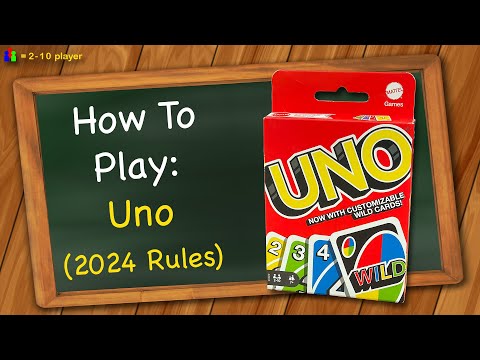
Yes, you absolutely can end a game of UNO with a Reverse card! According to the classic rules, playing a Reverse card as your last card does not require you to draw any additional cards. Instead, you win the game immediately. The Reverse card, a special action card, simply changes the direction of play and doesn’t penalize you for using it to finish your hand. Now that we have that important detail out of the way, let’s dive deeper into the intricacies of UNO strategy, common misconceptions, and some frequently asked questions.
Understanding the Reverse Card and its Strategy
The Reverse card is a deceptively powerful tool in UNO. Its primary function is to switch the direction of play. If the game is moving clockwise, playing a Reverse card changes it to counter-clockwise, and vice versa. This can be particularly useful in a two-player game, where playing a Reverse card effectively gives you another turn.
Strategic Uses
- Delaying opponents: If an opponent is close to winning, the Reverse card can shift the advantage and allow other players a chance to catch up.
- Setting up combos: The Reverse card can be combined with other action cards like Skip or Draw Two to further disrupt your opponents.
- As a final play: It can be tempting to hold onto a Reverse card hoping for the perfect moment, but remember, you can use it as your last card and win!
Common Misconceptions
One common misunderstanding is that playing a Reverse card forces you to draw a card. This is simply not true. You can play it on a matching color or another Reverse card, and if it’s your last card, you win.
Frequently Asked Questions (FAQs) About UNO
To further clarify the rules and strategies surrounding UNO, here are 15 frequently asked questions with detailed answers:
1. What card can you not end on in UNO?
According to the official UNO rules, there are no cards that you explicitly cannot finish on. You can play any card as your last card, including action cards like the Draw Two, Wild Draw Four, Skip, or Reverse, as long as it matches the color or symbol of the top card on the discard pile.
2. What are the rules for the Reverse card in UNO?
The Reverse card changes the direction of play. It can only be played on a matching color or another Reverse card. If played at the start of the game, the direction of play reverses immediately.
3. Can we end UNO with a Draw Two (+2) card?
Yes, you can end UNO with a Draw Two card. However, the next player must still draw two cards before the round ends. These cards are counted when tallying points.
4. Can you end a game of UNO on a Wild card?
Absolutely. There’s no rule prohibiting you from going out on a Wild Card. Once the Wild Card is played, the game is won, and no further action is required.
5. Can you end UNO with a Wild Draw Four (+4) card?
Yes, you can end UNO with a Wild Draw Four card, but the next player must draw four cards before the game officially ends. Points will then be tallied.
6. Can you win UNO with a Swap Hands card?
Yes, you can end a game with a Swap Hands card, just be aware that you will still need to swap hands with another player before you actually win.
7. Is stacking allowed in UNO?
Officially, stacking is not allowed in UNO. This means you cannot play a Draw Two card on top of another Draw Two or a Wild Draw Four on top of a Draw Two (or vice versa) to increase the penalty for the next player.
8. What happens in UNO if the first card is a Reverse?
If a Reverse card is the first card flipped from the draw pile at the beginning of the game, the direction of play immediately reverses. The player to the dealer’s left would then take the first turn.
9. Can you end UNO with a Wild Shuffle Hands card?
Yes, a Wild Shuffle Hands card can be used as your last card to end the game, treating it like a normal Wild Card. No further action is required.
10. Can UNO end in a tie?
While rare, UNO can technically end in a tie if determined by the group. Rules on how to handle ties vary, but often involve replaying the round or having a high card draw to break the tie.
11. What are the consequences of a false “UNO!” call?
If a player fails to call “UNO!” when they have only one card left, and another player notices before the card is played, they must draw penalty cards (typically three cards).
12. Can you put a Draw Four (+4) on a Draw Two (+2)?
No, as mentioned earlier, stacking is not allowed in UNO. You cannot place a Draw Four on a Draw Two or vice versa.
13. What is the “no bluffing” rule in UNO?
The “no bluffing” rule, if implemented, disables the ability to challenge a Wild Draw Four card. Normally, if you suspect a player played a Wild Draw Four illegally (i.e., they had a card of a matching color), you can challenge them. If they were bluffing, they draw four cards; if not, you draw six. The “no bluffing” rule removes this element.
14. Can you stack skip cards in UNO?
While there are house rules that may allow it, in general you can not stack skip cards.
15. What happens when you get a false Uno?
A false uno is when a player forgets to call “UNO!” before someone notices. This results in a three-shot penalty.
Mastering UNO: Beyond the Basics
While understanding the rules is crucial, mastering UNO involves strategic gameplay and understanding your opponents. Here are some advanced tips:
- Card counting: Pay attention to which cards have been played to anticipate your opponents’ moves and the remaining cards in the draw pile.
- Bluffing: Sometimes, it’s beneficial to mislead your opponents about the cards you hold.
- Adaptability: Be prepared to adjust your strategy based on the flow of the game and the actions of other players.
- Use action cards strategically: Don’t waste action cards; time them for maximum impact.
Learning Through Games
UNO, like many other games, provides valuable learning experiences. It enhances strategic thinking, mathematical skills (scoring), and social interaction. To explore the educational potential of games further, consider visiting the Games Learning Society at GamesLearningSociety.org. This organization promotes the use of games in education and research.
Conclusion
So, to reiterate, yes, you can end a game of UNO with a Reverse card. Now that you are armed with this definitive guide to UNO, including a detailed explanation on the Reverse card and a comprehensive list of FAQs, you are more than prepared to dominate the game at your next friendly gathering. Go forth and play!