Unleash the Magic: Creating Rainbows Indoors!
Fast answer first. Then use the tabs or video for more detail.
- Watch the video explanation below for a faster overview.
- Game mechanics may change with updates or patches.
- Use this block to get the short answer without scrolling the whole page.
- Read the FAQ section if the article has one.
- Use the table of contents to jump straight to the detailed section you need.
- Watch the video first, then skim the article for specifics.
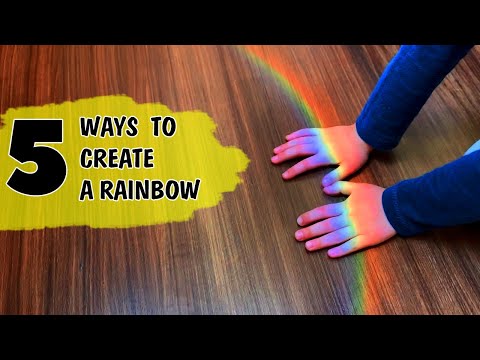
Yes, absolutely! You can make a rainbow inside your house. While natural rainbows require sunlight and raindrops, the fundamental principle behind their creation is the dispersion of light. This means separating white light into its component colors. By understanding this, we can replicate the effect indoors using readily available materials.
Understanding the Science of Rainbows
Before diving into the how-to, let’s briefly recap the science. A rainbow is an optical phenomenon caused by refraction, internal reflection, and dispersion of light in water droplets. Sunlight enters a raindrop, bends (refracts) as it enters, reflects off the back of the droplet, and refracts again as it exits. Because different wavelengths of light (different colors) bend at slightly different angles, the white light separates into the familiar spectrum of colors we see in a rainbow.
Rainbow Recipes: Indoor Edition
There are several methods to conjure rainbows within the comfort of your home. Here are some popular and easy-to-execute techniques:
Method 1: The Mirror and Water Trick
This is a classic and simple method.
- Gather Your Supplies: You’ll need a shallow dish (like a baking dish), water, a small mirror, and a white piece of paper or a white wall.
- Set Up: Fill the dish with water. Place the mirror in the water, leaning it against the edge of the dish at an angle.
- Shine the Light: Position the dish near a window where sunlight can directly hit the mirror. Alternatively, use a bright flashlight in a darkened room.
- Catch the Rainbow: Adjust the angle of the mirror until the reflected light hits the white paper or wall. With a bit of tweaking, you should see a miniature rainbow appear.
The mirror reflects the light through the water, which acts as a prism, separating the white light into its constituent colors.
Method 2: The Glass of Water Prism
Similar to the mirror method, this one relies on the refractive properties of water.
- The Basics: You need a clear glass of water and a sheet of white paper.
- Sunlight is Key: Place the glass of water near a sunny window.
- Positioning Matters: Position the glass so that sunlight shines through it onto the paper. Adjust the angle of the glass and the paper until a rainbow appears on the paper.
The curved surface of the glass and the water inside act as a lens and prism, bending and separating the light.
Method 3: The CD/DVD Rainbow
This method utilizes the diffraction grating on the surface of a CD or DVD.
- What You Need: A CD or DVD and a light source (sunlight or a flashlight).
- Shine On: Hold the CD/DVD so that light shines on its reflective surface.
- Observe: Look at the surface of the CD/DVD. You should see a rainbow-like pattern reflected from the grooves.
The closely spaced grooves on the CD act as a diffraction grating, scattering the light and separating it into its component wavelengths, creating the rainbow effect.
Method 4: The Garden Hose Rainbow (Miniature Outdoor Version)
While technically indoors, this one is best near a window.
- Essential Items: A garden hose with an adjustable nozzle and sunlight.
- Create a Mist: Adjust the nozzle to create a fine mist of water.
- Position Yourself: Stand with the sun behind you and spray the mist in front of you.
The water droplets in the mist act as tiny prisms, creating a miniature rainbow. The same principle applies to rainbows seen near waterfalls.
Method 5: Rainbow Bubbles
This is fun and interactive, especially for kids.
- Bubble Solution: You’ll need a standard bubble solution.
- Catch the Light: Blow bubbles and observe them in sunlight.
The thin film of the bubble solution refracts and interferes with light waves, creating iridescent colors that resemble a rainbow. The GamesLearningSociety.org could develop a bubble-blowing simulation to illustrate this principle in an engaging way.
Frequently Asked Questions (FAQs) About Indoor Rainbows
Here are some frequently asked questions to help you better understand and create your own indoor rainbows:
-
Do I need sunlight to make an indoor rainbow? While sunlight is ideal, a bright white light source like a flashlight can also work, especially in a darkened room.
-
Can I make a rainbow with a colored light? No. Rainbows are formed by the dispersion of white light. A colored light source is already filtered, so it won’t separate into a full spectrum.
-
What if I don’t have a mirror? While a mirror is most effective, any reflective surface can work in a pinch, though the rainbow may be less defined.
-
Why is the angle of the light so important? The angle of incidence of the light on the water or prism determines how effectively the light is refracted and separated.
-
Can I make a double rainbow indoors? Replicating a double rainbow indoors is challenging. It requires very specific light conditions and droplet arrangements, which are difficult to control in a small space.
-
Is it possible to create a full circular rainbow indoors? No. A full circular rainbow requires a high vantage point and specific atmospheric conditions, neither of which are achievable indoors.
-
Why does the CD method work? The microscopic grooves on a CD or DVD act as a diffraction grating, which separates light into its component colors through diffraction and interference.
-
Are indoor rainbows as vibrant as natural rainbows? Generally, no. Indoor rainbows are often less vibrant due to the limited scale and intensity of the light source.
-
Can I use a prism instead of water? Absolutely! A prism is specifically designed to refract and disperse light, making it an excellent tool for creating rainbows.
-
What is “virga” and how does it relate to rainbows? Virga is rain that evaporates before reaching the ground. Rainbows can form from virga, even if no rain is falling at the surface. You would need a specific environmental setup outdoors to see the virga.
-
How does the Games Learning Society use principles of light and color? The Games Learning Society uses principles of light and color in the design and development of educational games, creating visually engaging experiences that enhance learning and understanding of scientific concepts. You can learn more at: https://www.gameslearningsociety.org/.
-
Why can’t I touch a rainbow, even an indoor one? Rainbows are optical phenomena. They are formed by light interacting with water or a prism. There’s no physical object to touch; it’s simply the way light is being bent and dispersed to your eye.
-
Can I make a rainbow at night? Yes, but it would be a “moonbow,” created by moonlight instead of sunlight. It’s fainter and harder to see, requiring a very bright moon and specific atmospheric conditions. Indoors, you would need an extremely powerful white light source to mimic moonlight.
-
Can I make a rainbow in a jar? Yes, but not in the way you might think. You can create a rainbow effect by layering liquids of different densities and colors in a jar, creating a visually appealing layered effect.
-
What are some fun facts about rainbows? Rainbows are always opposite the sun. Each person sees a slightly different rainbow because the light reflects at a slightly different angle to each individual’s eye. Double rainbows occur when light reflects twice inside the raindrops.
Rainbow Mastery: Tips and Tricks
- Experiment with angles: The position of the light source, the water, and the surface you’re projecting onto are crucial. Small adjustments can make a big difference.
- Use a dark background: A dark room or background will help the rainbow stand out more vividly.
- Control the light source: Use a focused beam of light for a more defined rainbow.
- Be patient: It may take some practice to get the perfect rainbow. Don’t give up!
Creating rainbows indoors is a fun, educational, and awe-inspiring activity that brings a touch of magic into your home. By understanding the science behind rainbows and experimenting with different methods, you can unlock the beauty of light and color and create your own miniature rainbows anytime you want.