Navigating the Hyrulean Tapestry: Do All Zelda Games Tell the Same Story?
Fast answer first. Then use the tabs or video for more detail.
- Watch the video explanation below for a faster overview.
- Game mechanics may change with updates or patches.
- Use this block to get the short answer without scrolling the whole page.
- Read the FAQ section if the article has one.
- Use the table of contents to jump straight to the detailed section you need.
- Watch the video first, then skim the article for specifics.
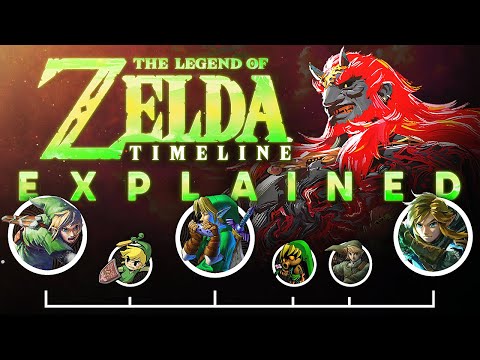
The Legend of Zelda is a cornerstone of gaming, a franchise synonymous with adventure, exploration, and timeless conflict. But lurking beneath the surface of its enchanting world is a question that has plagued fans for decades: Do all the Zelda games have the same story? The short answer is a resounding no. While they share common threads and recurring characters, each game offers a unique narrative experience, a distinct chapter in the sprawling legend of Hyrule.
The Core Elements: Familiar Faces, Familiar Struggles
At first glance, the argument for sameness is understandable. Most Zelda games feature a young hero named Link, tasked with rescuing Princess Zelda from the clutches of the malevolent Ganon (or his human form, Ganondorf). The Triforce, a symbol of ultimate power, often plays a central role, and the setting is frequently the kingdom of Hyrule, or a related world. These elements create a familiar framework, a comforting sense of recognition for returning players.
However, focusing solely on these recurring elements obscures the nuances that differentiate each game. While the overarching theme of good versus evil remains consistent, the specifics of the conflict, the relationships between the characters, and the world itself are constantly evolving.
Varied Narratives: More Than Just a Rescue Mission
Think about Majora’s Mask, a dark and introspective tale where Link is tasked with saving the land of Termina from a falling moon in just three days. Or consider Link’s Awakening, a dreamlike adventure where Link must awaken the Wind Fish to escape a mysterious island, questioning the very nature of reality. These stories deviate significantly from the standard “rescue the princess” trope.
Even when the core premise involves saving Zelda, the context and execution vary wildly. In Ocarina of Time, Link travels through time to defeat Ganondorf, confronting the consequences of his actions on both his younger and older self. The Wind Waker sees Link embarking on a seafaring quest across a flooded Hyrule to rescue his sister and ultimately confront Ganondorf’s lingering evil. Each game explores different themes, such as courage, sacrifice, regret, and hope, weaving them into a tapestry that is far more complex than a simple repetition of the same plot.
Diverging Timelines: A Multiverse of Hyrule
The complexity is further compounded by the infamous Zelda timeline. The events of Ocarina of Time created a branching timeline, resulting in three distinct paths: the Adult Timeline, the Child Timeline, and the Fallen Hero Timeline. Each timeline features its own set of games, characters, and historical events, further diversifying the narrative landscape of the Zelda universe.
The existence of these timelines underscores the idea that the Zelda games are not simply re-tellings of the same story, but rather alternate versions of the same legend, influenced by different choices and circumstances. While some speculate that the timelines may eventually merge, as hinted at in Breath of the Wild, this only adds another layer of intrigue to the overarching narrative.
The Ever-Evolving Hyrule
Ultimately, the beauty of the Zelda series lies in its ability to remain both familiar and fresh. The recurring elements provide a comforting foundation, while the unique narratives and evolving world keep the experience engaging and unpredictable. Each game offers a new perspective on the legend of Zelda, exploring different facets of Hyrule and its inhabitants.
The narrative depth and storytelling techniques used in Zelda games can be studied and enjoyed for its creativity, and this extends to education as well. Consider exploring the Games Learning Society to see how gaming concepts are linked with education. You can find them at https://www.gameslearningsociety.org/.
Frequently Asked Questions (FAQs) About the Zelda Story
Here are some frequently asked questions about the storylines in The Legend of Zelda series:
1. Does every Zelda game have the same plot?
No, while many Zelda games share overarching themes and recurring characters like Link, Zelda, and Ganon, each game presents a different narrative with unique scenarios, locations, and plot details.
2. Do all Zelda games follow the same storyline?
Not exactly. Some games are direct sequels (like Majora’s Mask to Ocarina of Time), while others are loosely connected within the overarching timeline. However, most Zelda games can be enjoyed as standalone experiences without prior knowledge of other titles.
3. Are all the Zelda stories connected?
Yes, generally, all Legend of Zelda games take place within a single, albeit complex and branching, timeline. This timeline has split into multiple paths due to events in Ocarina of Time.
4. Do all of the Legend of Zelda games take place in the same universe?
For the most part, yes. The majority of games are set in Hyrule, though some take place in other regions like Termina (Majora’s Mask) or Holodrum and Labrynna (Oracle of Seasons and Oracle of Ages, respectively).
5. What is the biggest gap between Zelda games?
As of this writing, the record between Breath of the Wild and Tears of the Kingdom is one of the longest gaps in the series’ release history.
6. Should I play all Zelda games in order?
It’s not essential. While some games have direct sequels, the majority are self-contained stories. Playing A Link to the Past before A Link Between Worlds is recommended, but otherwise, feel free to jump in wherever you like.
7. Can you play Zelda games in any order?
Yes, almost always. Each game introduces familiar characters in a unique, stand-alone story. You can generally pick whichever one you want, and start your adventure!
8. Do the Zelda timelines merge?
The timelines split after Ocarina of Time, but some theories and hints, particularly in Breath of the Wild, suggest a potential convergence.
9. Are Ocarina of Time and Breath of the Wild connected?
While not a direct sequel in terms of plot, Breath of the Wild contains numerous references and connections to Ocarina of Time, including elements of its world and lore. The degree to which they’re “connected” is a subject of ongoing debate among fans.
10. Does it matter what Zelda game you play first?
Not really. Most Zelda games serve as good entry points to the series. A Link to the Past is often recommended due to its classic gameplay and well-structured adventure.
11. Is Ganon in every Zelda game?
Ganon, or his human form Ganondorf, is the primary antagonist in many Zelda games. While not present in every single title, his influence is often felt even when he doesn’t directly appear.
12. Which Zelda game has the best plot?
This is subjective, but Ocarina of Time is frequently cited as having one of the best plots due to its time travel mechanics, compelling characters, and epic scope.
13. What is the only Zelda game without a hero?
This is a bit of a philosophical question! Some argue that Link’s Awakening presents a more morally ambiguous scenario where Link’s actions may not be entirely heroic.
14. Is Ganondorf the same in every game?
The official timeline suggests that each version of Ganondorf is essentially the same being, reincarnated or existing in different timelines.
15. Do all timelines lead to Breath of the Wild?
Nintendo has intentionally left Breath of the Wild’s placement in the timeline ambiguous, implying that it could potentially fit at the end of any of the existing timelines.