Do Druids Need a Focus to Wild Shape? The Definitive Guide
Fast answer first. Then use the tabs or video for more detail.
- Watch the video explanation below for a faster overview.
- Game mechanics may change with updates or patches.
- Use this block to get the short answer without scrolling the whole page.
- Read the FAQ section if the article has one.
- Use the table of contents to jump straight to the detailed section you need.
- Watch the video first, then skim the article for specifics.
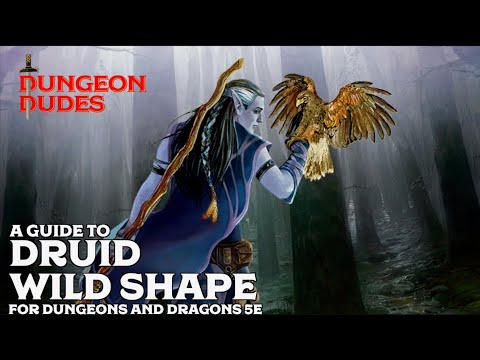
No, a druid does not need a spellcasting focus to use Wild Shape. Wild Shape is a transformative ability that draws upon the druid’s innate connection to nature, rather than relying on the manipulation of magical energies through a focus. It is a core class feature that allows a druid to magically assume the shape of a beast they have seen before, offering versatility in combat, exploration, and roleplaying scenarios.
Understanding the Druid’s Spellcasting and Wild Shape
Druids in Dungeons & Dragons 5th Edition are unique in that they are both powerful spellcasters and formidable shapeshifters. While their spellcasting relies heavily on a druidic focus, which channels the power of nature to cast spells, their Wild Shape ability operates independently. This distinction is crucial for understanding how to effectively play a druid.
Druidic Focus: The Conduit for Spells
A druidic focus serves as a channel through which a druid focuses their magical energies when casting spells. This focus can take many forms, such as a sprig of mistletoe, a wand or scepter made of yew, a staff drawn from a living tree, or a totem object. The focus effectively replaces the need for specific material components that some spells require, streamlining the spellcasting process.
Wild Shape: Innate Transformation
Wild Shape, on the other hand, is an inherent ability rooted in the druid’s deep connection to the natural world. It’s not about manipulating external magical forces, but rather tapping into the transformative potential within themselves. Consequently, Wild Shape doesn’t require a druidic focus to function. This allows druids to transform even in situations where they are unable to access or use their focus, such as when imprisoned or disarmed.
Wisdom: The Druid’s Guiding Star
While a focus isn’t needed for Wild Shape, it’s essential to understand the druid’s key ability score: Wisdom. Wisdom governs both the power of the druid’s spells and the effectiveness of their skills like Perception, Survival, and Animal Handling. A high Wisdom score allows a druid to prepare more spells and increases the potency of those spells, making it the most important stat for a druid build. Constitution is generally the second-most important stat, as many Druid spells are concentration based.
FAQs: Delving Deeper into Druid Mechanics
To further clarify the relationship between druidic focuses and Wild Shape, here are 15 frequently asked questions:
FAQ 1: Can a druid cast spells while in Wild Shape?
Generally, no. The Wild Shape ability states that you can’t cast spells while transformed unless the specific beast form you’ve taken allows you to speak and provide somatic components, which is exceedingly rare. There are some specific abilities, such as those granted by the Circle of the Moon subclass, that can alter this.
FAQ 2: What happens to my druidic focus when I Wild Shape?
When you transform using Wild Shape, your equipment, including your druidic focus, merges into your new form. The equipment doesn’t provide any benefits while merged. This means you can’t use your focus to cast spells while transformed unless you have a specific ability that allows it.
FAQ 3: Can I use Shillelagh on my Wild Shape form?
No. The Shillelagh cantrip requires you to target a club or staff that you are currently wielding. When you are in Wild Shape, you are not wielding a club or staff (unless your form happens to be wielding one). Your Druidic focus is also integrated into your Wild Shape form and cannot be targeted.
FAQ 4: Does Wild Shape break concentration on spells?
No, Wild Shape does not inherently break concentration. You can maintain concentration on a spell while using Wild Shape. This is a powerful tactic, allowing you to cast a concentration spell and then transform to enhance your combat capabilities.
FAQ 5: What are the limitations of Wild Shape?
Wild Shape has several limitations: you can only transform into beasts you have seen before; the beast’s Challenge Rating (CR) is limited by your druid level; you retain your alignment, personality, and mental stats, but adopt the beast’s physical stats; and you can’t cast spells in beast form (usually). The number of hours you can stay in beast shape is equal to half your druid level (rounded down).
FAQ 6: What is the best druid circle for Wild Shape?
The Circle of the Moon is widely considered the best druid circle for Wild Shape. Circle of the Moon druids gain access to stronger beast forms earlier in their progression, allowing them to transform into creatures with higher CR and gain additional combat benefits.
FAQ 7: What is the most powerful druid Wild Shape?
The “most powerful” Wild Shape depends on the situation and your druid level. Some notable options include the Giant Vulture, Giant Constrictor Snake, Giant Scorpion, Killer Whale, Fire Elemental, Giant Crocodile, Water Elemental, and Mammoth. Each form offers unique advantages in different scenarios.
FAQ 8: Can a druid Wild Shape into an Owlbear?
No. Druids can only transform into beasts, while an Owlbear is classified as a monstrosity.
FAQ 9: Can a druid speak Druidic in Wild Shape?
Only if the beast form is capable of speaking. For example, a druid transformed into a raven or parrot could potentially speak Druidic (or any language they know).
FAQ 10: What happens if I take damage in Wild Shape?
When you take damage in Wild Shape, the damage reduces the beast form’s hit points first. Once the beast form’s hit points are reduced to zero, any remaining damage carries over to your normal form.
FAQ 11: Can Wild Shape be dispelled?
No. Wild Shape is not a magical spell, but a transformative ability. It cannot be removed with effects like Dispel Magic and works even within anti-magic zones.
FAQ 12: Does Wild Shape break invisibility?
No, Wild Shape does not inherently break invisibility. Invisibility is broken by performing an action that makes the character visible, such as casting a spell. Because Wild Shape is an innate transformation, and not a spell, it does not break invisibility.
FAQ 13: Can a druidic focus be a tattoo?
Yes, provided the tattoo was created with the intention of serving as a druidic focus. It must be an object or symbol that holds significance to the druid’s connection with nature.
FAQ 14: What races make good druids?
Several races are well-suited to the druid class. Wood Elves and Wood Half-Elves gain a bonus to Wisdom and increased movement speed, which are both beneficial. Other strong choices include Variant Humans (for a feat at level 1) and races with abilities related to nature or healing.
FAQ 15: How many times can I use Wild Shape?
You can use Wild Shape twice between short or long rests, starting at level 2. You regain expended uses when you finish a short or long rest.
Optimizing Your Druid Gameplay
To maximize your effectiveness as a druid, focus on building a strong foundation with high Wisdom and Constitution scores. Utilize Wild Shape strategically, considering the specific needs of the situation. Remember that your druidic focus is essential for your spellcasting, but not for your transformative abilities. Understanding the nuances of both mechanics will empower you to become a formidable force of nature in your D&D campaign.
By understanding the core mechanics of the Druid class, including the role of a Druidic Focus and the unique rules governing Wild Shape, players can craft compelling and effective characters that embody the power and versatility of nature. The distinction between spellcasting, which relies on a focus, and Wild Shape, which is an innate ability, is key to mastering this fascinating class.
And as always, remember that learning is an adventure! If you are interested in educational games and simulations, check out the Games Learning Society at GamesLearningSociety.org!