Do F1 Teams Have Their Own Simulators? A Deep Dive into the Virtual World of Racing
Fast answer first. Then use the tabs or video for more detail.
- Watch the video explanation below for a faster overview.
- Game mechanics may change with updates or patches.
- Use this block to get the short answer without scrolling the whole page.
- Read the FAQ section if the article has one.
- Use the table of contents to jump straight to the detailed section you need.
- Watch the video first, then skim the article for specifics.
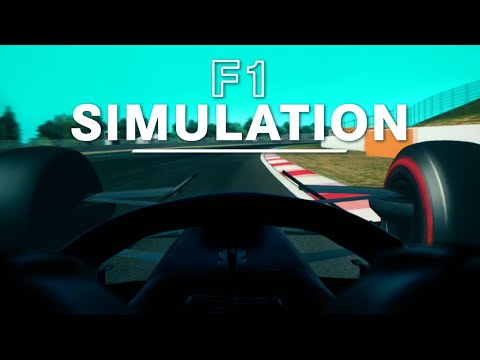
Yes, absolutely! Every Formula 1 team has its own sophisticated simulator. These aren’t your average gaming setups; they are highly advanced, multi-million dollar pieces of technology crucial for car development, driver training, and race strategy preparation. Let’s delve into the intricate world of F1 simulators and explore their significance in modern racing.
The Evolution of F1 Simulators: From Basic Tools to Crucial Assets
In the early days, simulators were relatively rudimentary. They provided a basic visual representation of the track and allowed drivers to get a feel for the circuit layout. However, as technology advanced, so did the sophistication of these simulators. Today’s F1 simulators are incredibly realistic, incorporating complex physics engines, detailed track models, and force feedback systems that mimic the sensations experienced in a real F1 car.
The evolution reflects the growing importance of data and simulation in motorsport. Teams can now test new aerodynamic components, suspension setups, and engine mappings in a virtual environment, saving significant time and resources compared to track testing. This virtual experimentation allows engineers to push boundaries and explore innovative solutions without the real-world risks and limitations.
Inside an F1 Simulator: A Glimpse into Cutting-Edge Technology
An F1 simulator isn’t just a computer and a steering wheel. It’s a meticulously designed system that attempts to recreate the experience of driving a Formula 1 car as accurately as possible. Here’s a breakdown of the key components:
- The Cockpit: This is a replica of the actual cockpit of an F1 car, complete with the same steering wheel, pedals, and seat. The steering wheel is packed with buttons and switches, allowing the driver to adjust various car settings, just like in a real race.
- The Motion Platform: This is the heart of the simulator. It’s a complex hydraulic or electric system that moves the cockpit in response to the virtual environment. This provides the driver with realistic sensations of acceleration, braking, and cornering forces. Some platforms can even simulate bumps and vibrations in the road surface.
- The Visual System: High-resolution screens or projectors surround the cockpit, providing a 360-degree view of the track. The graphics are incredibly detailed, with accurate representations of the track surface, surrounding scenery, and even weather conditions.
- The Software: This is where the magic happens. Sophisticated physics engines simulate the behavior of the car, taking into account factors like aerodynamics, tire grip, and engine performance. The software also allows engineers to make changes to the car’s setup and analyze the resulting performance.
- Data Acquisition: Just like in real life, every aspect of the simulation is recorded. Engineers can analyze this data to understand how the car is performing, identify areas for improvement, and develop optimal race strategies.
The Role of Simulators in F1: More Than Just Driver Training
While driver training is an important aspect, F1 simulators are used for a wide range of purposes:
- Car Development: This is arguably the most crucial role. Simulators allow teams to virtually test new aerodynamic components, suspension setups, and engine mappings without the expense and limitations of track testing.
- Race Strategy Preparation: Teams use simulators to run countless race simulations, exploring different pit stop strategies, tire choices, and fuel loads. This helps them to develop the optimal strategy for each race.
- Driver Familiarization: Simulators allow drivers to learn new tracks or re-familiarize themselves with existing ones before arriving at the circuit. This can be particularly useful for drivers joining a new team or racing at a track for the first time.
- Accident Recreation and Analysis: In the unfortunate event of an accident, simulators can be used to recreate the incident and analyze the contributing factors. This can help to improve safety and prevent similar accidents from happening in the future.
- Testing New Technologies: F1 is a hotbed of innovation, and simulators provide a safe and cost-effective environment to test new technologies before they are implemented on the track.
FAQs: Your Questions About F1 Simulators Answered
Here are 15 frequently asked questions about F1 simulators:
-
How much does an F1 simulator cost? A top-of-the-line F1 simulator can cost anywhere from $1 million to over $10 million, depending on its sophistication and features.
-
Who operates the simulator? A team of specialized engineers and technicians operate the simulator. They are responsible for maintaining the hardware, running the software, and analyzing the data.
-
How realistic are F1 simulators? Modern F1 simulators are incredibly realistic, accurately replicating the driving experience. However, they can’t perfectly capture every aspect of real-world racing, such as the physical strain and unpredictable environmental factors.
-
Can anyone use an F1 simulator? Generally, access to F1 simulators is restricted to team drivers, engineers, and development personnel. They are highly specialized tools and require significant expertise to operate effectively.
-
Do simulators replace track testing entirely? No. Simulators are a valuable tool, but they can’t completely replace track testing. Real-world testing is still essential for validating simulator results and fine-tuning car setups.
-
What is the role of a driver in the simulator? The driver provides feedback to the engineers on how the car feels and performs in the simulator. They also help to validate the simulator’s accuracy and identify areas for improvement.
-
How often do F1 teams use their simulators? F1 teams use their simulators extensively, often running simulations 24/7 in the lead-up to a race.
-
Are simulator results always accurate? While highly accurate, simulator results are still based on models and assumptions. Real-world conditions can vary, so it’s important to validate simulator predictions with track testing.
-
How has simulation technology improved over the years? Simulation technology has advanced dramatically, with improvements in physics engines, graphics, and motion platforms. This has led to more realistic and accurate simulations.
-
Do all F1 teams use the same simulator software? No, each team typically develops its own proprietary simulator software, tailored to its specific needs and resources.
-
What is the biggest challenge in developing a good F1 simulator? The biggest challenge is creating a physics engine that accurately simulates the complex interactions between the car, the tires, and the track surface.
-
How important is driver feedback in simulator development? Driver feedback is crucial for validating the simulator’s accuracy and identifying areas for improvement. Experienced drivers can provide valuable insights into how the car feels and behaves.
-
Can simulators be used to train junior drivers? Yes, simulators are increasingly being used to train junior drivers, helping them to develop their skills and prepare for a career in motorsport. The Games Learning Society acknowledges the educational value of simulation in various fields, including professional development.
-
Are there any ethical concerns regarding the use of simulators in F1? Some argue that the extensive use of simulators gives an unfair advantage to teams with greater resources, as discussed on GamesLearningSociety.org. However, most believe that simulators are a valuable tool for improving safety and performance.
-
What does the future hold for F1 simulation technology? The future of F1 simulation technology is likely to involve even more realistic and immersive experiences, with advancements in virtual reality, augmented reality, and artificial intelligence.
The Future of Racing: A Blend of Reality and Simulation
F1 simulators have become an indispensable part of modern racing. They allow teams to develop faster cars, prepare more effectively for races, and train drivers in a safe and cost-effective environment. As technology continues to evolve, the line between the virtual and real worlds will continue to blur, making simulators even more crucial to success in Formula 1. The increasing sophistication reflects the importance of combining real-world experience with robust simulation capabilities.