Does One Villager Count as a Village in Minecraft?
Fast answer first. Then use the tabs or video for more detail.
- Watch the video explanation below for a faster overview.
- Game mechanics may change with updates or patches.
- Use this block to get the short answer without scrolling the whole page.
- Read the FAQ section if the article has one.
- Use the table of contents to jump straight to the detailed section you need.
- Watch the video first, then skim the article for specifics.
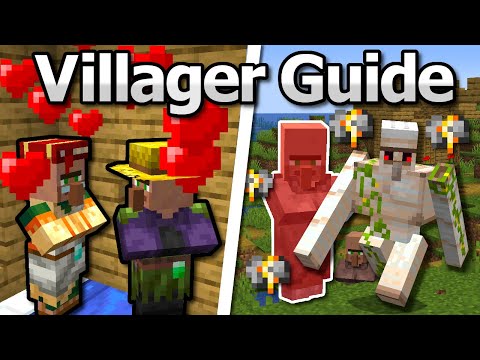
Yes, believe it or not, in the blocky world of Minecraft, one villager and one bed are all it takes to technically qualify as a village. The game’s internal mechanics are surprisingly lenient on what it considers a settlement, though perhaps “village” is a strong word for it. This bare minimum requirement opens up interesting possibilities for player-created settlements and manipulating villager behavior. Let’s delve deeper into the mechanics behind this seemingly simple question.
The Bare Bones of a Village: Beds and Inhabitants
Minecraft’s definition of a village is predicated on the presence of beds and villagers. More specifically, the game registers a location as a village when there is at least one bed present and a villager nearby that can claim it. This system is the backbone of villager breeding and trade mechanics. If there are no beds, villagers won’t breed, and the village will remain stagnant.
It’s a pragmatic system, really. The game needs a way to track potential breeding centers and manage the villager population dynamically. Think of it as the absolute minimum viable product for a functional (albeit tiny) society within Minecraft’s digital ecosystem.
Beyond the Minimum: Expanding and Thriving
While one villager and one bed constitute a village, a thriving settlement needs far more. Villager happiness, breeding, and trade require a stable environment, sufficient housing (beds), and access to workstations. This is where player intervention becomes crucial. Constructing secure buildings, providing light to deter hostile mobs, and ensuring a steady supply of food all contribute to a village’s prosperity.
A larger village also unlocks more complex interactions with the villagers. You can establish a robust trading system with a variety of professions, build defenses to protect them from raids, and create a truly self-sustaining community.
Manipulating the System: Villager Relocation and Breeding Farms
The “one villager, one bed” rule has led to creative gameplay strategies. Players often exploit this to relocate villagers, establish remote trading posts, and create villager breeding farms. By strategically placing beds and workstations, you can control villager populations and efficiently generate new traders with desired professions.
This also plays into the game’s exploration aspect. You can take a villager from a naturally spawned village and establish another one elsewhere in the world. You can even create a “zombie village,” which has a 2% chance in Java Edition and about a 30% chance in Bedrock Edition to spawn as a zombie village. The freedom to manipulate the game’s systems to create new experiences is a common theme found in sandbox games, and Minecraft leads the way.
The Importance of Game Mechanics and Learning
Understanding these core mechanics – how the game defines a village, how villagers interact with their environment, and how players can influence these interactions – is essential for mastering Minecraft. By learning the rules of the game, players can create amazing structures, complex systems, and captivating stories within the sandbox world.
Games, like Minecraft, offer valuable opportunities for learning and exploration. They can encourage creativity, problem-solving skills, and strategic thinking. If you are interested in the intersection between games and education, consider visiting the Games Learning Society website to learn more about game-based learning and its potential to transform education: https://www.gameslearningsociety.org/.
Frequently Asked Questions (FAQs) About Villagers and Villages
Here are some common questions players have about villagers and how they interact with the game’s village mechanics:
1. How many villagers count as a village?
A village needs at least one villager and one bed. This is the absolute minimum requirement for the game to recognize a location as a village.
2. Will villagers despawn if I trap them?
No, villagers are not supposed to despawn in any version of Minecraft. However, some bugs have been reported where villagers disappear, particularly if their bed is located on a chunk border.
3. Do villagers need beds to restock their trades?
No, villagers do not need beds to restock. They only need access to their workstation and to be linked to a valid village. However, a villager without a bed may become unhappy, making them less likely to trade.
4. Will villagers stay in houses I build?
Yes, villagers will stay in houses you build. They look for beds every night. To ensure they stay in a specific house, you can completely block their exit or use methods like minecart tracks or doors that are too short for them.
5. How do I make a villager claim a bed?
A villager will claim a bed if:
- They are within a 48-block sphere of the bed.
- It is ‘pathfinding’.
- The bed is not already claimed by another villager.
6. Do villagers respawn in an empty village?
Yes, villagers can respawn in an empty village, provided the village structure, including doors (if any) and beds, are still intact.
7. Can I breed villagers near a village?
Yes, you can breed villagers near a village. Ensure there are enough beds for the existing villagers and the offspring. Villagers also need access to food, such as bread, carrots, beetroot, or potatoes, to be willing to breed.
8. Does every Minecraft world have a village?
Villages spawn randomly, and as far as we can tell, at least one village will always spawn in each world. It’s possible that more than one village can spawn, as well.
9. What’s the rarest village in Minecraft?
The snowy village is generally considered the rarest due to the scarcity of the snowy tundra biome.
10. Will villagers despawn without beds?
No, villagers will not despawn without beds, but the absence of beds can cause issues with certain village behaviors, such as breeding.
11. What counts as a village?
A village is defined as a settlement with at least one villager and one bed. Larger villages typically feature multiple houses, workstations, and a population of villagers with various professions. Geographers specifically define a village as having between 500 and 2,500 inhabitants.
12. How far away can a villager detect a workstation?
In Bedrock Edition, villagers search for unclaimed job sites in a 16-block radius and 4-block height.
13. Can you put a lead on a villager?
You cannot directly put a lead on a villager using standard gameplay mechanics. However, it can be achieved using a map editor or NBT editor.
14. What’s smaller than a village?
A hamlet is smaller than a village. It’s often an informal description of a smaller settlement or a subdivision of a larger settlement.
15. Can villagers open fence gates?
No, villagers cannot open fence gates. This makes fence gates useful for creating enclosures to manage villager movement.