Does a Copy Count as a Token in Magic: The Gathering?
Fast answer first. Then use the tabs or video for more detail.
- Watch the video explanation below for a faster overview.
- Game mechanics may change with updates or patches.
- Use this block to get the short answer without scrolling the whole page.
- Read the FAQ section if the article has one.
- Use the table of contents to jump straight to the detailed section you need.
- Watch the video first, then skim the article for specifics.
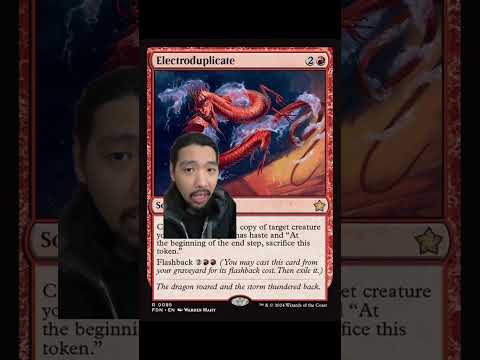
Yes, but it’s a nuanced yes. A copy of a permanent spell that resolves on the stack becomes a token. The copy itself exists as a spell on the stack before it resolves. After resolution, it transitions into a token on the battlefield, possessing the characteristics of whatever it copied. This distinction is crucial for understanding how copies and tokens interact with other game mechanics in Magic: The Gathering.
Understanding the Fundamentals: Spells, Permanents, and Tokens
To dissect this topic, we must first understand the foundational elements of a Magic game:
- Spells: Spells are cards you cast from your hand (usually, but not always). They exist on the stack, where players can respond to them before they resolve.
- Permanents: Permanents are cards on the battlefield. This includes creatures, artifacts, enchantments, and lands.
- Tokens: Tokens are permanents that are not represented by regular cards with a casting cost. They are created by spells or abilities. They exist only on the battlefield and in the graveyard (briefly).
The crucial point is that a copy of a permanent spell is initially a spell on the stack. It can be countered, targeted, or copied further. Only upon resolution does it become a token on the battlefield. It is at that moment that it transitions from a spell on the stack to a token permanent. It is at that moment that it is considered a token.
Why This Matters: Key Interactions & Distinctions
The seemingly subtle difference between a copy as a spell versus a copy as a token heavily influences the way it interacts with various triggered abilities, replacement effects, and game mechanics. Here are a few critical considerations:
- “Creating a Token” Triggers: A copy becoming a token does not trigger abilities that trigger when a token is created. The rules specifically state that the token is not “created” for the purposes of these kinds of triggers. The copy merely becomes a token, instead of generating a token.
- Casting vs. Copying: Copying a spell is NOT the same as casting a spell. This matters for triggered abilities like Cascade or effects that give bonuses when you cast a spell (like Swarm Intelligence). Copies put directly onto the stack, like those created with Twincast, do not trigger Cascade, since they are not cast.
- Devotion: If a copy of a card has a mana cost, then it does contribute to your devotion. If the copy’s effect specifies that the token has no mana cost, then it doesn’t affect devotion.
- Summoning Sickness: A copy of a creature entering the battlefield will have summoning sickness, even if the original creature has been under your control.
- Graveyard interactions: Tokens do go to the graveyard, and as a passive effect immediately cease to exist.
The Bottom Line
A copy of a permanent spell becomes a token once it successfully resolves on the stack and enters the battlefield. Understanding this rule is crucial for navigating the complexities of Magic: The Gathering and correctly interacting with various card abilities and triggers. It’s about the precise moment of transformation from spell to permanent that dictates how it interacts with the rest of the game.
Frequently Asked Questions (FAQs)
1. Does copying a creature spell count as creating a token?
Yes. Upon resolving on the stack, a copy of a permanent spell becomes a token. It inherits all the characteristics of the original spell.
2. Is a copy considered a token on the stack?
No. While on the stack, the copy is considered a spell. Only after it resolves does it become a token on the battlefield.
3. Do copy tokens trigger abilities that trigger “when a token is created”?
No. The rules text specifically states that they do not. The copy becomes a token, it is not technically created.
4. Does copying count as casting?
No. Copies of spells are generally not considered cast. Thus, they don’t trigger abilities like Cascade.
5. Do copy tokens go to the graveyard?
Yes. Tokens do go to the graveyard, but they cease to exist immediately as a state-based action.
6. Do copied spells count for storm?
No. Storm counts spells that have been cast. Copies are put directly onto the stack; they aren’t cast.
7. Can you transform a token copy of a transforming double-faced card?
Yes. An effect that creates a token that is a copy of a transforming permanent will create a transforming double-faced token.
8. Do copies have mana value?
Generally, yes. If the mana cost is able to be copied, the mana value is copied as well. If the mana value cannot be copied, the mana value of the copy is 0.
9. Can you copy a creature with Hexproof?
Yes. Copy effects, like those found on Clone, do not target. So, you can copy a creature with Hexproof, Shroud, or Protection.
10. Do copy tokens count towards devotion?
Yes, as long as the effect specifies that the copies have the mana cost as the original. If the token has no mana cost, it does not contribute to devotion.
11. If I copy a spell with kicker, is the copy also kicked?
Yes. If a kicked spell is copied, the copy is also kicked, since the kicker is part of the copied characteristics.
12. Do copies have summoning sickness?
Yes. If you bring in a “copy” of a card that’s been under your control since your last turn, the copy will still have summoning sickness.
13. Does playing a land count as casting?
No. Playing a land is distinct from casting a spell. Playing a card includes casting a spell, but casting never includes playing a land.
14. Do copied spells trigger cascade?
No. Cascade won’t trigger if you put a copy of a spell with cascade on the stack because the copy was not cast.
15. Are copies of cards legal in formats that the original is not?
If the effect is a copy of an existing card in the game (like a copy of a creature in your graveyard), the copy will only be legal if the original card would have been. However, there are special instances with sets like March of the Machine where there are reprints. March of the Machine Draft and Set Boosters contain one Multiverse Legends card. These will only be legal in formats that they are already legal in and in Historic. They are not part of the Standard environment, however the cards may be used in Limited events.
Where to Learn More
For a deeper understanding of game rules, design principles, and the intersection of learning and play, visit the Games Learning Society website. They offer resources and insights into how games can be powerful tools for education and engagement. You can learn more about game mechanics and the intersection of learning at GamesLearningSociety.org.