Does Aid Require Line of Sight? A Deep Dive into 5e Spellcasting
Fast answer first. Then use the tabs or video for more detail.
- Watch the video explanation below for a faster overview.
- Game mechanics may change with updates or patches.
- Use this block to get the short answer without scrolling the whole page.
- Read the FAQ section if the article has one.
- Use the table of contents to jump straight to the detailed section you need.
- Watch the video first, then skim the article for specifics.
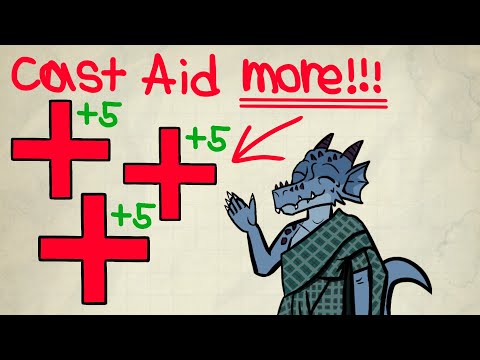
The short answer is no, the Aid spell in 5th Edition Dungeons & Dragons does not require line of sight to its targets. The spell description clearly states that it targets up to three creatures within range (30 feet), but it places no restrictions on being able to see those creatures. This distinction is crucial because many spells explicitly state “a creature you can see,” which is absent from Aid. Let’s delve deeper into why this is the case and how it fits into the broader rules of spellcasting in 5e.
Understanding Line of Sight and Line of Effect
Before we get into the specifics of Aid, it’s essential to understand the difference between line of sight and line of effect (also often referred to as a clear path to the target). These concepts often cause confusion, even among experienced players.
- Line of Sight: This refers to the ability to visually perceive a target. Something blocks your line of sight if you can’t see it. Examples include walls, dense fog, thick curtains, or even other creatures. The Dungeon Master’s Guide (DMG) on page 251 provides a detailed description of line of sight.
- Line of Effect (Clear Path): This means there is an unobstructed path for the spell’s energy to travel from the caster to the target. Even if you don’t need to see the target, there can’t be anything physically blocking the spell’s effect from reaching them. A solid wall would block line of effect, even for spells that don’t require line of sight.
Aid bypasses the requirement for line of sight. It still needs line of effect. This means you could cast it on allies you know are behind a thin door (assuming the door isn’t magically warded or otherwise blocking energy), but not through a solid stone wall.
Aid: A Closer Look
The full text of the Aid spell is crucial for understanding its limitations:
“Your spell bolsters your allies with toughness and resolve. Choose up to three creatures within range. Each target’s hit point maximum and current hit points increase by 5 for the duration. At Higher Levels. When you cast this spell using a spell slot of 3rd level or higher, the hit points increase by 5 for each slot level above 2nd.”
Notice the key phrase: “Choose up to three creatures within range.” This doesn’t specify that you need to see those creatures. This absence is deliberate. If Wizards of the Coast intended for Aid to require line of sight, the spell description would explicitly state it, as is the case with spells like Vicious Mockery.
The Significance of Range
The range of the Aid spell is 30 feet. This range limitation is important. You must be within 30 feet of the intended targets to cast the spell successfully. You also need to know where they are. You can’t just randomly cast it hoping to affect someone. You must have a reasonable belief that your allies are within that range. If you are using a grid or other system to track movement, this becomes much easier. If not, the DM will need to make some rulings.
Context Matters
While Aid doesn’t require line of sight, context is still important. If you’re in a pitch-black cave and have no idea where your allies are, it’s hard to argue you can target them effectively, even if they’re potentially within 30 feet. DM discretion is crucial here.
Frequently Asked Questions (FAQs)
Here are 15 FAQs related to Aid, line of sight, and general spellcasting rules:
1. If Aid doesn’t need line of sight, does it need a clear path to the target?
Yes, Aid still requires a clear path to the target (line of effect). While you don’t need to see the creatures, the spell’s energy must be able to reach them without being blocked by solid objects like walls or force fields.
2. Can I cast Aid on someone behind a closed wooden door?
Potentially, yes. If the door is thin enough and doesn’t have any magical properties that would block the spell’s effect, you could argue that you can cast Aid through it. The DM has the final say.
3. What if my target is behind a glass window?
Since glass typically doesn’t block magical effects, you should be able to cast Aid through a glass window.
4. Does the target need to be willing for Aid to work?
No, Aid does not require the target to be willing. It is a beneficial spell, and there is no saving throw or requirement for the target’s cooperation.
5. Can I target an unconscious creature with Aid?
Yes, you can target an unconscious creature with Aid. The spell only requires a creature within range.
6. What happens if I cast Aid and accidentally target an enemy?
The Aid spell is still a beneficial spell, and as such it would increase the enemy’s hit points.
7. Can I cast Aid on myself?
Yes, you can target yourself with the Aid spell.
8. How does Aid interact with temporary hit points?
The hit points gained from Aid are not temporary hit points. They increase the creature’s maximum and current hit points for the duration of the spell. Temporary hit points are a separate mechanic.
9. If a target moves out of range after I cast Aid, do they lose the benefits?
No, the benefits of Aid remain for the spell’s full duration, regardless of whether the target moves out of range.
10. Can I cast Aid multiple times on the same creature?
Yes, you can cast Aid multiple times on the same creature. However, the effects don’t stack. Only the most recent casting of Aid applies.
11. Can I cast Aid using a higher-level spell slot to increase the hit points gained?
Yes, the Aid spell description explicitly states that you can cast it at a higher level to increase the hit points gained by 5 for each level above 2nd.
12. If I am blinded, can I still cast Aid?
Yes, as long as you know the general location of your allies, you can cast Aid while blinded, as it does not require line of sight.
13. How does Aid interact with the Globe of Invulnerability spell?
Globe of Invulnerability blocks spells of 3rd level or lower. If Aid is cast at 3rd level or lower, it will be blocked from affecting targets within the Globe. If cast at 4th level or higher, it can affect creatures inside.
14. Can I use Aid to bring a creature back from 0 hit points?
No, Aid does not restore hit points. It increases the target’s maximum and current hit points. If a creature is at 0 hit points, Aid will increase their maximum hit points, but their current hit points will remain at 0 unless they receive healing.
15. What are some strategic uses for the Aid spell?
Aid is an excellent spell for bolstering your party before a potentially dangerous encounter. Increasing maximum hit points can provide a significant buffer against burst damage. It’s also useful for keeping party members alive in prolonged fights where they’re taking consistent damage.
Mastering Spellcasting: It’s All About the Details
Understanding the nuances of spellcasting in 5e D&D, including the intricacies of line of sight, line of effect, and specific spell descriptions, is crucial for effective gameplay. Always refer to the spell descriptions and the Player’s Handbook for clarification, and don’t be afraid to consult with your DM for rulings in ambiguous situations. The Games Learning Society offers resources for exploring the educational aspects of gaming, which includes understanding complex rule sets like those found in D&D. Check out GamesLearningSociety.org for more information. Good luck, and may your spells always hit their mark!