Does Redstone Run Out? A Comprehensive Guide to Minecraft’s Electrical Heart
Fast answer first. Then use the tabs or video for more detail.
- Watch the video explanation below for a faster overview.
- Game mechanics may change with updates or patches.
- Use this block to get the short answer without scrolling the whole page.
- Read the FAQ section if the article has one.
- Use the table of contents to jump straight to the detailed section you need.
- Watch the video first, then skim the article for specifics.
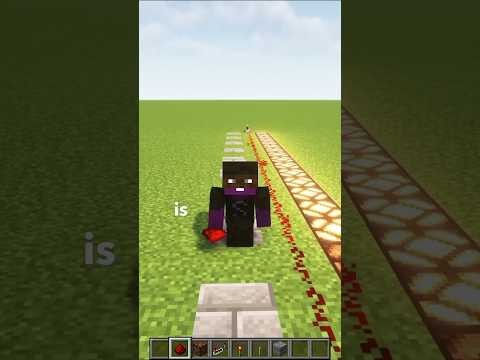
The short answer: No, Redstone does not run out in Minecraft. Neither the dust itself nor the devices powered by it are consumed through use. However, understanding how Redstone circuits work and how to maintain them is crucial for any aspiring Minecraft engineer. Let’s delve into the intricacies of Redstone, exploring its mechanics and addressing common concerns.
Understanding Redstone Mechanics
Redstone is Minecraft’s in-game equivalent of electricity, enabling players to create complex mechanisms, automated systems, and intricate contraptions. It comes in various forms, each with unique properties and applications.
Redstone Dust: The Conductor
Redstone dust is the most fundamental component, acting as a wire to transmit signals. When activated by a power source (like a lever, button, or Redstone torch), the Redstone dust emits a signal that can activate other Redstone components, such as pistons, doors, and lamps.
Redstone Repeaters: Amplification and Delay
Redstone repeaters serve two primary purposes: amplifying a weakened signal and introducing a delay. As a Redstone signal travels through Redstone dust, its strength diminishes. After 15 blocks, the signal is completely lost. A Redstone repeater boosts the signal back to full strength, allowing it to travel another 15 blocks. Furthermore, repeaters can be set to introduce a delay, measured in ticks, affecting the timing of your circuits.
Redstone Comparators: Logic and Detection
Redstone comparators are more advanced components that can perform logical operations. They can compare the signal strength of two inputs, detect the contents of containers (like chests and hoppers), and maintain a constant output. These functionalities are essential for creating sophisticated automated systems.
Redstone Torches: Power and Inversion
Redstone torches serve as both a power source and an inverter. They continuously emit a Redstone signal unless the block they are attached to is powered. This property allows for the creation of NOT gates and other logic circuits. Be careful, though – Redstone torches can burn out if rapidly switched on and off.
Common Misconceptions About Redstone Durability
Despite the fact that Redstone itself doesn’t deplete, certain factors can lead to perceived “failures” or interruptions in Redstone circuits.
-
Torch Burnout: As previously mentioned, Redstone torches subjected to rapid cycling can burn out, temporarily ceasing to function. This is easily remedied by allowing the torch to cool down for a few seconds.
-
Signal Decay: While not a depletion of Redstone, the decay of signal strength over distance can make it seem like your circuit is “running out of power.” This requires the strategic placement of repeaters to maintain the signal.
-
Block Updates: Minecraft’s world relies on “block updates” to trigger certain Redstone reactions. Sometimes, a circuit may not function until a nearby block is updated, prompting the Redstone to re-evaluate its state.
-
Accidental Disconnections: Simple misplacement of blocks or accidental breakage of Redstone dust can interrupt circuits, leading to a perceived failure. Double-checking your wiring is always a good practice.
Redstone in Education and Beyond
Redstone provides a fantastic platform for learning about logic gates, binary operations, and basic circuit design. Its intuitive visual nature makes it accessible to players of all ages, fostering problem-solving skills and creative thinking. The Games Learning Society recognizes the educational potential of games like Minecraft and promotes their use in learning environments. You can explore more about their initiatives at GamesLearningSociety.org.
Frequently Asked Questions (FAQs) about Redstone
Here are 15 frequently asked questions about Redstone, addressing common concerns and offering helpful tips:
1. How far until Redstone stops working?
A Redstone signal, transmitted through Redstone dust, fades by one strength level for each block it travels. After 15 blocks, the signal reaches zero and stops. Use Redstone repeaters to maintain the signal’s strength.
2. How do you extend the range of Redstone?
To extend the range of Redstone, strategically place Redstone repeaters along your Redstone dust lines. These repeaters amplify the signal back to its maximum strength of 15, allowing it to travel another 15 blocks.
3. Do Redstone torches run out?
Redstone torches do not run out in the sense of being consumed. However, they can burn out temporarily if they are switched on and off too rapidly (8 or more off-on cycles within approximately 5 seconds).
4. How do you make Redstone signals last longer in Minecraft?
The duration of a Redstone signal is primarily determined by the input signal that activates it. For sustained signals, use a continuous power source like a lever or a Redstone torch. For longer pulses, use a pulse extender circuit.
5. What is the limit of Redstone signal?
The maximum power level of a Redstone signal is 15. This signal strength decreases by 1 for each block of Redstone dust the signal travels through.
6. What turns Redstone off?
A Redstone signal can be turned off by removing the power source that is activating it. For example, toggling a lever to the off position or deactivating a pressure plate will cut off the signal. A Redstone Torch can be deactivated by powering the block it is attached to.
7. Why does Redstone burn out?
Redstone torches burn out as a safety mechanism to prevent infinite loops. If a torch is rapidly switching on and off due to a feedback loop, it will temporarily deactivate to prevent the game from crashing.
8. Do torches burn forever in Minecraft?
Regular torches in Minecraft do burn forever and never run out. Redstone Torches can burn out temporarily as covered above, but will return to their on state.
9. How do you repeat a Redstone signal without delay?
While a standard Redstone repeater introduces a delay, using a Redstone Comparator in certain configurations can repeat a signal without a noticeable delay. It depends heavily on the exact circuit design.
10. How many repeaters is 1 second?
One Redstone tick equals 0.1 seconds, so there are 10 Redstone ticks in a second. If you use repeaters to measure time, each repeater can be set to a delay between 1-4 ticks.
11. Why won’t my Redstone repeaters work?
Ensure that the repeater is within 15 blocks of the Redstone signal source. Also, make sure the repeater is facing the correct direction. Repeaters must be aligned with the Redstone dust line to properly transmit the signal.
12. Do Redstone torches stop spawning?
This is a confusing questions as Redstone Torches don’t ‘spawn’. They are craftable items, and they do not prevent mobs from spawning due to their low light level.
13. Does Redstone work on dirt?
Redstone dust can be placed on dirt blocks and will function normally. Dirt blocks do not interfere with the Redstone signal, but they do not conduct it either.
14. Can you turn Redstone on and off?
Yes, Redstone circuits can be turned on and off using various power sources like levers, buttons, pressure plates, and Redstone torches in conjunction with inverters.
15. Do Redstone lamps drop when broken?
Yes, a Redstone lamp will drop itself as an item when broken, regardless of the tool used.
Conclusion
While Redstone itself doesn’t “run out,” understanding its properties and limitations is essential for effective circuit design. By mastering the use of repeaters, comparators, and other Redstone components, you can build complex and automated systems that will enhance your Minecraft experience. So go forth and experiment, engineer, and enjoy the endless possibilities that Redstone offers! Remember to always double-check your circuits, prevent torch burnout, and maintain signal strength for optimal performance.