Does Sand and Fire Make Glass? Unveiling the Alchemist’s Secret
Fast answer first. Then use the tabs or video for more detail.
- Watch the video explanation below for a faster overview.
- Game mechanics may change with updates or patches.
- Use this block to get the short answer without scrolling the whole page.
- Read the FAQ section if the article has one.
- Use the table of contents to jump straight to the detailed section you need.
- Watch the video first, then skim the article for specifics.
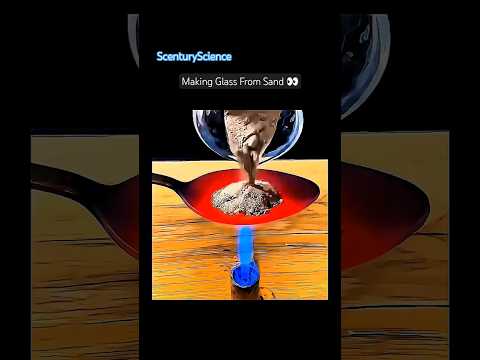
Yes, sand and fire can indeed make glass, but with a crucial caveat: it requires an intense heat exceeding what an ordinary fire can produce. The key lies in the composition of the sand itself. Common sand is mostly silicon dioxide (SiO2), also known as quartz. To transform this sand into glass, it must be heated to an astonishing 1700°C (3090°F). At this temperature, the silicon dioxide melts into a liquid state. The magic then happens when the molten sand is cooled rapidly. This rapid cooling prevents the silicon dioxide molecules from arranging themselves into a crystalline structure, the hallmark of quartz and other minerals. Instead, the molecules are locked into a disordered, amorphous state—the very definition of glass. So, while the process is fundamentally about sand and fire (or rather, intense heat), it’s the rapid cooling that truly seals the transformation.
Understanding the Science Behind the Transformation
The creation of glass from sand involves more than just melting. The transformation hinges on a disruption of the sand’s natural structure and the prevention of its reformation during cooling. Let’s delve deeper into the scientific principles at play:
The Role of Silicon Dioxide
Silicon dioxide, the primary component of most sand suitable for glassmaking, has a unique molecular structure. In its crystalline form (quartz), the silicon and oxygen atoms arrange themselves in a highly ordered, repeating pattern. This crystalline structure gives quartz its hardness and transparency.
The Melting Point Challenge
Reaching the required melting point of 1700°C (3090°F) isn’t something your average campfire can achieve. That’s why natural glass formation is typically associated with volcanic activity or lightning strikes, both capable of generating the necessary extreme temperatures. Industrial glassmaking employs specialized furnaces designed to withstand and maintain these intense temperatures.
The Importance of Rapid Cooling
Once the sand has melted into a liquid state, the cooling process is just as crucial as the heating. If the molten sand cools slowly, the silicon dioxide molecules will gradually re-arrange themselves into a crystalline structure, reverting back to something resembling quartz. Rapid cooling—a process known as quenching—prevents this re-crystallization, trapping the molecules in a disordered, amorphous state that gives glass its unique properties.
Beyond Pure Silica: Additives and Variations
While pure silica can be transformed into glass, it’s often desirable to add other ingredients to alter the glass’s properties. For instance, adding sodium carbonate (soda ash) lowers the melting point, making the process more energy-efficient. Calcium oxide (lime) is then added to stabilize the resulting glass, preventing it from dissolving in water. These additives, along with others like lead oxide (for crystal glass) or boron oxide (for borosilicate glass), allow for the creation of a wide range of glass types with varying characteristics.
From Nature to Industry: The Diverse Forms of Glass Creation
Glass formation isn’t limited to industrial processes. Nature itself provides stunning examples of this transformation.
Natural Glass Formation: Obsidian and Fulgurites
Obsidian, often called volcanic glass, is formed when molten lava cools rapidly, preventing crystal formation. Its smooth, glassy texture and dark color make it a prized material for tools and ornamentation. Fulgurites, also known as petrified lightning, are another example of naturally formed glass. They occur when lightning strikes sand, instantly melting the silica and creating a glassy tube.
The Industrial Glassmaking Process
Industrial glassmaking typically involves a complex series of steps:
- Mixing: Raw materials (silica sand, soda ash, lime, and other additives) are carefully mixed in precise proportions.
- Melting: The mixture is fed into a furnace, where it’s heated to extremely high temperatures.
- Shaping: Once molten, the glass can be shaped using various techniques, including blowing, pressing, casting, and drawing.
- Annealing: After shaping, the glass is slowly cooled in a process called annealing to relieve internal stresses and prevent cracking.
- Finishing: The finished glass product may undergo additional treatments, such as polishing, coating, or tempering, to enhance its properties or appearance.
Frequently Asked Questions (FAQs) About Sand and Glass
1. Can any type of sand be used to make glass?
No, the best sand for glassmaking is silica sand, which is primarily composed of silicon dioxide (quartz). Other types of sand, like those containing high amounts of iron or other impurities, may not produce clear or high-quality glass.
2. What temperature is required to turn sand into glass?
Sand needs to be heated to approximately 1700°C (3090°F) to melt into liquid, which will turn into glass after rapid cooling.
3. Can a regular fire turn sand into glass?
No, a regular fire does not reach high enough temperatures to melt sand into glass. You need a very intense heat source.
4. Is glass a crystal or a mineral?
Glass is not a crystal because its molecules are arranged in a disordered, amorphous structure. It is also not considered a mineral as it does not have a fixed chemical composition.
5. What is obsidian, and how is it formed?
Obsidian is a volcanic glass formed when lava cools rapidly, preventing the formation of crystals.
6. What are fulgurites, and how are they related to glass?
Fulgurites are glassy tubes formed when lightning strikes sand, instantly melting the silica and creating a natural glass structure.
7. Is sea glass natural or man-made?
Sea glass is typically man-made, originating from broken glass that has been tumbled and smoothed by the ocean over many years.
8. Can black sand be used to make glass?
Black sand, which often contains heavy minerals such as magnetite, is not suitable for making glass.
9. Why is glass transparent, but sand isn’t?
Glass is transparent because its molecular structure allows light to pass through without scattering. Sand, on the other hand, contains impurities that scatter light, making it opaque.
10. What role do additives play in glassmaking?
Additives such as soda ash and lime are added to silica sand to lower the melting point and stabilize the glass, respectively. Other additives can be used to alter the color and other properties of the glass.
11. What is the annealing process in glassmaking?
Annealing is the process of slowly cooling glass to relieve internal stresses and prevent cracking.
12. What is crystal glass, and how is it different from regular glass?
Crystal glass is a type of glass that contains lead oxide, which gives it a higher refractive index and a sparkling appearance. It’s produced in the same way, but with different components. All crystal is glass, but not all glass is crystal.
13. Can electricity be used to make glass?
Yes, high-voltage electricity can melt sand into glass by creating a plasma of superheated gas.
14. Is sand just broken glass?
While finely crushed glass is similar to sand in that it is a pure form of sand, natural sand is made of quartz crystals of silicon dioxide, whereas glass is the non-crystalline, amorphous form of silicon dioxide.
15. Where can I learn more about the science behind materials and their transformations?
Explore educational resources and communities like the Games Learning Society (GamesLearningSociety.org) to discover engaging ways to learn about science and technology through interactive experiences and games. Games Learning Society is dedicated to advancing learning through innovative game-based approaches.
The Enduring Fascination with Glass
The transformation of humble sand into shimmering glass has captivated humans for millennia. From ancient artisans crafting delicate vessels to modern engineers developing cutting-edge technologies, the allure of glass remains undiminished. Understanding the science behind this transformation allows us to appreciate the ingenuity and artistry that have shaped our world. The next time you gaze through a window or admire a piece of glass art, remember the alchemical secret: sand, fire, and the magic of rapid cooling.