Decoding Spiritual Weapon: Is It Truly Melee in D&D 5e?
Fast answer first. Then use the tabs or video for more detail.
- Watch the video explanation below for a faster overview.
- Game mechanics may change with updates or patches.
- Use this block to get the short answer without scrolling the whole page.
- Read the FAQ section if the article has one.
- Use the table of contents to jump straight to the detailed section you need.
- Watch the video first, then skim the article for specifics.
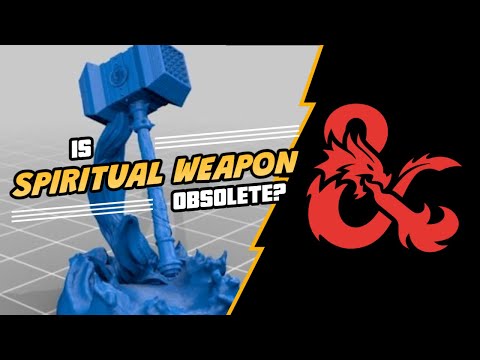
Yes, but with a crucial caveat. Spiritual Weapon in Dungeons & Dragons 5th Edition does allow you to make a melee spell attack, but it is not a true melee weapon attack in the way a sword swing or a punch is. It’s a spell, conjured and controlled, that delivers a melee-range attack using your spellcasting ability. This subtle distinction has significant implications for how the spell interacts with other abilities, feats, and game mechanics. Understanding this nuance is key to effectively wielding (or countering) Spiritual Weapon.
The Nature of the Spiritual Weapon Attack
The core of the confusion lies in the phrase “melee spell attack.” It borrows elements from both melee combat and spellcasting, creating a hybrid that follows its own set of rules.
-
It’s a Spell: First and foremost, remember that Spiritual Weapon is a 2nd-level spell. This means it requires verbal and somatic components to cast, and it uses your spell attack bonus for accuracy. Effects that specifically target spells, like Counterspell, can be used against it.
-
Melee Range: The weapon itself must be within 60 feet of you when you cast it. Once summoned, you can attack creatures within 5 feet of the weapon. This clearly establishes its melee connection – you’re engaging targets at close range, albeit indirectly.
-
Spell Attack, Not Weapon Attack: Here’s the critical distinction. While the attack occurs at melee range, it isn’t made with a physical weapon. This means that abilities or features that key off “weapon attacks” (like the Great Weapon Master feat) generally do not apply to Spiritual Weapon. Instead, it uses your spell attack modifier for the attack roll.
-
Bonus Action Attack: The spell allows you to make an attack with the spiritual weapon as a bonus action on your turn. This is a huge advantage, as it allows you to take your normal action to cast another spell, dash, disengage or attack with your own melee or ranged weapon.
Force Damage and Form
The spiritual weapon deals force damage, which is one of the least resisted damage types in the game. This makes it a reliable source of damage against a wide variety of enemies. The spell also grants you considerable thematic flexibility. The weapon can take whatever form you choose, from a floating hammer to a spectral sword.
Spiritual Weapon: Power and Limitations
Spiritual Weapon is a solid spell choice, especially at lower levels, but it’s essential to understand both its strengths and weaknesses:
-
Strengths:
- Bonus Action Attack: This is the spell’s biggest draw. It grants you an additional attack each round without sacrificing your primary action.
- Force Damage: The consistent damage type is incredibly valuable.
- Action Economy: Continues to inflict damage round after round.
- Low Level: Available at level 3 for Clerics.
- Scaling: It adds your spellcasting ability modifier to damage.
-
Weaknesses:
- No synergy with weapon-based feats: As mentioned, features relying on weapon attacks won’t work with it.
- Relatively Low Damage: While reliable, the damage output isn’t exceptionally high compared to some other options.
- Concentration-Free: This can be either a boon or a bane. It’s great that you don’t need to concentrate on it, allowing you to concentrate on other spells. However, it also means that if you need to concentrate, you may have had better options.
- Only one extra attack: You get one extra attack per round, which is useful, but not incredible.
FAQs: Delving Deeper into Spiritual Weapon Mechanics
Here are some frequently asked questions to further clarify the nuances of Spiritual Weapon:
Does Spiritual Weapon trigger opportunity attacks?
No. The Spiritual Weapon itself does not trigger opportunity attacks, as it is a spell effect and not a creature moving out of reach. The caster might trigger an opportunity attack if they move within reach of an enemy without disengaging.
Can I use Spiritual Weapon to deliver touch spells?
No. Spiritual Weapon makes a melee spell attack, dealing force damage. It does not allow you to deliver touch spells at a distance. Touch spells typically require you to make a melee attack or the target to make a saving throw, neither of which applies to Spiritual Weapon’s attack.
Does Spiritual Weapon benefit from flanking?
No. Flanking grants advantage on melee attacks. Spiritual Weapon uses a melee spell attack. Although the attacks occur within 5 feet, they are not considered melee weapon attacks for flanking purposes.
Can Spiritual Weapon be targeted by spells like Dispel Magic?
Yes. Because Spiritual Weapon is a spell effect, it can be targeted by Dispel Magic.
Does Spiritual Weapon count as a weapon for the purpose of spells like Magic Weapon?
No. Spiritual Weapon is a spell effect, not a physical weapon. Therefore, Magic Weapon cannot be cast on it.
Can Spiritual Weapon be used to grapple?
No. Spiritual Weapon makes a melee spell attack that deals force damage. It does not allow you to perform grapple attacks.
Can Spiritual Weapon occupy a space and block movement?
No. Spiritual Weapon is a spell effect, not a creature or object that occupies space. It does not hinder movement. You can move through its space without penalty.
Can Spiritual Weapon trigger Sneak Attack for a Rogue?
No. Sneak Attack requires an attack with a finesse or ranged weapon. Spiritual Weapon is a spell effect that makes a spell attack.
Can Spiritual Weapon make attacks of opportunity?
No. Spiritual Weapon cannot make attacks of opportunity. It requires your bonus action to attack.
Can I have multiple Spiritual Weapons at once?
While the rules don’t explicitly prevent casting the spell multiple times, it’s generally not advantageous. Spiritual Weapon’s effectiveness diminishes as you gain levels and access to higher-level spells. The action economy cost of casting it multiple times is not worth the limited benefit.
If I lose concentration, does Spiritual Weapon disappear?
Spiritual Weapon does not require concentration, so losing concentration on a different spell will not affect it.
Can Spiritual Weapon be used to perform a shove attack?
No. Spiritual Weapon only allows you to make a melee spell attack dealing force damage. It cannot be used to shove a creature.
Does Spiritual Weapon benefit from abilities that increase melee damage, such as Rage?
Generally, no. Rage’s damage bonus specifically applies to attacks using Strength. Spiritual Weapon uses your spellcasting ability modifier, not Strength.
Is Spiritual Weapon affected by feats that require a bonus action to attack, such as Polearm Master?
No. Polearm Master requires you to make a weapon attack, and spiritual weapon is a spell attack.
Can I use Spiritual Weapon to knock a creature prone?
No. You cannot knock a creature prone with Spiritual Weapon’s attack, as it does not grant that functionality.
Conclusion: Mastering the Spectral Armory
Spiritual Weapon occupies a unique niche in the D&D 5e spell repertoire. It’s a reliable, bonus-action-fueled source of force damage that scales with your spellcasting ability. By understanding its distinctions as a spell effect delivering a melee spell attack (rather than a traditional melee weapon attack), you can effectively utilize its strengths while avoiding common pitfalls. Next time you are looking for D&D advice, check out GamesLearningSociety.org.