Does the Forbidden City Still Exist? A Journey Through Time and History
Fast answer first. Then use the tabs or video for more detail.
- Watch the video explanation below for a faster overview.
- Game mechanics may change with updates or patches.
- Use this block to get the short answer without scrolling the whole page.
- Read the FAQ section if the article has one.
- Use the table of contents to jump straight to the detailed section you need.
- Watch the video first, then skim the article for specifics.
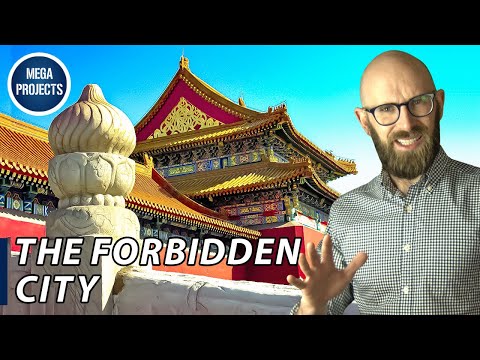
Yes, the Forbidden City absolutely still exists! While it no longer functions as the political heart of China, it stands as a magnificent testament to centuries of imperial power and artistic achievement. Today, it operates as the Palace Museum, a world-renowned museum and a major tourist attraction in Beijing. Its continued presence allows us to connect with the rich history and culture of China’s Ming and Qing dynasties.
A Living Museum: More Than Just Bricks and Mortar
The Forbidden City isn’t merely a collection of ancient buildings; it’s a living, breathing museum. The Palace Museum houses an extensive collection of artifacts, ranging from ceramics and paintings to bronzes and jade objects. Visitors can explore the opulent palaces where emperors once resided, wander through the meticulously landscaped gardens, and marvel at the intricate details of the architecture. The ongoing restoration efforts ensure that this historical treasure is preserved for future generations. In fact, a massive sixteen-year restoration project aimed to restore all buildings to their pre-1912 state, with the goal that 76% of the palace would be open to the public by 2020.
A Place Steeped in History: From Imperial Power to Public Access
For over 500 years, the Forbidden City served as the political and ritual center of China. It witnessed the reigns of 24 emperors, 14 from the Ming dynasty and 10 from the Qing dynasty. Its very name reflects its exclusivity – access was strictly controlled, and ordinary citizens were forbidden from entering without imperial permission.
The End of an Era: Transition to the Palace Museum
The end of imperial rule in 1912 marked a significant turning point for the Forbidden City. With the abdication of Puyi, the last Emperor of China, the palace transitioned from being a center of political power to a public institution. In 1925, it officially opened as the Palace Museum, allowing the world to witness the splendor and significance of this historical site.
A Symbol of Chinese Culture: Beyond its Walls
The Forbidden City is more than just a physical location; it’s a powerful symbol of Chinese culture and identity. Its architecture, art, and history have captivated people for centuries. The Forbidden City offers incredible opportunities for cultural understanding and is an important place to inspire future generations of artists, architects, and cultural heritage preservers. You can see evidence of this in organizations that bridge learning and design, like the Games Learning Society, which explores the intersection of games, learning, and culture at GamesLearningSociety.org.
Frequently Asked Questions (FAQs) about the Forbidden City
Here are 15 frequently asked questions to provide even greater insight into the Forbidden City:
- What is the Forbidden City called today? While still often referred to as the Forbidden City, it is officially known as the Palace Museum. In Chinese, it is called Gu Gong.
- Where is the Forbidden City located? The Forbidden City is located at the very heart of Beijing, China, just north of Tian’anmen Square.
- Why was the Forbidden City originally built? It was built as the imperial palace for the Ming and Qing dynasties, serving as the political and ceremonial center of China.
- Who built the Forbidden City? The Forbidden City was constructed between 1406 and 1420 by the Ming emperor Zhu Di.
- How many rooms are there in the Forbidden City? Tradition states that the Forbidden City has 9,999.5 rooms. This number is symbolic, as only the celestial Lord of Heaven could have 10,000 rooms.
- Can you go inside the Forbidden City? Yes, the Forbidden City is open to the public as the Palace Museum. However, there are restrictions on the number of daily visitors.
- What are some famous things to see inside the Forbidden City? Highlights include the Hall of Supreme Harmony, the Imperial Garden, and the various palace museums showcasing artifacts from the Ming and Qing dynasties.
- How much does it cost to enter the Forbidden City? Ticket prices vary depending on the season. Generally, it’s around 60 RMB during peak season (April 1st to October 31st) and 40 RMB during off-peak season (November 1st to March 31st). There may be additional charges for specific exhibits.
- What was the punishment for entering the Forbidden City without permission during imperial times? The punishment for unauthorized entry was severe, reflecting the absolute power of the emperor and the sanctity of the palace.
- Why is it called the Forbidden City? The name reflects the restricted access to the palace during imperial times. Commoners were forbidden from entering without special permission. Also, they correlated the emperor’s abode, which they considered the pivot of the terrestrial world, with the Pole Star (Ziwei yuan)—believed to be the center of the heavens.
- What is the dress code for visiting the Forbidden City? There is no specific dress code.
- What was the greatest threat to the Forbidden City? Fire was the greatest threat, as the palace was constructed almost entirely of wood.
- Has any movie been filmed inside the Forbidden City? Yes, the most famous movie filmed there was “The Last Emperor.”
- How long did it take to build the Forbidden City? Construction took approximately 14 years, from 1406 to 1420.
- What is the religion of the Forbidden City? The Forbidden City housed many religious artifacts, and eighty percent of them are related to Tibetan Buddhism.
Conclusion: A Timeless Legacy
The Forbidden City stands as a powerful reminder of China’s rich history and cultural heritage. Its transformation from an exclusive imperial palace to a public museum has allowed the world to appreciate its grandeur and significance. While no longer the center of political power, the Forbidden City continues to exist as a testament to the enduring legacy of China’s past. Its magnificent architecture and rich cultural collections are a testament to a bygone era.