Does Turn Undead Count as a Spell? A Deep Dive into Divine Power
Fast answer first. Then use the tabs or video for more detail.
- Watch the video explanation below for a faster overview.
- Game mechanics may change with updates or patches.
- Use this block to get the short answer without scrolling the whole page.
- Read the FAQ section if the article has one.
- Use the table of contents to jump straight to the detailed section you need.
- Watch the video first, then skim the article for specifics.
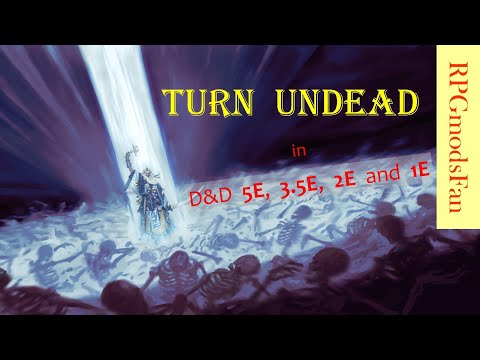
The short answer is: no, Turn Undead is generally not considered a spell in 5th Edition Dungeons & Dragons. It is a Channel Divinity option available primarily to Clerics and sometimes Paladins, fueled by the power of their deity rather than the weaving of arcane magic. While it produces a magical effect, it functions under a different set of rules than spells. This distinction is crucial for understanding how it interacts with other game mechanics.
Understanding Channel Divinity vs. Spells
To fully grasp why Turn Undead isn’t a spell, we need to differentiate between Channel Divinity and spellcasting.
- Channel Divinity: This is a special class feature that allows characters to channel divine energy directly from their deity. It’s typically usable a limited number of times per short or long rest and offers a variety of effects depending on the class and subclass.
- Spells: These are magical formulas that characters learn and cast using spell slots. They require specific components (verbal, somatic, material) and are governed by a rigid set of rules regarding casting time, range, duration, and effects.
The key difference lies in the source and mechanics. Channel Divinity taps directly into divine power, while spells manipulate the Weave of Magic. Therefore, effects that specifically target spells, such as Counterspell, typically do not work against Turn Undead or other Channel Divinity options.
How Turn Undead Works
Turn Undead (and its more powerful variant, Destroy Undead) is a powerful ability for divine characters. Here’s a breakdown of its typical mechanics:
- Action: It’s usually activated as an action.
- Presentation: The character presents their holy symbol and speaks a prayer.
- Effect: Undead creatures within a certain range (often 30 feet) must make a Wisdom saving throw.
- Turning: If an undead fails its saving throw, it is Turned. A Turned creature must spend its turns trying to move as far away from the character as it can, and it can’t willingly move to a space within 30 feet of the character. It also can’t take reactions. This effect lasts for 1 minute or until the creature takes damage.
- Destroying (Optional): Some higher-level clerics have the Destroy Undead feature, which allows them to automatically destroy weaker undead creatures that fail their Wisdom saving throw against Turn Undead. The specific Hit Point threshold for destruction varies depending on the cleric’s level.
Why This Distinction Matters
The distinction between Turn Undead and spells is vital for several reasons:
- Countermeasures: Spells like Counterspell and Dispel Magic, which specifically target spells, are ineffective against Turn Undead. Similarly, abilities that grant advantage or disadvantage on saving throws against spells won’t affect saving throws against Turn Undead.
- Magic Resistance: While Turn Undead is a magical effect, it’s fueled by divine power, and the rules are still inconsistent across different D&D editions as to whether or not magic resistance would apply.
- Class Features: Certain class features might interact differently with spells than with Channel Divinity. For example, a class feature might grant a bonus to spell damage but not affect the damage dealt by a Channel Divinity option.
- Rule Interpretation: Understanding this distinction is crucial for correctly interpreting game rules and making informed decisions during gameplay.
Turn Undead and Magic Items
Magic items that enhance spellcasting generally do not affect Turn Undead unless specifically stated. For instance, a rod that grants a bonus to spell attack rolls or saving throw DCs wouldn’t apply to Turn Undead, as it’s not a spell. However, an item that enhances Channel Divinity specifically would affect Turn Undead.
Frequently Asked Questions (FAQs)
Here are some frequently asked questions about Turn Undead and its classification:
1. Can Counterspell stop Turn Undead?
No, Counterspell only works on spells being cast. Turn Undead is a Channel Divinity option, not a spell.
2. Does Dispel Magic remove the Turned condition?
No, Dispel Magic only works on spells. The Turned condition, imposed by Turn Undead, is not caused by a spell, but by the Channel Divinity ability.
3. Does Magic Resistance grant advantage on saving throws against Turn Undead?
This is a grey area and often up to the Dungeon Master’s interpretation. Some argue that, because Turn Undead produces a magical effect, Magic Resistance should apply. Others argue that, since it’s not a spell, Magic Resistance doesn’t apply.
4. Can I use War Caster to cast a spell as a reaction when an undead provokes an opportunity attack?
Yes, if you are using War Caster to cast a spell when an undead leaves your reach, War Caster allows you to cast a spell as a reaction instead of making an opportunity attack. This does not affect Turn Undead, though, as that is a separate matter.
5. Does Turn Undead deal damage?
In some editions of D&D, Turn Undead could deal radiant damage. In 5th Edition, the base Turn Undead feature doesn’t directly deal damage; it imposes the Turned condition. However, the Destroy Undead feature, available to higher-level clerics, can destroy weaker undead creatures.
6. Does Turn Undead affect vampires?
Yes, vampires are undead and therefore susceptible to Turn Undead.
7. Can a Lich be turned by Turn Undead?
Theoretically, yes. However, Liches are powerful creatures with high Wisdom saving throw bonuses, making it difficult to successfully turn them.
8. Does Turn Undead frighten undead?
In some contexts, particularly in older editions or specific campaign settings, Turn Undead could frighten undead. In 5th Edition, the primary effect is to turn them, forcing them to flee.
9. Can Paladins use Turn Undead?
Some Paladin subclasses grant access to a Channel Divinity option that is similar to or identical to the cleric’s Turn Undead.
10. Is creating undead an evil act?
Generally, yes. Spells and abilities that create undead are often considered evil because they involve manipulating life force and often require dark rituals.
11. Does Turn Undead work on all types of undead?
Yes, Turn Undead affects all types of undead creatures.
12. What happens if an undead creature is immune to being charmed?
The Turned condition doesn’t rely on the Charmed condition. Therefore, immunity to being Charmed doesn’t prevent an undead from being Turned.
13. Are there ways to enhance Turn Undead?
Yes, some feats, magic items, and class features can enhance Turn Undead, either by increasing the range, the number of uses, or the effectiveness of the effect.
14. Can I use Turn Undead offensively?
While the primary effect of Turn Undead is defensive (forcing undead to flee), it can be used strategically to control the battlefield and protect allies. The Destroy Undead feature provides a direct offensive capability against weaker undead.
15. How does Turn Undead interact with area-of-effect spells?
If an area-of-effect spell deals damage, it can break the Turned condition on undead creatures within the area. However, the area-of-effect spell itself does not interfere with the initial Turn Undead effect.
Conclusion
Turn Undead is a powerful and versatile Channel Divinity option that is distinct from spellcasting. Understanding this distinction is crucial for correctly interpreting game rules and making informed decisions during gameplay. Its effectiveness lies in its ability to control undead creatures, providing crucial protection and tactical advantages to divine characters. By mastering the nuances of Turn Undead, players can effectively combat the forces of undeath and uphold the tenets of their deity.
This is also a great opportunity to learn more about games-based learning and the educational impact of games by visiting the Games Learning Society website, GamesLearningSociety.org.