Does The Witcher 3 Truly Have 36 Endings? Unpacking the Truth Behind the Claim
Fast answer first. Then use the tabs or video for more detail.
- Watch the video explanation below for a faster overview.
- Game mechanics may change with updates or patches.
- Use this block to get the short answer without scrolling the whole page.
- Read the FAQ section if the article has one.
- Use the table of contents to jump straight to the detailed section you need.
- Watch the video first, then skim the article for specifics.
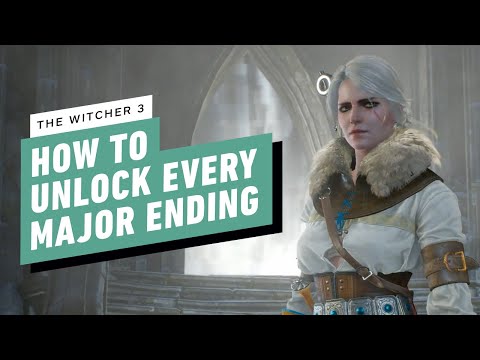
The Witcher 3: Wild Hunt is renowned for its complex narrative, player agency, and the significant impact your choices have on the game world. One figure that’s often tossed around is the claim that it boasts 36 different endings. Is this accurate? Well, it’s a bit of a simplification. The Witcher 3 doesn’t have 36 distinct ending cutscenes. Instead, the 36 refers to the possible variations in the game world and character fates at the end of the main storyline. These variations stem from the accumulation of choices made throughout the game, big and small, influencing the final state of affairs. While there are technically three main endings revolving around Ciri’s fate, the nuances within those endings, combined with the outcomes of various side quests and political decisions, create a vast tapestry of possibilities, ultimately leading to this perceived number of 36.
Breaking Down the Ending Structure
To understand this further, let’s look at how the endings work in The Witcher 3. Primarily, the game focuses on Ciri’s ultimate fate, which branches into these key scenarios:
- Ciri becomes a Witcher: Widely considered the “best” ending by many, this sees Ciri embrace her destiny as a monster hunter.
- Ciri becomes Empress: This ending sees Ciri taking the throne of Nilfgaard. While arguably safer, this is usually a less desired ending by players.
- Ciri dies: This is considered the “bad” ending, resulting from Geralt making choices that fail to encourage or support Ciri throughout the game.
However, these aren’t the only considerations. The state of the Northern Kingdoms is heavily affected by your choices. Key decisions about Radovid, Dijkstra, and Nilfgaard’s control greatly affect which faction triumphs. This in turn dictates who will control the region. These choices have significant consequences on the lives of everyday people within the world. So while you’re resolving Ciri’s personal destiny, you are simultaneously shaping the political landscape of the Northern Kingdoms, creating many variations.
The Impact of Side Quests and Decisions
Beyond the main storyline, numerous side quests and seemingly minor decisions contribute to the final outcome. Did you help a particular village? Did you solve a local conflict fairly? Did you choose to spare a monster, or hunt it down? These decisions create ripples throughout the game, affecting character relationships, available quests, and ultimately, the overall tone of the ending. Therefore, the 36 variations account for these nuanced differences within those three main conclusions.
The Role of the DLCs
The Hearts of Stone and Blood and Wine expansions also add to the overall narrative complexity, with Blood and Wine being the most important. Blood and Wine provides a more conclusive epilogue and a stronger sense of closure for Geralt’s story. This ultimately makes it feel like the “true ending” for many players.
Ultimately, claiming The Witcher 3 has 36 different endings isn’t entirely misleading. While the core endings surrounding Ciri’s fate are limited, the combination of choices made throughout the game creates numerous variations in the game world’s final state, accounting for that number. It speaks to the depth and detail of the Witcher 3’s narrative design, showcasing the player’s agency and the impact of their decisions on the world around them. This also shows the importance of games and learning. Learn more at GamesLearningSociety.org!
Frequently Asked Questions (FAQs)
Here are some frequently asked questions about the endings and other aspects of The Witcher 3:
1. How do I get the best ending for Ciri?
To achieve the “best” ending where Ciri becomes a Witcher, you must accumulate at least three positive points in your interactions with her. This includes:
- Letting her vent her anger after the Battle of Kaer Morhen.
- Taking her to visit Skjall’s grave.
- Encouraging her to meet with the Lodge of Sorceresses on her own terms.
- Playing in the snowball fight.
- Giving her a choice of whether or not to accept money from the Emperor.
2. What constitutes a “positive” point in Ciri’s questline?
A “positive” point signifies that Geralt is supportive, encouraging, and respects Ciri’s agency. It’s about letting her make her own choices and deal with her emotions in a healthy way.
3. What happens if Ciri becomes Empress?
If Ciri becomes Empress of Nilfgaard, she will rule with compassion and justice. While this ending offers her a position of power and safety, she might not be entirely happy, as it’s not a life she actively desires.
4. How can I prevent Ciri from dying?
To prevent Ciri’s death, you must ensure you have enough positive points in your interactions with her. Failing to do so leads to her vanishing after confronting the White Frost.
5. What are the consequences of killing Radovid?
If you kill Radovid and side with Dijkstra in the quest “Reason of State”, Dijkstra will take control of the North. He is a ruthless but effective ruler. However, his iron-fisted rule is far from benevolent.
6. Is it better to kill Radovid or let him live?
The choice of whether to kill Radovid is a moral dilemma. Letting him live means he continues his persecution of non-humans and mages. Killing him opens the door for Dijkstra, who brings order but at a cost to personal freedoms. There is no clear “good” or “bad” decision here.
7. How do I ensure Nilfgaard loses the war?
To have Nilfgaard lose the war, you must either not participate in the assassination of Radovid or side with Dijkstra during the quest “Reason of State”.
8. What is the maximum level in The Witcher 3?
The maximum level in The Witcher 3 is 70 in the base game and Hearts of Stone. The Blood and Wine expansion raises it to 100.
9. What happens when toxicity reaches 100%?
Early in the game, reaching 100% toxicity will result in death. As you develop Geralt’s abilities, you can increase his tolerance threshold, which means Geralt’s health will begin to decrease when reaching that level.
10. Can Vesemir be saved?
Unfortunately, Vesemir cannot be saved in The Witcher 3. His death is a pivotal moment in the story.
11. What’s the rarest encounter in The Witcher 3?
Some of the rarest encounters in The Witcher 3 include finding Letho in a haunted manor, encountering the ghost ship in Skellige, and finding Birna Bran on the rocks. These are often missable or require specific choices.
12. What should I do after 100% completing The Witcher 3?
After 100% completing The Witcher 3, consider starting a New Game+ adventure, exploring different choices and outcomes, or diving deeper into the lore by reading the books or watching The Witcher on Netflix.
13. Is it better for Ciri to be Empress or a Witcher?
The best path for Ciri depends on your perspective. Being Empress offers her safety and power, but she might find it stifling. Becoming a Witcher allows her freedom and purpose. Many players consider the Witcher path the “best” ending because she pursues what she desires.
14. What’s the significance of the Blood and Wine expansion ending?
The Blood and Wine expansion provides a more personal and satisfying conclusion to Geralt’s story. He gets to settle down in his own vineyard and has a visitor show up that is decided by his actions in the main game. This expansion offers a sense of closure that is lacking in the main game ending.
15. How does killing or sparing certain characters affect the game?
Killing or sparing characters throughout the game has significant consequences. It affects your relationships with other characters, the availability of quests, and the overall tone of the ending. The game remembers your choices and reacts accordingly.