How Do I Know If I Just Saw a Meteor?
Fast answer first. Then use the tabs or video for more detail.
- Watch the video explanation below for a faster overview.
- Game mechanics may change with updates or patches.
- Use this block to get the short answer without scrolling the whole page.
- Read the FAQ section if the article has one.
- Use the table of contents to jump straight to the detailed section you need.
- Watch the video first, then skim the article for specifics.
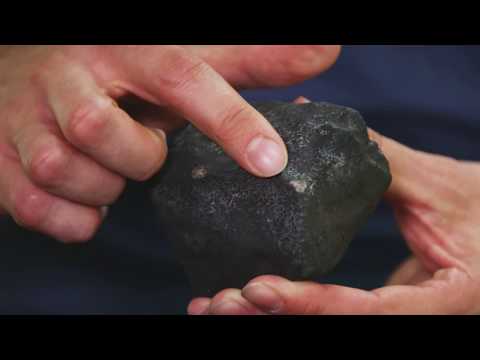
Have you ever glanced at the night sky and witnessed a sudden, fleeting streak of light? That could very well have been a meteor, commonly known as a “shooting star”. But how can you be certain? Identifying a meteor involves understanding a few key characteristics: its speed, duration, and appearance. If what you saw was extremely fast, lasting only a flash or a few seconds, and appeared as a single, bright streak of light that vanished quickly, then it’s highly probable you witnessed a meteor. These celestial events are not as rare as you might think, and knowing what to look for can enhance your stargazing experience.
What Makes a Meteor a Meteor?
A meteor is not a star, but rather a meteoroid – a space rock or particle – that enters Earth’s atmosphere. As it plunges through the air at high speed, friction causes it to burn up, creating a bright streak of light that we see as a meteor. Here’s a breakdown of the defining factors:
Speed and Duration
- Extremely Fast: Meteors travel at incredible speeds, often tens of thousands of miles per hour. This speed is a crucial differentiator.
- Short Duration: Unlike satellites, which move slowly across the sky, a meteor’s light display is usually gone in a fraction of a second to a few seconds.
- Brief Streak: The light appears as a brief streak rather than a continuous, elongated trail.
Appearance
- Single Point of Light: Typically, you’ll see a single streak of light, unlike a reentry breakup where you might observe multiple bright points moving together.
- Sudden Brightness: A meteor’s light often appears suddenly and is usually quite bright during its short visibility.
- Rapid Disappearance: The streak of light vanishes almost as quickly as it appears.
Differentiation from Other Objects
It’s essential to distinguish a meteor from other celestial phenomena:
- Satellites: Satellites move much slower, taking several minutes to cross the sky. Their light might also brighten and dim in a regular pattern as they reflect sunlight, not a smooth constant streak.
- Reentry Breakups: These involve multiple bright points of light, often moving together in the same direction, and leaving streaks behind, unlike the single streak of a meteor.
- Comets: While both involve objects in space, comets are typically much slower, appear fuzzy, and might remain visible for extended periods. They also usually have a more defined tail.
Frequently Asked Questions (FAQs) About Meteors
Here are some commonly asked questions to further your understanding of meteors:
1. What’s the difference between a meteor, a meteoroid, and a meteorite?
These terms are related but distinct. A meteoroid is the space rock itself. A meteor is the light phenomenon produced when a meteoroid enters the atmosphere and burns up. A meteorite is the remaining portion of a meteoroid that survives its atmospheric passage and hits the ground.
2. How rare is it to see a meteor?
While seeing a very bright meteor or a fireball might seem rare, meteors, in general, are quite common. Under ideal conditions (dark sky, no clouds) you might see several every hour. It’s estimated that up to 10 million meteors occur each night across the entire Earth’s atmosphere.
3. What does a fireball meteor look like?
A fireball is simply an exceptionally bright meteor, typically reaching a magnitude of -3 or brighter. They can be caused by larger meteoroids, sometimes exceeding one meter in size, creating an impressive display.
4. Do meteors come in different colors?
Yes, meteors can appear in different colors depending on their chemical composition. For example, a meteor with high iron content may appear yellow, while a meteor with high calcium content might appear purple.
5. What do I do if I think I found a meteorite?
If you believe you’ve found a meteorite, it is important to handle it with care. Do not touch it with bare hands. You may want to contact the Geological Survey of your state, a local college or university or even a natural history museum. Also, there are commercial firms that charge fees to examine them.
6. Can I keep a meteorite if I find it?
In most places, casual collection of meteorites for personal use is permitted without a permit or collection fee; however, these cannot be sold or bartered for commercial purposes. For scientific or educational collection, you would need a permit, often under the authority of the Antiquities Act.
7. Why is it sometimes advised not to touch a freshly fallen meteorite?
Oils and microbes from your skin can degrade the meteorite’s surface, dulling the fusion crust, contaminating it, and possibly promoting rust.
8. What is a fusion crust?
A fusion crust is a thin, dark, and sometimes shiny rind formed on the surface of a meteorite as it melts during its fiery passage through the atmosphere. It’s a key identifying characteristic for meteorites.
9. What are the three main types of meteorites?
There are three major types of meteorites: irons, stonys, and stony-irons. Iron meteorites are mostly metallic, stony meteorites are primarily made of rock, and stony-irons contain a mix of both.
10. Are meteorites valuable?
Yes, meteorites can be valuable, especially to collectors and researchers. Their value varies depending on their type, condition, and rarity. Stone meteorites could be worth $2-$20/gram, or even over $1,000/gram.
11. Is it true that shooting stars are good luck?
Many cultures associate shooting stars, which are actually meteors, with good luck, positive change, or wish fulfillment. This superstition is based in folklore, and it is a fun way to enjoy their ephemeral beauty.
12. Can a meteor hit a person?
It is rare, but not impossible for a person to be hit by a meteorite. However, the odds are quite low, roughly about 1 in 250,000. This makes a meteor much less likely to cause harm than other more common occurrences such as being struck by lightning, or involved in a car accident.
13. What are Bolide meteors?
A bolide is a very bright meteor that often explodes in the atmosphere, sometimes creating sonic booms. It is essentially a brighter and more dramatic version of a regular meteor.
14. What is the rarest type of meteor?
Of the three main types, stony-iron meteorites are the rarest.
15. How many meteorites hit Earth every day?
Experts estimate that between 10 to 50 meteorites fall to Earth every day, but many land in remote areas, and are thus not found.
Conclusion
Witnessing a meteor is a breathtaking experience that connects us to the vastness of space. Understanding the characteristics of a meteor can help you appreciate these brief moments of astronomical magic, allowing you to distinguish them from satellites and other phenomena. Whether you’re making a wish on a “shooting star” or simply enjoying the view, the next time you spot a fleeting streak of light, you’ll know you’ve likely just observed a meteor.