Unleashing the Flood: Understanding Multiple Instances of Cascade in Magic: The Gathering
Fast answer first. Then use the tabs or video for more detail.
- Watch the video explanation below for a faster overview.
- Game mechanics may change with updates or patches.
- Use this block to get the short answer without scrolling the whole page.
- Read the FAQ section if the article has one.
- Use the table of contents to jump straight to the detailed section you need.
- Watch the video first, then skim the article for specifics.
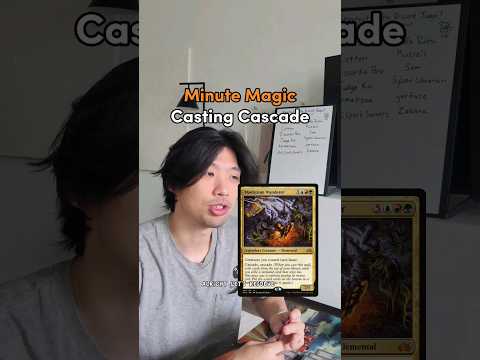
Multiple instances of Cascade in Magic: The Gathering allow you to trigger the ability multiple times when you cast the spell. Each instance of Cascade will exile cards from the top of your library until you exile a nonland card with a lower converted mana cost than the original spell. You may then cast that spell without paying its mana cost. These triggers resolve one at a time, each potentially leading to further cascading spells. The key is that each Cascade trigger operates independently, effectively chaining together free spell casts.
Delving Deeper into the Mechanics of Cascade
Cascade is a triggered ability that fundamentally changes how spells are cast and interact within a game of Magic: The Gathering. When a spell with Cascade is cast, the Cascade ability triggers. This trigger leads to a series of events that can significantly impact the game state. The power of Cascade lies in its ability to generate card advantage and tempo by effectively casting spells for free.
The Cascade Process Explained
When a spell with Cascade is cast, here’s a breakdown of the process:
- Casting the Spell: You cast a spell that has the Cascade ability. This immediately triggers Cascade.
- Exiling Cards: You exile cards from the top of your library face down until you exile a nonland card with a converted mana cost less than the original spell.
- Optional Casting: You may cast the exiled nonland card without paying its mana cost. If you choose not to, or if you don’t find a valid card, all exiled cards are put on the bottom of your library in a random order.
- Resolution: The original spell that triggered Cascade resolves as normal, after the Cascade trigger has resolved.
The true complexity, and potential power, arrives when multiple instances of Cascade are involved.
The Magic of Multiple Cascades
Spells like Apex Devastator intrinsically possess multiple Cascade abilities, while other cards can grant Cascade to other spells. This opens up a world of strategic possibilities. Each instance of Cascade triggers independently when the spell is cast. Each instance of Cascade goes on the stack, and the controller orders the stack so that the first Cascade spell will exile cards, then find and cast a card of lesser mana value. Then the second Cascade goes off, exiling cards looking for another card of lesser mana value.
Consider Maelstrom Wanderer, a popular commander with “Cascade, Cascade.” When Maelstrom Wanderer is cast, both Cascade abilities trigger. These triggers are put on the stack in an order you choose. For example, resolving the first cascade could cast a 3 mana value sorcery. The second Cascade then resolves, potentially casting another valuable spell for free. This dramatically increases the impact of a single card.
The order in which these Cascade triggers resolve is crucial. As the controller of the spell with multiple Cascades, you determine the order the abilities resolve. This allows for strategic decisions like casting a creature that buffs other creatures before cascading into a larger threat. This layer of decision making makes multiple Cascades so powerful.
Strategic Implications and Deck Building
Understanding how multiple Cascades work opens up new avenues for deck building. Decks built around Cascade often leverage the card advantage and tempo generated by casting multiple spells for the price of one.
Cards that grant Cascade, like The First Sliver, are extremely powerful when built into a deck designed to abuse the mechanic, because each Sliver card that you cast from your hand will trigger the Sliver’s Cascade ability.
Building a Cascade deck involves carefully curating a selection of spells with varying mana costs to maximize the chances of hitting valuable targets when cascading. The mana curve should be optimized to ensure that you are consistently casting impactful spells off of Cascade triggers.
Countering Cascade
While Cascade is powerful, it is not unstoppable. Understanding how to interact with Cascade is crucial for playing against it.
-
Countering the Original Spell: Countering the original spell with Cascade prevents the Cascade ability from triggering in the first place. This is the most straightforward way to deal with Cascade.
-
Countering the Cascaded Spell: The spell cast from Cascade is a normal spell on the stack and can be countered like any other spell. This is often the most efficient use of counterspells, as it denies your opponent the card advantage generated by Cascade.
Ultimately, understanding the mechanics of multiple Cascades opens a deeper layer of gameplay strategy. It allows you to use Cascade more effectively in your own decks and more effectively counter Cascade when used by others.
Frequently Asked Questions (FAQs) about Multiple Cascades
Here are 15 FAQs to further clarify the nuances of multiple Cascade instances:
-
Can a spell have more than two instances of Cascade? Yes. While less common, a spell could theoretically have more than two instances of Cascade, leading to even more cascading spells. Each instance would trigger separately upon casting the original spell.
-
If I Cascade into another card with Cascade, do I get to Cascade again? Absolutely. Cascade triggers when you cast a spell, and it instructs you to cast another spell. So if you cascade into a spell that also has Cascade, then that spell will trigger its Cascade ability and you get to Cascade again. This can lead to powerful chains of spells.
-
Does the order I put the Cascade triggers on the stack matter? Yes. The order in which Cascade triggers resolve can significantly impact the game. You might want to cast a creature that buffs other creatures before cascading into a larger threat. Careful planning can maximize the value of your Cascade triggers.
-
What happens if I don’t find a valid card to cast with Cascade? If you exile all cards of lesser mana value to your cascading card, or you choose not to cast the exiled card, all exiled cards are put on the bottom of your library in a random order. Nothing happens, and the main spell still continues to resolve.
-
Can I Cascade into a land card? No. Cascade specifically states that you exile cards until you find a nonland card. Lands are ignored during the Cascade process.
-
If I Cascade into a card with X in its mana cost, how is the converted mana cost determined? When determining if a card with X in its mana cost can be cast off of the cascade trigger, X is considered to be 0. But if you cast a spell with X by cascading into it, you get to choose what the value of X is.
-
Can my opponent respond to the spell I cast off of Cascade? Yes. The spell cast from Cascade is a normal spell and goes on the stack like any other spell. Your opponent can respond to it with instants and activated abilities.
-
What happens if I Cascade into a counterspell, but there are no legal targets? If you Cascade into a discard spell when your opponent has no cards in hand, or if you cascade into a counterspell at an inopportune time, no harm done. The card simply goes on the bottom of your library with the rest of the spells you exiled with cascade.
-
If I have multiple creatures with the Cascade ability due to The First Sliver, and I cast a Sliver card, how many times do I Cascade? You will Cascade once for each instance of the Cascade ability among all creatures with cascade that you control. The First Sliver grants all slivers you cast from your hand Cascade. So each sliver in your hand will Cascade once, plus once for each creature with Cascade on the battlefield.
-
Can I Cascade into a card that also grants Cascade to other spells? Yes. If you cascade into a card like The First Sliver, any sliver you cast will now have Cascade and will Cascade when cast.
-
If I control Yidris, Maelstrom Wielder, does casting a card with Cascade from my hand cause it to Cascade twice? No, Yidris only grants an additional instance of Cascade to spells that are cast from your hand, so a spell cast from Cascade only gets to Cascade once, but anything from your hand will Cascade twice.
-
Does Cascade trigger if the original spell is countered? No. If the original spell is countered, it never resolves, and therefore its Cascade ability never triggers.
-
Can I use mana abilities to pay for the spell I cast off of Cascade? No. The spell cast from Cascade is cast “without paying its mana cost.” This bypasses any mana requirements for the spell.
-
If I Cascade into a modal spell (a spell with multiple modes), which mode do I choose? You choose the mode as you cast the spell. This allows you to tailor the spell to the current game state.
-
Where can I learn more about complex Magic: The Gathering rules and interactions? Resources like the official Magic: The Gathering rulebook, Judge Academy materials, and communities like the Games Learning Society at GamesLearningSociety.org are invaluable for deepening your understanding of the game. The Games Learning Society is a valuable resource for anyone looking to delve deeper into the intricacies of game design and mechanics.