How to Conquer the Unconquerable: Getting Around Indestructible in MTG
Fast answer first. Then use the tabs or video for more detail.
- Watch the video explanation below for a faster overview.
- Game mechanics may change with updates or patches.
- Use this block to get the short answer without scrolling the whole page.
- Read the FAQ section if the article has one.
- Use the table of contents to jump straight to the detailed section you need.
- Watch the video first, then skim the article for specifics.
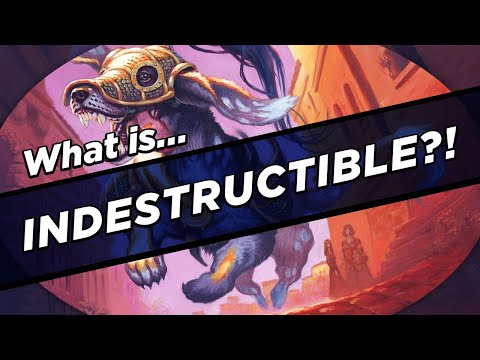
So, you’re facing down a hulking, seemingly invincible creature on the battlefield? Indestructible is a powerful keyword in Magic: The Gathering, but fear not! It’s not the absolute protection it appears to be. The key to overcoming indestructible lies in understanding exactly what it does and doesn’t do.
The direct answer is this: Indestructible only prevents destruction. Specifically, it prevents destruction by damage (combat or spell-based) and effects that explicitly use the word “destroy.” That’s it. This leaves a whole host of avenues for dealing with those pesky, resilient permanents. You need to go around the ability, not through it.
Here’s a breakdown of the strategies and tactics you can employ to outmaneuver those “untouchable” creatures:
-
Exile: This is arguably the cleanest and most reliable way to deal with an indestructible permanent. Exile removes the card from the game entirely, bypassing its indestructible nature. Cards like “Swords to Plowshares,” “Path to Exile,” and many board wipes featuring exile effects are your best friends.
-
Reduce Toughness to Zero: Indestructible doesn’t protect a creature from having its toughness reduced to zero or less. When a creature’s toughness reaches zero (or goes negative), state-based actions kick in, and the creature is put into its owner’s graveyard. Effects that grant -X/-X, such as “Erebos’s Intervention” or “Languish,” are effective here.
-
Forced Sacrifice: Another powerful tactic is forcing your opponent to sacrifice the indestructible creature. Sacrifice effects aren’t considered destruction, so indestructible provides no protection. Cards like “Diabolic Edict,” “Grave Pact,” and “Pox” can be devastating against opponents relying on indestructible creatures.
-
Bounce (Return to Hand): While it doesn’t permanently remove the threat, bouncing an indestructible creature back to your opponent’s hand can buy you valuable time. This disrupts their strategy and forces them to replay the creature, potentially at a disadvantage. Cards like “Unsummon” or “Into the Roil” are solid options.
-
Tuck (Send to Library): Similar to bouncing, “tucking” a card into its owner’s library removes it from the battlefield. Unlike bouncing, it introduces a greater degree of uncertainty for your opponent, as they may not draw it again for quite some time. Cards like “Hinder” or “Spin into Myth” can be useful in certain situations.
-
Control/Steal: In some cases, the best solution is to turn your opponent’s weapon against them! Cards that allow you to gain control of a creature, like “Mind Control” or “Act of Treason” (followed by a sacrifice effect), can completely swing the game in your favor.
-
Counterspells: The most proactive solution is to prevent the indestructible creature from ever hitting the battlefield in the first place. Counterspells like “Counterspell,” “Negate,” and “Force of Will” are crucial for controlling the game and stopping threats before they become a problem.
-
Infect and Wither: Damage from sources with Infect or Wither places -1/-1 counters on creatures. As mentioned earlier, enough -1/-1 counters will reduce a creature’s toughness to zero, sending it to the graveyard, regardless of indestructible.
-
Enchantments and Auras: While you can’t use Auras or Enchantments to destroy it, you can use them to your advantage. For instance, Pacifism can prevent it from attacking, and if the indestructible creature relies on equipment, enchantments can disable it.
Essentially, the key to overcoming indestructible is to think outside the box and exploit the limitations of the ability. Remember, it only prevents destruction from damage and “destroy” effects. By employing these strategies, you can confidently face down even the most formidable indestructible threats. And remember, the Games Learning Society provides valuable resources for deepening your understanding of game mechanics and strategies. You can find more information at GamesLearningSociety.org.
Frequently Asked Questions (FAQs) about Indestructible in MTG
Here are some frequently asked questions regarding indestructible to further expand your understanding.
1. Can a board wipe kill indestructible creatures?
It depends on the board wipe. Board wipes that “destroy all creatures” like Wrath of God will not affect creatures with indestructible. However, board wipes that exile all creatures (e.g., “Farewell”), or give all creatures -X/-X (e.g., “Toxic Deluge”) will bypass indestructible.
2. Can you block an indestructible creature?
Yes! Indestructible creatures can be blocked normally. Indestructible only prevents them from being destroyed by damage dealt during combat or the use of the “destroy” keyword on another card. They can still be tied up in combat, preventing them from attacking elsewhere.
3. Can you counter an indestructible creature spell?
Absolutely! Indestructible is an attribute that applies to a permanent on the battlefield. When it’s still a spell on the stack, it can be countered like any other spell. Counterspells are a great way to prevent an indestructible threat from ever resolving.
4. Does Deathtouch kill indestructible creatures?
No. Deathtouch causes damage to be considered “lethal damage”. Since Indestructible makes it so creatures are not destroyed by lethal damage, Deathtouch does not affect indestructible creatures.
5. If an indestructible creature is dealt lethal damage, does it still get marked with damage?
Yes, it does! Damage is still marked on the creature. However, because of its indestructible ability, the game will ignore the state-based action that would normally destroy a creature with lethal damage marked on it.
6. Can infect kill an indestructible creature?
Yes! Infect deals damage in the form of -1/-1 counters. If enough -1/-1 counters are placed on an indestructible creature to reduce its toughness to 0 or less, the creature will be put into the graveyard due to state-based actions, bypassing its indestructible ability. This makes infect a significant threat to indestructible creatures.
7. What happens if an indestructible creature is enchanted with “Arrest”?
The indestructible creature is still enchanted by “Arrest” and cannot attack or activate its abilities as long as “Arrest” remains attached. Indestructible doesn’t prevent a creature from being enchanted or having its abilities restricted.
8. Can I target an indestructible creature with a spell like “Murder”?
No. “Murder” says “Destroy target creature”, which specifically targets and attempts to destroy a creature. You cannot do this to an indestructible creature.
9. If an indestructible creature has hexproof, how can I remove it?
This is a tricky situation, but not impossible. You can’t target it with spells or abilities because of hexproof. Your best bet is to use a board wipe that exiles all creatures (which doesn’t target), or a sacrifice effect that forces your opponent to sacrifice a creature (also non-targeting).
10. Does trample damage go through an indestructible blocker?
Yes! Trample damage can be assigned to the defending player even if the blocking creature is indestructible. You only need to assign lethal damage to the indestructible blocker (which it ignores), and then you can assign the remaining damage to the player being attacked.
11. Can I sacrifice my own indestructible creature?
Absolutely! Indestructible only prevents destruction. Sacrificing a creature is a cost or effect that puts the creature directly into the graveyard without destroying it. You can freely sacrifice your own indestructible creatures for various effects.
12. Does first strike matter against an indestructible creature?
Not really, unless the first strike creature also has deathtouch and the indestructible creature doesn’t have first or double strike. But in that case the creature dies because of its toughness being reduced to 0, and not due to being destroyed.
13. Does regenerate prevent the exile of an indestructible creature?
No. Regenerate replaces “destroying” with “removing from combat” and “tapping” (and removing all damage). Since exile doesn’t involve destruction, regenerate offers no protection.
14. Can an indestructible creature still be bounced back to my hand or exiled if it’s enchanted with an Aura that says “Enchanted creature can’t be exiled or returned to hand?”
Yes, if the enchantment is on the indestructible creature, it will not allow you to bounce it or exile it.
15. How does shroud interact with indestructible?
Shroud prevents a permanent from being the target of spells or abilities. This means you can’t target it with spells like Murder. However, shroud doesn’t prevent it from being affected by non-targeting effects like board wipes. Indestructible protects from destruction, while shroud prevents being targeted. They protect from different things.
By understanding these nuances and incorporating these strategies into your gameplay, you’ll be well-equipped to handle any indestructible threat that comes your way. Good luck, and happy battling!