Crafting an Endless Inferno: Your Guide to Infinite Lava in Minecraft
Fast answer first. Then use the tabs or video for more detail.
- Watch the video explanation below for a faster overview.
- Game mechanics may change with updates or patches.
- Use this block to get the short answer without scrolling the whole page.
- Read the FAQ section if the article has one.
- Use the table of contents to jump straight to the detailed section you need.
- Watch the video first, then skim the article for specifics.
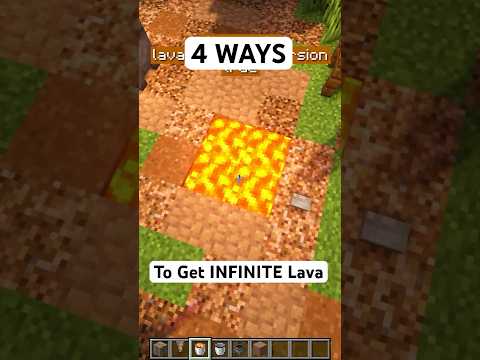
So, you want infinite lava in Minecraft? Fantastic! It’s an incredibly useful resource for powering furnaces, creating light, and even for some sneaky traps (we’re not judging!). The key to creating a truly infinite lava source lies in exploiting a clever mechanic involving pointed dripstone, cauldrons, and a readily available lava source. Let’s dive in!
The process involves setting up a contained space with a lava source block positioned directly above a pointed dripstone. Below the dripstone, you place a cauldron. Over time, the dripstone will slowly drip lava into the cauldron, eventually filling it. You can then harvest the lava from the cauldron with a bucket, and the process will continue refilling the cauldron, providing you with a renewable, effectively infinite source of lava. Remember that it is not duplicating the lava, but rather moving it from the source to the cauldron.
Here’s the step-by-step:
-
Find a Suitable Location: Choose a safe, enclosed area. Non-flammable blocks are ideal, especially if building in the Overworld, to prevent accidental fires. The Nether is naturally a good option for this.
-
Build the Enclosure: Create a small, enclosed space, typically a 3×3 area, around where your lava source will be. Leave a one-block gap in the center of the roof directly above where the dripstone will be. This gap will serve as the place from where you will fill the above block with lava.
-
Place the Lava Source: Place a block directly under the one-block gap you just left and pour a bucket of lava into it, creating a lava source block. This is your starting point.
-
Position the Dripstone: Directly beneath the lava source block, attach a pointed dripstone to the bottom of the block. The dripstone needs to be pointing downwards.
-
Place the Cauldron: Place a cauldron on the ground, directly beneath the pointed dripstone. Ensure there are no obstructions between the dripstone tip and the cauldron.
-
Wait and Harvest: Over time (about one in-game day), the cauldron will gradually fill with lava. Once full, you can use an empty bucket to collect the lava. The lava source block above will not be depleted and will continue to drip into the cauldron, replenishing your supply!
This setup, while not technically creating lava from nothing, provides a sustainable and practical way to have a constant source of lava available for your needs. It is particularly useful in areas where lava is scarce. Now, let’s address some common questions!
Frequently Asked Questions (FAQs) About Infinite Lava
How far away can lava burn wood?
Lava can set flammable blocks on fire in a 3×3 square directly above the lava, and a 5×5 square above that. This is a crucial consideration when building near wood or other flammable materials. Always prioritize fire-resistant blocks like stone, brick, or netherrack around your lava source.
What happens when lava touches water?
The interaction between lava and water depends on their flow states. When flowing water touches a lava source block, it creates obsidian. When flowing lava touches a water source block, it creates stone. When flowing lava and flowing water meet, they create cobblestone.
Can you put lava in buckets?
Yes! You can fill an empty bucket with lava by using it on a lava source block or lava in a cauldron. Remember, you must target a source block (one that isn’t flowing) or lava contained within a cauldron. Flowing lava won’t fill a bucket.
What is the item ID for lava?
The numeric item ID for still lava (obtained via inventory editors) is 11. However, it’s generally easier and more rewarding to obtain lava through legitimate gameplay methods like finding it in the world or creating a lava farm.
Why is my lava turning into cobblestone or obsidian?
Your lava is turning into cobblestone or obsidian because it’s interacting with water. If flowing water touches flowing lava, you get cobblestone. If flowing water touches a lava source block, you get obsidian. Ensure that your lava source is isolated from any water sources to prevent unwanted transformations.
How long do cauldrons take to fill with lava?
Typically, a cauldron will take approximately one in-game day (20 minutes of real-time) to fill completely with lava using the dripstone method. This can vary slightly depending on the game version and any lag issues.
How long does lava last in a furnace?
A lava bucket is an extremely efficient fuel source for furnaces. It has a burning value of 1000 seconds, allowing it to smelt 100 items. This is significantly longer than a coal block, which smelts 80 items. After use, the lava bucket is returned as an empty bucket.
What can’t be burned in lava in Minecraft?
Many items are destroyed by lava, but certain materials are immune. This includes obsidian and most netherite items. Note that wooden chests are also immune to fire but items inside will burn if the chest is destroyed by other means.
How do you get past lava safely in the Nether?
The Nether is riddled with lava, but several strategies can help you navigate it safely. Using a Strider is a reliable method. Striders are passive mobs that spawn in the Nether and can be ridden with a saddle. You can also use fire resistance potions to provide temporary immunity to lava damage. Another trick involves carefully placing blocks to create a safe path across lava seas.
How do you spawn lava in Minecraft?
Lava naturally spawns in the Nether as large oceans below y-level 31. It also spawns in the Overworld, replacing air blocks in caves deep underground. You can’t directly “spawn” lava like you can with certain mobs using commands, but exploring these areas will yield plenty of lava sources.
Can you get infinite obsidian?
While there isn’t a truly infinite source of obsidian, you can create more through controlled interactions between lava and water. By pouring water onto a lava source block, you create obsidian, which can then be mined with a diamond pickaxe. Locating lava pools with naturally occurring waterfalls can also provide renewable obsidian sources.
What are the best blocks to use for building a lava farm?
When building a lava farm, prioritize non-flammable blocks. Stone, cobblestone, brick, and netherrack are excellent choices. These materials will prevent accidental fires and ensure the longevity of your farm, especially if you’re building it in the Overworld.
What happens if you don’t sleep in Minecraft?
If you go for three in-game days (72000 ticks, or 1 hour of real time) without sleeping, you will be attacked by phantoms.
What is the difference between lava source blocks and flowing lava?
Lava source blocks are stationary and can be collected with a bucket. Flowing lava is dynamic, spreading outwards from a source block. Only source blocks can be harvested, and they are the key to creating renewable lava farms.
How long is a Minecraft day if you sleep?
Nights in Minecraft last roughly seven minutes. A full in-game day lasts 20 minutes.
By understanding these concepts and employing the dripstone-cauldron method, you can establish a reliable and sustainable supply of lava in your Minecraft world. Now go forth and harness the power of the molten depths! Remember to always prioritize safety when working with lava. For more information on games and learning, visit the Games Learning Society at https://www.gameslearningsociety.org/.