Understanding Cooldowns in Pokémon GO: A Trainer’s Guide
Fast answer first. Then use the tabs or video for more detail.
- Watch the video explanation below for a faster overview.
- Game mechanics may change with updates or patches.
- Use this block to get the short answer without scrolling the whole page.
- Read the FAQ section if the article has one.
- Use the table of contents to jump straight to the detailed section you need.
- Watch the video first, then skim the article for specifics.
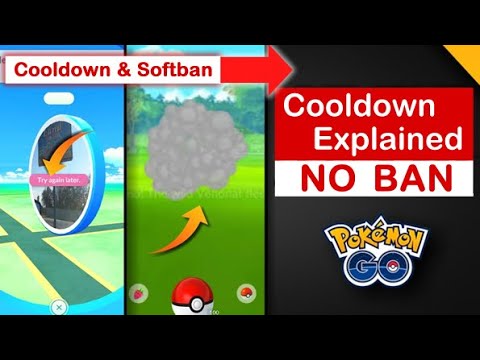
So, you’re diving deep into the world of Pokémon GO, maybe even exploring some… alternative methods of play, and you’ve stumbled upon the term “cooldown“. Let’s break it down. What exactly triggers a cooldown in Pokémon GO, and how can you navigate this sometimes frustrating mechanic?
The simple answer: A cooldown in Pokémon GO is triggered by performing in-game actions that are geographically sensitive after a significant change in your perceived location within the game. Think of it as Niantic’s way of preventing players from bouncing across the globe instantaneously, which would be physically impossible and strongly suggests the use of location spoofing. Actions like catching Pokémon, spinning PokéStops, battling in Gyms, and even feeding berries to Pokémon in Gyms will trigger a cooldown if performed too soon after a major location jump.
The duration of the cooldown depends entirely on the distance between your last “action” location and your current location. The further the jump, the longer the wait. This can range from a few minutes to a couple of hours. Understanding this mechanic is crucial, especially if you’re experimenting with location spoofing or even just travelling quickly between distant locations.
Actions That Trigger a Cooldown
Let’s get specific. Here are some actions that will trigger a cooldown timer if you’ve recently made a significant location change:
- Catching a wild Pokémon: Attempting to catch a Pokémon will almost certainly trigger a cooldown if you’ve recently teleported a considerable distance.
- Spinning a PokéStop: Trying to spin a PokéStop after teleporting is another common trigger for cooldowns.
- Placing a Pokémon in a Gym: This action is geographically locked and will trigger a cooldown if you’ve moved too far too recently.
- Battling in a Gym (including Raids): Engaging in a Gym battle or participating in a Raid battle is a surefire way to trigger a cooldown.
- Feeding a Berry to a Gym Defender: Remotely feeding berries to Pokémon in Gyms is also subject to cooldown restrictions. Even dropping a ball on an encounter can trigger a cooldown!
- Accidental Drop of a ball on Encounter Screen: Many players don’t know that just clicking on an encounter and accidentally dropping a ball can trigger a cooldown.
Actions That Do NOT Trigger a Cooldown
Knowing what doesn’t trigger a cooldown is just as important. Here are some actions you can safely perform even after a significant location change, without risking a cooldown:
- Teleporting to a new location: This might seem counterintuitive, but the act of teleporting itself doesn’t trigger a cooldown. It’s the subsequent actions you take at the new location that matter.
- Encountering a wild Pokémon: Simply clicking on a Pokémon on the map to initiate an encounter does not trigger a cooldown until you try to catch it (or flee).
- Healing a Gym Defender with a Berry (if far away): If you’re using remote berry feeding and are already outside the cooldown range from your last action, this won’t trigger a new cooldown.
- Obtaining your free Raid Pass by clicking on a Gym (without spinning it): Interacting with a Gym to claim your daily free raid pass without spinning the photo disc doesn’t trigger a cooldown.
- Hatching Eggs: Hatching eggs is safe regardless of your location changes.
- Trading Pokémon: Trading is a global activity and isn’t tied to your immediate location.
- Autowalking (without catching or spinning): Using an autowalker to passively explore a location doesn’t trigger cooldowns as long as you aren’t actively catching Pokémon or spinning stops.
Understanding the Cooldown Timer
The cooldown timer begins immediately after you perform an action that triggers it. This is crucial to remember. The duration of the timer depends on the distance between your previous action and your current location. There is a specific formula but the general rule is:
- Short Distances (a few kilometers): Shortest cooldowns, generally under 30 minutes.
- Medium Distances (hundreds of kilometers): Moderate cooldowns, usually between 1 and 2 hours.
- Long Distances (thousands of kilometers): Longest cooldowns, typically around 2 hours.
Avoiding Bans and Staying Safe
While understanding cooldowns is important for all players, it’s particularly crucial for those who might be using spoofing tools. Breaking cooldown rules can lead to soft bans, which temporarily restrict your ability to catch Pokémon or spin PokéStops. Repeated violations can even result in a permanent ban on your account.
Respecting cooldowns, even when spoofing, does NOT guarantee you won’t be banned. Other factors, like how you are interacting with the game, also factor into your risk. PGSharp has a built in Cooldown Timer option to show you when your cooldown ends.
Why Cooldowns Exist
Cooldowns are a necessary evil. They’re designed to prevent unfair advantages and maintain the integrity of the game. Imagine if someone could teleport instantly across the globe to snipe rare Pokémon or dominate Gyms. It would ruin the experience for everyone else. The concept of fair play in games, especially mobile games with location-based elements, has been studied extensively by scholars in the Games Learning Society. You can learn more about their research at GamesLearningSociety.org.
Frequently Asked Questions (FAQs)
1. Does clicking on a Gym trigger a cooldown?
No, simply clicking on a Gym to view it does not trigger a cooldown. Only actions like battling, placing Pokémon, or feeding berries will do so. However, spinning the Gym’s photo disc will trigger a cooldown.
2. How long is a soft ban in Pokémon GO?
Soft bans usually last anywhere from a few minutes to a couple of hours, with the longest duration typically being around 2 hours. The exact duration depends on the severity of the perceived violation.
3. What is the first warning on Pokémon GO?
The first warning, often referred to as “Strike 1”, involves receiving an in-app message indicating that Niantic has detected cheating on your account. This strike may also limit your ability to encounter rare Pokémon in the wild.
4. How do I get rid of a 7-day ban in Pokémon GO?
A 7-day ban is a more serious penalty than a soft ban. You can appeal the suspension by contacting Niantic’s support team and selecting “Ban Appeal” from the issue type dropdown on their support form. There is no other way to remove it.
5. Will I get banned for using PGSharp?
Using PGSharp carries a risk of getting banned because it is considered a third-party application that violates the Niantic Terms of Service. To minimize the risk, create a PTC account, avoid frequent location changes, and use the app cautiously.
6. Can I evolve Pokémon during a cooldown?
Yes, evolving Pokémon does not trigger a cooldown. It’s a safe action to perform regardless of your location changes. This also applies to Mega Evolving after the initial cooldown.
7. What is a hard ban in Pokémon GO?
A hard ban, or permanent ban, completely removes your access to the game. It’s the most severe penalty and is usually reserved for repeated or egregious violations of the Terms of Service.
8. How do you know if you’ve been banned in Pokémon GO?
You’ll know you’ve been banned if you see the message “Your account has been suspended/terminated for violating the Terms of Service” when attempting to log in to Pokémon GO.
9. Is it okay to skip cooldown?
Skipping cooldowns in the real world after exercise can be detrimental to your health. However, in the context of Pokémon GO, “skipping” a cooldown refers to performing an action before the timer has expired, which can lead to a soft ban.
10. Does Niantic ban spoofers?
Yes, Niantic actively bans players who are caught using spoofing tools or engaging in other forms of cheating.
11. Is it safe to use iPoGo?
iPoGo, like PGSharp, is considered an unsafe spoofing app because it violates the Niantic Terms of Service. Using it carries a risk of getting banned.
12. Can I still spin PokeStops if I’m soft banned?
No, if you’re soft banned, you won’t be able to spin PokeStops. The PokeStops will appear, but they will do nothing when you spin them. You will not receive any items.
13. Can you teleport and still play Pokemon Go?
Yes, but not without a cooldown. Using Pokemon Go spoofing apps will let you teleport to another place, but you must be mindful of how long the cooldown timer is so you don’t get soft banned.
14. What is a spoofing cooldown?
A spoofing cooldown is a waiting period a player must observe after performing an action within Pokémon GO following a significant location change, to mimic real-world travel and avoid penalties from Niantic. The duration of the cooldown depends on the distance between the player’s last action location and their new location.
15. What happens if I fail to observe the cooldown?
If you fail to observe the cooldown, you’ll likely experience a “soft ban.” This can prevent you from spinning PokeStops or catching Pokemon for a period of time, ranging from a few minutes to a few hours.