How Much Faster Is the Super Game Boy? Exploring the Speed Differences and More
Fast answer first. Then use the tabs or video for more detail.
- Watch the video explanation below for a faster overview.
- Game mechanics may change with updates or patches.
- Use this block to get the short answer without scrolling the whole page.
- Read the FAQ section if the article has one.
- Use the table of contents to jump straight to the detailed section you need.
- Watch the video first, then skim the article for specifics.
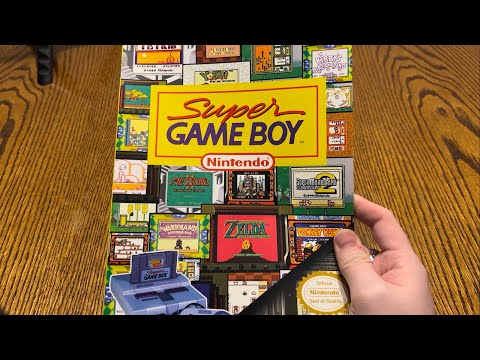
The Super Game Boy (SGB) runs Game Boy games approximately 2.4% faster than the original Game Boy hardware. This is due to the SGB utilizing the Super Nintendo Entertainment System’s (SNES) clock speed, which is divided by 5, resulting in a 4.295 MHz clock speed for the Game Boy emulation, compared to the original Game Boy’s 4.194 MHz. While seemingly insignificant, this difference can be noticeable to experienced players, affecting the pace of gameplay and sometimes even the audio.
Understanding the Super Game Boy
The Super Game Boy was an ingenious accessory released by Nintendo in 1994 that allowed you to play your Game Boy cartridges on the SNES. It essentially contained a complete Game Boy system on a chip, but instead of using its own screen, it outputted the visuals to your television via the SNES. This opened up a new way to experience Game Boy games, offering a larger screen and the potential for enhanced features.
Super Game Boy Enhanced Games
One of the most exciting aspects of the Super Game Boy was its capability for enhanced features in specific games. Developers could leverage the SNES’s additional processing power and color palette to add unique borders, color enhancements, and even multiplayer capabilities using the SNES controllers. These “Super Game Boy Enhanced” games offered a more immersive and visually appealing experience compared to playing them on the original Game Boy. Games like Killer Instinct and The King of Fighters ’95 famously offered local multiplayer options using two SNES controllers when played via the Super Game Boy.
Super Game Boy 2: A Refined Experience
The Super Game Boy 2 (SGB2) was a later revision of the original SGB, released only in Japan. It addressed some of the shortcomings of the original, most notably restoring the original Game Boy clock speed of 4.194 MHz. This eliminated the slightly faster gameplay experienced on the original SGB, providing a more authentic Game Boy experience. The SGB2 also included a link port, allowing for two-player connectivity with another SNES/SGB2 or a Game Boy. Additionally, the SGB2 featured different border designs than the original.
Frequently Asked Questions About the Super Game Boy
Here are some frequently asked questions to deepen your understanding of the Super Game Boy:
-
What processor did the Game Boy use? The Game Boy used a custom Sharp LR35902 processor, often referred to as the DMG-CPU. It was a hybrid design based on the Intel 8080 and Zilog Z80 architectures, running at approximately 4.19 MHz.
-
What is the resolution of the Game Boy and Super Game Boy? The original Game Boy had a screen resolution of 160×144 pixels. The Super Game Boy, when displaying Game Boy games, still outputs the same 160×144 resolution for the game screen. However, the SNES outputs at a higher resolution, typically 256×224, allowing for borders and other graphical enhancements around the Game Boy game screen.
-
Can the Super Game Boy play Game Boy Color games? The original Super Game Boy can play original Game Boy games and Game Boy Color games that are backwards compatible. However, it will only display them in black and white (or with a limited color palette) as if they were running on a standard Game Boy. For full color support, you would need a Game Boy Color or Game Boy Advance.
-
Is the Game Boy Advance more powerful than the SNES? The Game Boy Advance (GBA) is generally considered to be more powerful than the SNES, particularly in terms of its CPU. While the SNES might have advantages in certain areas like sound capabilities, the GBA’s faster CPU and larger RAM allow it to handle more complex games and even emulate SNES titles with impressive accuracy.
-
How many frames per second (FPS) did Game Boy games run at? Most Game Boy games aimed for 60 FPS (or 50 FPS in PAL regions). However, due to hardware limitations, many games experienced slowdowns, dropping below this target, especially during graphically intense scenes.
-
Why was the Super Game Boy created? The Super Game Boy was created to allow players to enjoy their Game Boy games on a larger screen with the added potential for enhanced graphics and features. It extended the lifespan of Game Boy games and provided a compelling reason for Game Boy owners to invest in an SNES.
-
Is the Game Boy bulletproof? There have been claims and anecdotal evidence suggesting the original Game Boy is remarkably durable, even to the point of withstanding bullet impacts in some extreme cases. While not intentionally designed as such, its robust construction has contributed to its legendary status for durability.
-
Which Game Boy model is considered the best? Many enthusiasts consider the Game Boy Advance SP (AGS-101) to be the best Game Boy model. It features a backlit screen that provides excellent visibility, is portable, and can play the entire library of Game Boy, Game Boy Color, and Game Boy Advance games.
-
What is the best-selling Game Boy game of all time? While Pokémon is the most popular franchise on the Game Boy, Tetris is one of the best-selling individual Game Boy game.
-
What replaced the Game Boy? The Nintendo DS eventually replaced the Game Boy line, offering dual screens, touch controls, and backwards compatibility with Game Boy Advance games.
-
What is Super Game Boy Enhanced? Super Game Boy Enhanced refers to Game Boy games that were specifically designed to take advantage of the Super Game Boy’s capabilities. These games often included custom borders, color palettes, and even special game modes when played on the SGB.
-
Can the Super Game Boy play Pokemon? Yes, the Super Game Boy can play Pokémon games designed for the original Game Boy and Game Boy Color. However, Game Boy Color games will be displayed in black and white or with limited color palettes.
-
Why was the Game Boy so popular? The Game Boy was popular for many reasons, including its portability, its extensive library of games, its affordable price, and its innovative approach to handheld gaming. It brought the experience of console gaming to a portable format, revolutionizing the industry.
-
What is a ‘System On Chip’ (SoC)? A ‘System On Chip’ (SoC) integrates all the necessary electronic circuits for a complete system onto a single integrated circuit (IC). In the context of the Game Boy, the Sharp LR35902 processor is an example of an SoC, combining the CPU, memory controller, and other essential components.
-
How can educators use gaming and game design in the classroom to improve student engagement and understanding? Educators can leverage games and game design to teach a variety of subjects. This approach fosters collaboration, problem-solving, and creative thinking. For resources and insights on incorporating game-based learning, consider visiting the Games Learning Society at GamesLearningSociety.org.
The Super Game Boy: A Classic Accessory
The Super Game Boy remains a beloved accessory for SNES owners and fans of classic Game Boy games. Its ability to bring these portable experiences to the big screen, along with the added enhancements in select titles, solidified its place in gaming history. While the speed difference on the original SGB might have been a minor quirk, it’s a testament to the ingenuity and innovation that defined Nintendo’s approach to gaming in the 1990s.