The Destruction of Leviathan: Myth, Symbolism, and Divine Power
Fast answer first. Then use the tabs or video for more detail.
- Watch the video explanation below for a faster overview.
- Game mechanics may change with updates or patches.
- Use this block to get the short answer without scrolling the whole page.
- Read the FAQ section if the article has one.
- Use the table of contents to jump straight to the detailed section you need.
- Watch the video first, then skim the article for specifics.
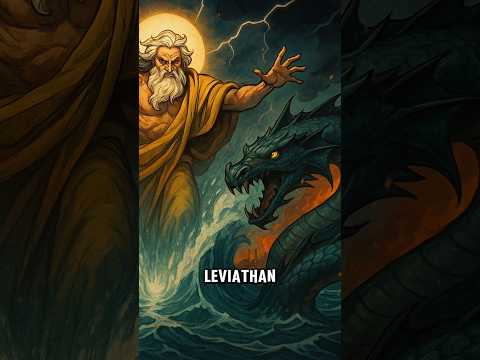
Leviathan, a name that resonates with power, mystery, and primal fear. Across various religious and mythological texts, this colossal sea serpent embodies chaos, the untamed forces of nature, and the ultimate test of divine authority. The destruction of Leviathan, therefore, isn’t just a story of brute force, but a powerful narrative laden with symbolism and theological implications. In the Old Testament, God is the one who is credited with the destruction of the Leviathan. He slays the multiheaded sea serpent and gives it as food to the Hebrews in the wilderness. In the Book of Isaiah, God also slays the serpent as a symbol of Israel’s enemies.
The Biblical Accounts: God’s Triumph Over Chaos
The primary accounts of Leviathan’s destruction are found within the Hebrew Bible, primarily in the books of Psalms, Isaiah, and Job. While the specifics vary, the core theme remains consistent: Leviathan is ultimately defeated by God’s power.
Psalms 74:14: A Divine Victory
In Psalm 74:14, the destruction of Leviathan is presented as a historical event and a demonstration of God’s creative and destructive power. It says, “You crushed the heads of Leviathan and gave it as food to the creatures of the desert.” Here, God is depicted as directly slaying Leviathan, breaking its multiple heads, and providing its carcass as sustenance for the people in the wilderness. This act highlights God’s provision and protection for his chosen people.
Isaiah 27:1: Prophecy of Future Judgment
The Book of Isaiah presents a more eschatological perspective. Isaiah 27:1 states, “In that day the Lord will punish Leviathan the fleeing serpent, with his fierce and great and mighty sword, even Leviathan the twisted serpent; and He will kill the dragon who lives in the sea.” Here, Leviathan is not just a literal sea monster, but a symbol of Israel’s enemies. God’s future judgment will involve the complete and utter destruction of these forces of opposition, symbolized by the slaying of Leviathan.
Job 41: A Display of Divine Power
The Book of Job contains the most extensive description of Leviathan. While it doesn’t explicitly describe Leviathan’s destruction, it emphasizes the creature’s invulnerability to human weapons and its immense power. God uses the description of Leviathan to demonstrate to Job the vastness of His creation and the limitations of human understanding. By showcasing Leviathan’s untamable nature, God underscores his own supreme power and authority. This implicitly suggests that only He is capable of defeating such a creature.
Beyond the Bible: Other Interpretations and Analogies
While the Bible provides the foundation for Leviathan’s story, other religious and mythological traditions offer unique perspectives on its demise, or at least its symbolic representation.
Manichaeism: A Tragic Defeat
In Manichaeism, an ancient religion influenced by Gnostic ideas, the story takes a different turn. The sons of the fallen angel Shemyaza kill Leviathan, but this act is not portrayed as heroic. Instead, it’s depicted as foolish and transient, symbolizing the fleeting nature of worldly triumphs. The sons of Shemyaza are subsequently killed by archangels, highlighting the ultimate futility of their victory.
Ugaritic Mythology: Lotan and the Sea
Scholars often point to parallels between Leviathan and the Ugaritic sea monster Lotan. In Ugaritic mythology, the god Baal battles and defeats Lotan, a serpentine creature representing chaos. This myth is considered a precursor to the biblical narratives and provides insights into the ancient Near Eastern understanding of the struggle between order and chaos.
Symbolism and Theological Implications
The destruction of Leviathan carries profound symbolic weight, transcending the literal interpretation of a sea monster’s death.
- Triumph Over Chaos: Leviathan represents the chaotic, untamed forces of the world. God’s defeat of Leviathan symbolizes his control over chaos and the establishment of order.
- Victory Over Evil: As a symbol of Israel’s enemies, Leviathan’s destruction represents God’s ultimate victory over evil and oppression.
- Divine Power and Authority: The inability of humans to harm Leviathan emphasizes God’s unparalleled power and authority. Only He is capable of defeating such a formidable creature.
- Provision and Protection: In Psalm 74, Leviathan’s carcass becomes food for the people in the wilderness, highlighting God’s provision and care for his followers.
- Eschatological Hope: Isaiah’s prophecy of Leviathan’s future destruction offers hope for the final triumph of good over evil and the establishment of God’s kingdom.
The story of Leviathan’s destruction continues to resonate in literature, art, and popular culture, serving as a powerful reminder of the ongoing struggle between order and chaos, good and evil, and the ultimate triumph of divine power. For educators interested in exploring the themes of mythology and storytelling, resources available at Games Learning Society can provide valuable insights and tools. Check out GamesLearningSociety.org for more details.
Frequently Asked Questions (FAQs)
1. Is Leviathan a literal creature or a symbolic representation?
Leviathan is generally understood as both a literal creature in ancient Near Eastern mythology and a powerful symbolic representation of chaos, evil, and the untamed forces of nature in biblical and other religious contexts.
2. What is the origin of the name “Leviathan”?
The name “Leviathan” comes from the Hebrew word “Livyatan,” which means “writhing sea monster” or “coiled.”
3. Does the Book of Revelation mention Leviathan?
While the Book of Revelation doesn’t explicitly use the name “Leviathan,” it features similar imagery of a powerful sea monster, often associated with Satan and the forces of evil.
4. Is Leviathan the same as the serpent in the Garden of Eden?
Some interpretations connect Leviathan to the serpent in the Garden of Eden, viewing both as symbols of temptation and rebellion against God. However, this connection is not explicitly stated in the Bible.
5. What does Leviathan represent in modern literature and art?
In modern literature and art, Leviathan often symbolizes overwhelming power, chaos, and the destructive forces of nature, as well as political and social forces.
6. Is there any scientific basis for the Leviathan myth?
Some theories suggest that the Leviathan myth may have been inspired by sightings of large marine animals, such as whales, crocodiles, or sea serpents. Fossils of prehistoric creatures like Livyatan melvillei may also contribute to the origin of the myth.
7. How does the Talmud describe the creation of Leviathan?
The Talmud states that God created Leviathan on the fifth day of creation but, realizing its immense power, prevented it from procreating to avoid the destruction of the world.
8. What is the relationship between Leviathan and Behemoth?
Leviathan and Behemoth are often paired together in Jewish tradition as symbols of the untamed forces of the sea and land, respectively. They represent the vastness and complexity of God’s creation.
9. Was Leviathan considered good or evil?
The perception of Leviathan as good or evil varies depending on the cultural and religious context. In some ancient Semitic religions, it may have been treated like a goddess. However, in the context of Gnostic cosmology, it is connoted negatively.
10. What are some of the alternative names or descriptions of Leviathan?
Leviathan is sometimes referred to as Lotan in Ugaritic mythology, and described as a sea serpent, dragon, crocodile, or whale-like animal in different texts.
11. How does the description of Leviathan in the Book of Job differ from other biblical accounts?
The Book of Job provides the most detailed physical description of Leviathan, emphasizing its invulnerability to human weapons and its fearsome appearance, including fire-breathing capabilities.
12. In what ways is Leviathan used as a political symbol?
Leviathan can be used to symbolize an all-powerful state or government, sometimes with negative connotations of oppression or control. This usage is derived from Thomas Hobbes’s book “Leviathan,” where the state is portrayed as a powerful entity necessary to maintain social order.
13. Are there any modern-day creatures that resemble the biblical Leviathan?
While there are no exact modern-day equivalents, some speculate that creatures like the super-croc Sarcosuchus or various large marine animals could have inspired the Leviathan myth.
14. What is the significance of God giving Leviathan as food to the people in the wilderness?
This act symbolizes God’s provision and care for his people, even in the harshest conditions. It also demonstrates God’s power to transform a symbol of chaos and danger into a source of sustenance.
15. How has the Leviathan myth influenced popular culture?
The Leviathan myth has influenced countless books, movies, video games, and other forms of popular culture, often appearing as a monstrous sea creature or a symbol of overwhelming power and destruction.