The Genesis of Pac-Man: How a Slice of Pizza Created a Gaming Icon
Fast answer first. Then use the tabs or video for more detail.
- Watch the video explanation below for a faster overview.
- Game mechanics may change with updates or patches.
- Use this block to get the short answer without scrolling the whole page.
- Read the FAQ section if the article has one.
- Use the table of contents to jump straight to the detailed section you need.
- Watch the video first, then skim the article for specifics.
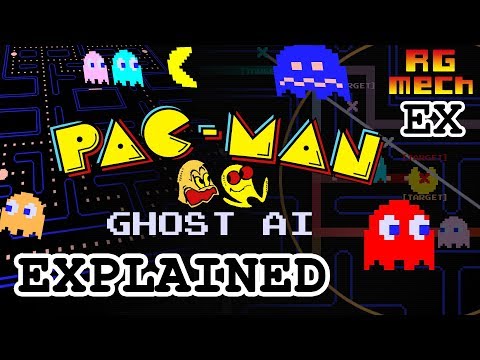
Pac-Man, the iconic yellow, chomping character, wasn’t born from complex algorithms or intricate design documents. Its creation story is surprisingly simple and charming, originating from a moment of inspiration over a half-eaten pizza. The game was conceived by Toru Iwatani, a game designer at Namco, in 1980. Iwatani, then just 24 years old, was brainstorming ideas for a food-themed game when he looked down at a pizza box. A missing slice revealed a shape that resembled a mouth, and thus, Pac-Man’s basic design was born. The simple yet brilliant concept would go on to revolutionize the arcade game industry and establish Pac-Man as a cultural phenomenon.
The Spark of Inspiration
The most frequently told origin story of Pac-Man revolves around that fateful pizza. While developing game concepts centered around eating, Iwatani reportedly took a slice from a pizza, and the remaining circular pie, with its wedge removed, instantly suggested the now-familiar Pac-Man shape. It’s a testament to the power of observation and the ability to find inspiration in the most mundane of objects. This “aha” moment provided the visual foundation for the game’s protagonist.
However, the pizza wasn’t the only source of inspiration for Pac-Man’s creation. Iwatani was also influenced by the Japanese onomatopoeic phrase “paku paku,” which means “chomp chomp,” perfectly capturing the sound of Pac-Man’s voracious appetite. Additionally, the kanji symbol for “taberu,” meaning “to eat,” also played a role in the character’s design and concept. This blend of visual inspiration and linguistic influence demonstrates the multifaceted approach that went into creating one of gaming’s most enduring icons.
From Concept to Arcade
With the character’s visual design and thematic inspiration solidified, the next step was to develop the game’s mechanics and environment. Pac-Man was designed to be a maze action game, where the player controlled the titular character through an enclosed labyrinth. The objective was straightforward: eat all the dots (originally envisioned as cookies) placed throughout the maze while avoiding the four colored ghosts. These ghosts – Blinky (red), Pinky (pink), Inky (cyan), and Clyde (orange) – were programmed with different movement patterns to create varying levels of difficulty and chase dynamics.
The game design was intentionally kept simple and accessible. It was meant to be a game that was easy to pick up and play, but difficult to master, and this focus on accessible and engaging gameplay is a key factor in its enduring popularity. The game’s simplicity, coupled with its addictive chase mechanics and charming character, helped propel it to global success, transcending cultural and linguistic barriers.
The Evolution of a Legend
Initially released in Japan under the name Puck Man, the name was changed to Pac-Man for its North American release due to concerns that the “P” might be vandalized into an “F” on arcade cabinets. Midway Manufacturing, through a licensing agreement with Namco America, brought the game to North America, where it became an instant hit. Pac-Man’s success wasn’t merely a flash in the pan. It quickly permeated popular culture, spawning merchandise, music, cartoons, and numerous sequels and adaptations.
The Impact of Ms. Pac-Man
Following the massive success of Pac-Man, its sequel Ms. Pac-Man was released in 1982. Ironically, the game was originally conceived as an enhancement kit for Pac-Man called Crazy Otto by programmers at General Computer Corporation (GCC). Ms. Pac-Man was widely praised for improving upon the original’s formula and introducing a female protagonist to the series. Ms. Pac-Man was not initially a Namco-produced game. However, it was later officially integrated as part of the Pac-Man franchise.
Pac-Man: A Lasting Legacy
Pac-Man’s impact on gaming and popular culture cannot be overstated. It helped popularize the arcade game format, broadened the demographics of gamers, and remains a beloved classic to this day. The legacy of Pac-Man lies in its ability to capture the imagination with simple yet effective gameplay, colorful characters, and a timeless appeal. It is a true testament to Iwatani’s ingenuity and vision, which transformed a simple observation into a worldwide phenomenon.
Frequently Asked Questions (FAQs)
Here are some frequently asked questions about Pac-Man, designed to provide a more comprehensive understanding of the game’s history, mechanics, and impact:
1. What inspired the visual design of Pac-Man?
The visual design of Pac-Man was directly inspired by the shape of a pizza with a slice removed. Iwatani also considered the Japanese character for mouth, "kuchi," and aimed to make a cute and colorful character.
2. What does “paku paku” mean and how did it influence Pac-Man?
“Paku paku” is a Japanese onomatopoeic phrase meaning “chomp chomp.” This sound, reflective of eating, influenced the concept behind Pac-Man, highlighting his voracious appetite and eating actions.
3. Why was Pac-Man originally called Puck Man?
The original Japanese name was Puck Man, derived from the Japanese word “paku.” However, due to its phonetic similarity to an offensive English word, it was changed to Pac-Man for its North American release.
4. Who were the four ghosts in Pac-Man and what were their Japanese names?
The four ghosts are Blinky (red, Chaser in Japanese), Pinky (pink, Ambusher in Japanese), Inky (cyan, Fickle in Japanese), and Clyde (orange, Stupid in Japanese).
5. Why do the ghosts chase Pac-Man?
In the original Pac-Man, the ghosts were designed to chase Pac-Man around the maze to prevent him from eating all the dots. It was the player's objective to avoid the ghosts while collecting the dots.
6. What happens when Pac-Man eats a power pellet?
When Pac-Man eats a larger, “power pellet,” the ghosts turn blue and dizzied, allowing Pac-Man to eat them for bonus points. Once a ghost is eaten, only their eyes return to their respawn center.
7. Was Pac-Man ever banned and why?
Pac-Man, along with other arcade games, was subject to attempts at being banned in some areas. Proponents alleged that games were responsible for social issues like violence and drug use. However, these claims were largely unfounded and faced legal challenges.
8. Who achieved the first perfect score in Pac-Man?
In 1999, Billy Mitchell was the first person to claim a perfect score of 3,333,360 points on the arcade version of Pac-Man.
9. How does one beat Pac-Man?
The best strategy for success in Pac-Man involves collecting all the small dots, eating any fruit that appears for bonus points, and utilizing power pellets to eat the ghosts. Mastering patterns and timing are key to high scores.
10. Is Pac-Man a hero or villain?
Pac-Man is generally regarded as a hero, especially in adaptations like the 2013 animated series "Pac-Man and the Ghostly Adventures." In this series, he protects Pac-World from Betrayus and his ghost army.
11. How does the Japanese word “taberu” relate to Pac-Man?
“Taberu,” the Japanese word for “to eat,” was another conceptual inspiration for Pac-Man. It reinforced the central theme of the game, which is focused on eating and consumption.
12. What did Pac-Man used to eat before power pellets?
Pac-Man's favorite snack pellets, the small dots, were originally conceived as cookies. The "power cookies" (larger pellets) allow Pac-Man to turn the tables and eat the ghosts temporarily.
13. Is there a female version of Pac-Man?
Yes, Ms. Pac-Man, originally an enhancement kit called Crazy Otto, was released in 1982 and is a critically acclaimed game that is seen by some to be even better than the original.
14. Is Pac-Man based on a true story?
Pac-Man is not based on a true story. He is a fictional character, designed and developed for the original arcade game.
15. What inspired the yellow color of Pac-Man?
While many attribute the yellow to various sources, it is most likely that the yellow used on Pac-Man was inspired by the color of LEGO bricks, as revealed by Sven, a former employee of Namco.