How Zeus Became a God: A Mythological Ascent to Power
Fast answer first. Then use the tabs or video for more detail.
- Watch the video explanation below for a faster overview.
- Game mechanics may change with updates or patches.
- Use this block to get the short answer without scrolling the whole page.
- Read the FAQ section if the article has one.
- Use the table of contents to jump straight to the detailed section you need.
- Watch the video first, then skim the article for specifics.
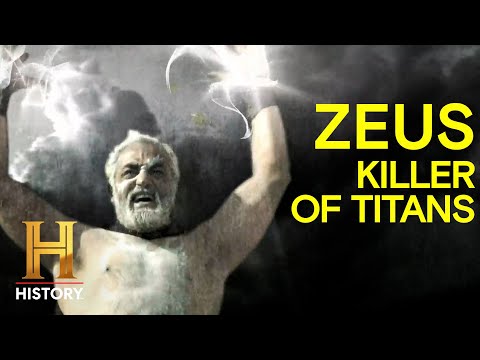
Zeus, the king of the Olympian gods, didn’t simply become a god – he was born a god. However, his journey to supreme power was a long and arduous one, marked by rebellion, war, and cunning. Zeus became the ruler of the gods through a combination of birthright, strategic alliances, and ultimately, a successful overthrow of the previous ruling power, his father Cronus. This usurpation, followed by a divinely ordained lottery, cemented his position as the ultimate authority in the Greek pantheon.
From Infant Deception to Titanic War
The Saving of Zeus
Zeus’s story begins with his father, Cronus, a Titan who ruled the cosmos. Prophesized to be overthrown by his own son, Cronus swallowed each of his children at birth: Hestia, Demeter, Hera, Hades, and Poseidon. His wife, Rhea, distraught at losing her children, devised a plan to save her sixth child, Zeus. She secretly gave birth to him on the island of Crete, hiding him in a cave on Mount Ida. Instead of Zeus, Rhea presented Cronus with a stone wrapped in swaddling clothes, which he unknowingly swallowed.
Growing Up in Secrecy
Zeus was raised in secret, nurtured by nymphs and protected by the mythical goat Amalthea, whose horn became the Cornucopia, a symbol of abundance. As he grew, he gained immense strength and began to plot his revenge against his tyrannical father.
Unleashing the Titans
Upon reaching adulthood, Zeus, with the help of Metis (the Titan goddess of wisdom), tricked Cronus into drinking a potion that caused him to regurgitate Zeus’s siblings. United, these six Olympian gods – Zeus, Poseidon, Hades, Hera, Demeter, and Hestia – formed a formidable force ready to challenge the Titans’ rule.
The Titanomachy: A Decade of Divine Warfare
The ensuing conflict, known as the Titanomachy, lasted for ten long years. It was a cosmic war of epic proportions, pitting the younger Olympian gods against the older Titans. The Titans, led by Cronus, were powerful, but Zeus possessed key advantages: his siblings, his growing strength, and the support of other powerful allies.
Allies from Tartarus
A crucial turning point in the Titanomachy was Zeus’s decision to release the Cyclopes and the Hecatoncheires (hundred-handed giants) from their prison in Tartarus. These beings, grateful for their liberation, aided Zeus and his allies in the war. The Cyclopes forged Zeus’s iconic thunderbolt, Poseidon’s trident, and Hades’s helmet of invisibility – weapons that proved decisive in the conflict.
Victory and Divine Partition
After a decade of relentless battle, Zeus and the Olympians triumphed over the Titans. Cronus and the other defeated Titans were imprisoned in Tartarus, the deepest abyss of the underworld. With the Titans defeated, the Olympians faced the task of dividing the cosmos among themselves.
The Drawing of Lots
To avoid further conflict, Zeus and his brothers, Poseidon and Hades, drew lots to determine their respective realms. Zeus won the draw for the sky and became the supreme ruler of the gods. Poseidon received the sea, and Hades received the underworld. While these were their primary domains, Zeus maintained overall authority over all realms.
The Gigantomachy and Establishment of Order
Zeus’s reign was not immediately secure. He faced another challenge in the form of the Gigantomachy, a war against the Giants, monstrous offspring of Gaia, the Earth goddess. The Giants sought to overthrow the Olympian order and reinstate the Titans. However, with the help of his divine siblings and mortal heroes, Zeus ultimately defeated the Giants and secured his place as the undisputed king of the gods. He then established his court on Mount Olympus, a majestic mountain in Greece, from where he ruled over the gods and mortals.
FAQs: Delving Deeper into Zeus’s Ascension
Here are some frequently asked questions to further illuminate the story of Zeus’s rise to power:
-
Was Zeus always destined to be king of the gods? While his birthright as a son of Cronus placed him in a position of potential power, his destiny was far from guaranteed. He had to actively fight for his position, overcome numerous obstacles, and strategically outmaneuver his rivals.
-
Why did Cronus swallow his children? Cronus swallowed his children out of fear. He had learned of a prophecy that he would be overthrown by his own son, just as he had overthrown his father, Uranus.
-
Who helped Rhea hide Zeus? Rhea was assisted by Gaia (Mother Earth) and Uranus (Father Sky) in hiding Zeus on Crete. She also entrusted his care to the nymphs Adrasteia and Ida, and the goat Amalthea.
-
What role did Metis play in Zeus’s victory over Cronus? Metis, the Titan goddess of wisdom, was a key ally to Zeus. She provided him with the potion that forced Cronus to regurgitate his siblings, a crucial step in their rebellion.
-
What were the key weapons used in the Titanomachy? The Cyclopes provided Zeus with his thunderbolt, Poseidon with his trident, and Hades with his helmet of invisibility. These weapons were instrumental in the Olympians’ victory.
-
What happened to the Titans after the Titanomachy? The defeated Titans were imprisoned in Tartarus, a deep, dark abyss in the underworld. They remained there for eternity, guarded by the Hecatoncheires.
-
What is the significance of the drawing of lots between Zeus, Poseidon, and Hades? The drawing of lots demonstrates a sense of fairness and order in the division of power after the defeat of the Titans. While Zeus became the supreme ruler, his brothers were given significant domains to govern.
-
What was the Gigantomachy? The Gigantomachy was a war between the Olympian gods and the Giants, monstrous offspring of Gaia (Earth). The Giants sought to overthrow the Olympian order, but were ultimately defeated by Zeus and his allies.
-
Why is Zeus often depicted with a thunderbolt? The thunderbolt is Zeus’s signature weapon, symbolizing his power over the sky and his ability to deliver swift and decisive judgment.
-
Did Zeus have absolute power? While Zeus was the supreme ruler of the gods, he wasn’t always able to act unilaterally. He was often influenced by the opinions of other gods and goddesses on the Olympian council, and he had to respect the laws of fate and destiny.
-
How did Zeus maintain his power throughout his reign? Zeus maintained his power through a combination of strength, wisdom, and diplomacy. He was a powerful warrior, a cunning strategist, and a skilled negotiator. He also used his divine authority to enforce his will and punish those who challenged his rule.
-
Are there modern interpretations of the Zeus mythology? Yes! You can explore modern game-based learning environments that draw upon Greek myths, including Zeus, to create engaging and effective educational experiences. See resources from the Games Learning Society at GamesLearningSociety.org for more information.
-
Was Zeus a benevolent or a tyrannical ruler? Zeus’s character is complex. While he brought order and justice to the cosmos, he was also known for his infidelities, his quick temper, and his sometimes arbitrary use of power. He was both a protector and a punisher, a god capable of great kindness and terrible wrath.
-
Did any mortals challenge Zeus’s authority? Yes, many mortals challenged Zeus’s authority, often facing dire consequences. Examples include Tantalus, who stole nectar and ambrosia from the gods, and Prometheus, who defied Zeus by giving fire to humanity.
-
How is Zeus viewed in contemporary culture? Zeus remains a powerful and enduring figure in contemporary culture, appearing in literature, film, television, and video games. He is often depicted as a symbol of power, authority, and divine justice, though his flaws and contradictions are also frequently explored.
In conclusion, Zeus’s journey to becoming the king of the gods was a complex and multifaceted process. It involved divine birth, familial betrayal, epic warfare, strategic alliances, and a touch of luck. His reign was marked by both triumphs and challenges, solidifying his position as one of the most iconic and enduring figures in mythology. His story continues to captivate and inspire, offering insights into the nature of power, leadership, and the eternal struggle between order and chaos.