Is the RTX 3070 Worse Than the RTX 3060? The Truth Revealed
Fast answer first. Then use the tabs or video for more detail.
- Watch the video explanation below for a faster overview.
- Game mechanics may change with updates or patches.
- Use this block to get the short answer without scrolling the whole page.
- Read the FAQ section if the article has one.
- Use the table of contents to jump straight to the detailed section you need.
- Watch the video first, then skim the article for specifics.
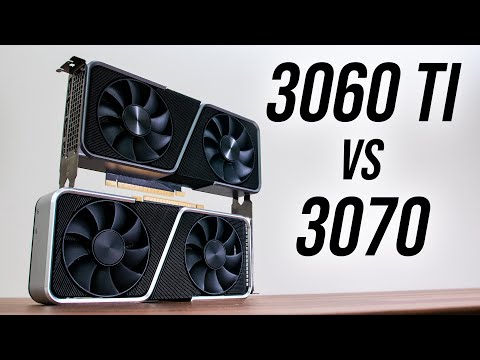
Unequivocally, the RTX 3070 is not worse than the RTX 3060 in terms of overall performance. While there are specific scenarios where the 3060 might appear superior due to its larger VRAM, the 3070 generally offers higher frame rates and better performance in most gaming and graphically demanding tasks. The 3070 boasts more powerful core specifications and is designed for higher resolutions and settings, making it the more capable card in most situations. Understanding the nuances between these two GPUs requires a deeper dive into their strengths, weaknesses, and ideal use cases. Let’s explore these differences and clear up any confusion.
Unpacking the Specs: Core Differences Matter
The primary reason the RTX 3070 typically outperforms the RTX 3060 lies in its core architecture. The 3070 features a more powerful GA104 GPU compared to the 3060’s GA106. This translates to a higher count of crucial components:
-
CUDA Cores: The 3070 boasts significantly more CUDA cores (5888) than the 3060 (3584). These cores are essential for parallel processing, directly impacting performance in rendering, gaming, and other computationally intensive tasks.
-
Tensor Cores: Designed for AI and deep learning tasks, Tensor Cores are more plentiful in the 3070. This affects performance in applications leveraging AI features, like DLSS (Deep Learning Super Sampling), which can improve frame rates without significant visual fidelity loss.
-
Ray Tracing (RT) Cores: Both cards support ray tracing, a rendering technique that creates more realistic lighting and reflections. However, the 3070’s stronger RT cores provide better performance when ray tracing is enabled, allowing for higher frame rates or more demanding ray tracing settings.
-
Memory Bandwidth: The 3070 has a wider memory bus (256-bit) compared to the 3060 (192-bit). This, combined with its faster memory clock, results in significantly higher memory bandwidth, allowing the GPU to access data more quickly.
The VRAM Conundrum: Why the 3060 Sometimes Shines
The one area where the RTX 3060 holds an advantage is its 12GB of VRAM (Video RAM) compared to the 3070’s 8GB. VRAM is crucial for storing textures, frame buffers, and other data needed for rendering. When a game or application requires more VRAM than is available, performance can suffer significantly, leading to stuttering, lower frame rates, and reduced visual quality.
In a few specific games at very high settings (especially with high-resolution textures), the 3060’s 12GB of VRAM can prevent VRAM-related bottlenecks that the 3070 might encounter. This is especially true at 1440p and 4K resolutions. However, it’s important to note that this advantage is situational.
Resolution and Settings: Finding the Right Fit
-
1080p Gaming: For 1080p gaming, both cards are generally capable. The 3070 will typically offer higher frame rates, but the difference might not be as noticeable, especially with higher refresh rate monitors.
-
1440p Gaming: The RTX 3070 is the better choice for 1440p gaming. Its superior core performance allows it to handle higher settings and achieve smoother frame rates compared to the 3060, even considering the 3060’s added VRAM.
-
4K Gaming: While neither card is ideally suited for ultra-high settings at 4K, the 3070 will generally provide a more enjoyable 4K gaming experience than the 3060. You’ll likely need to adjust settings to achieve playable frame rates on both cards.
Use Cases Beyond Gaming: Content Creation and More
The differences between the RTX 3070 and RTX 3060 extend beyond gaming. In applications such as video editing, 3D rendering, and AI/machine learning, the 3070’s stronger core specifications and faster memory bandwidth provide significant advantages. The extra VRAM of the 3060 might be helpful in certain video editing workflows, but the 3070’s raw processing power provides a performance advantage overall.
The Value Proposition: Price vs. Performance
The RTX 3070 typically commands a higher price than the RTX 3060. When deciding between the two, it’s important to weigh the performance benefits against the price difference. If you’re primarily gaming at 1080p and are budget-conscious, the 3060 might be a reasonable choice. However, for 1440p gaming, content creation, or those seeking the best possible performance within a certain budget, the 3070 is the clear winner.
Making an Informed Decision
Choosing between the RTX 3070 and RTX 3060 depends on your specific needs and priorities. Consider the games you play, the resolution you target, your budget, and any other tasks you’ll be performing on your PC. In most scenarios, the RTX 3070 is the superior card. However, the RTX 3060’s larger VRAM shouldn’t be dismissed for those who might specifically benefit from the memory increase.
Frequently Asked Questions (FAQs)
1. Is the RTX 3070 good for 1440p gaming?
Yes, the RTX 3070 is an excellent choice for 1440p gaming. It can handle most modern games at high or even ultra settings and maintain smooth frame rates.
2. Can the RTX 3070 run 4K games?
Yes, the RTX 3070 can run 4K games, but you might need to adjust settings to achieve playable frame rates in more demanding titles. Aim for medium to high settings for a smoother experience.
3. Is the RTX 3060 12GB enough for video editing?
The RTX 3060 12GB is a decent option for video editing, particularly if you work with large video files or high-resolution footage. The extra VRAM can help prevent bottlenecks.
4. Which is better for streaming, RTX 3060 or RTX 3070?
The RTX 3070 is generally better for streaming due to its more powerful GPU core, which provides better encoding performance, particularly when using Nvidia’s NVENC encoder.
5. Does the 3070 have ray tracing?
Yes, the RTX 3070 supports ray tracing. It features dedicated ray tracing cores that accelerate ray tracing performance in supported games and applications.
6. Is the RTX 3070 a high-end graphics card?
The RTX 3070 is considered a high-end graphics card, offering excellent performance for gaming and other demanding tasks.
7. Will 8GB VRAM be enough in the future?
8GB of VRAM is becoming increasingly limiting for the newest titles at higher settings. While it is still viable for most current games, future titles may require more. Games Learning Society knows that technology advances rapidly, so monitor your performance regularly and update your system when necessary.
8. Is it worth upgrading from a 3060 to a 3070?
Whether it’s worth upgrading depends on your needs. If you’re primarily gaming at 1080p, the upgrade might not be necessary. However, if you’re aiming for 1440p or want better performance in demanding games, the 3070 offers a significant improvement.
9. Is the RTX 3060 overkill for 1080p gaming?
No, the RTX 3060 is not overkill for 1080p gaming, especially if you’re aiming for high refresh rates or want to play demanding games at high settings.
10. What is DLSS, and how does it affect performance?
DLSS (Deep Learning Super Sampling) is an Nvidia technology that uses AI to upscale lower-resolution images to a higher resolution, improving performance without significantly impacting visual quality. Both the 3060 and 3070 support DLSS.
11. Is the RTX 3070 power-hungry?
The RTX 3070 has a TDP (Thermal Design Power) of around 220W, which is relatively moderate for a high-end graphics card. Make sure your power supply is sufficient for the card and your other system components.
12. What CPU should I pair with an RTX 3070?
A good CPU pairing for the RTX 3070 would be an AMD Ryzen 5 5600X or an Intel Core i5-12600K or better. This will ensure that your CPU doesn’t bottleneck the GPU.
13. How much does the RTX 3070 cost?
The price of the RTX 3070 can vary depending on the retailer, availability, and market conditions. Check online retailers for current pricing.
14. Is the RTX 3060 or 3070 better for VR gaming?
The RTX 3070 is generally better for VR gaming due to its higher performance, which allows for smoother frame rates and better visual fidelity in virtual reality environments.
15. Can the RTX 3060 handle ray tracing?
Yes, the RTX 3060 can handle ray tracing, but its performance may be limited in more demanding games. You may need to lower ray tracing settings to achieve playable frame rates.