Are Warhammer 40k and Age of Sigmar in the Same Universe? A Deep Dive
Fast answer first. Then use the tabs or video for more detail.
- Watch the video explanation below for a faster overview.
- Game mechanics may change with updates or patches.
- Use this block to get the short answer without scrolling the whole page.
- Read the FAQ section if the article has one.
- Use the table of contents to jump straight to the detailed section you need.
- Watch the video first, then skim the article for specifics.
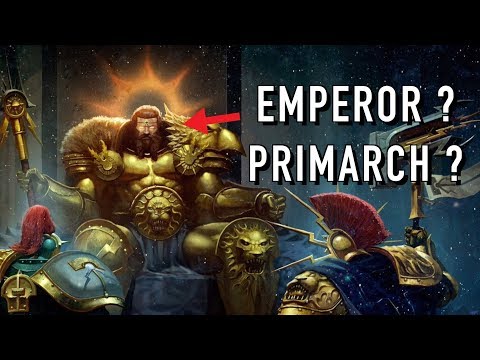
The short, definitive answer is no. Warhammer 40,000 (40k) and Warhammer: Age of Sigmar (AoS) are set in completely separate universes. Despite sharing the “Warhammer” name, some recurring themes, and being owned by the same company, Games Workshop, the two are distinct entities with their own lore, histories, and cosmologies. This is a crucial point to understand for any fan of either franchise, as mixing their narratives or assuming direct connections can lead to considerable confusion. Let’s explore why this is the case.
The Separate Origins and Lore
Warhammer Fantasy: The Foundation
Before Age of Sigmar, there was Warhammer Fantasy Battle, often just called “Warhammer.” This setting was a classic high fantasy world with familiar tropes like elves, dwarves, orcs, and humans, all warring for dominance. Sigmar, a powerful human warrior who ascended to godhood, was a central figure in this world’s mythology. Warhammer Fantasy came to an end with a cataclysmic event known as the End Times, which destroyed the Old World.
The Rise of Age of Sigmar
Age of Sigmar emerged as a reboot of the Warhammer Fantasy setting. It takes place after the destruction of the Old World, with the remnants of the old world and the old gods having been scattered through the cosmos and forming the Mortal Realms. Sigmar is reborn as a God-King, and his armies wage war in this new, more fantastical, and less grounded setting. Age of Sigmar employs a streamlined ruleset and a more overtly epic scale compared to its predecessor.
Warhammer 40,000: The Grim Darkness of the Far Future
Warhammer 40,000, conversely, is a science-fantasy setting set in the distant future. It depicts a universe dominated by humanity’s Imperium, which is locked in a constant, brutal war against numerous alien species and the chaotic forces of the Warp. The universe is gothic, oppressive, and filled with technological marvels and horrors. The setting is distinctly different in tone and narrative focus from both Warhammer Fantasy and Age of Sigmar. The Emperor of Mankind is the central figure in 40k and is vastly different from the god Sigmar.
Why They Are Not Connected
The key difference is the nature of the universes themselves.
- AoS’s Mortal Realms: These are explicitly a collection of interconnected realms, each with its own unique characteristics and magical properties, created after the destruction of the Old World. It’s a metaphysical and fantastical cosmology.
- 40k’s Milky Way Galaxy: The 40k universe is primarily set within our own Milky Way Galaxy, with its own physical laws and rules, albeit twisted by the influence of the Warp. It’s more grounded in the idea of a vast, physical space and less reliant on metaphysical forces like the Mortal Realms.
Furthermore, the way Chaos is depicted is notably different. While both share the concept of Chaos Gods, their manifestations and interactions vary between the two settings. The gods in AoS have a very different history than those of the 40k universe. While some thematic parallels exist, direct connections are non-existent, with any similarities being intentional nods to the overall “Warhammer” brand.
Frequently Asked Questions (FAQs)
1. Is Sigmar the Emperor from 40k?
No, Sigmar and the Emperor of Mankind are completely separate characters from different universes. Sigmar is a god-like figure in Age of Sigmar, while the Emperor is a powerful psychic from 40k’s lore. They are not connected in any way besides being part of the “Warhammer” family.
2. Is Warhammer 40k connected to Warhammer Fantasy/Age of Sigmar?
No, despite sharing the “Warhammer” name and some thematic similarities, the universes of Warhammer 40,000 and Warhammer Fantasy/Age of Sigmar are entirely separate.
3. Are all Warhammer 40k books canon?
Most material licensed by Games Workshop is considered canon, but some sources are “more” canon than others due to the vast amount of material and time produced.
4. Does Total War Warhammer take place in Age of Sigmar?
No, Total War: Warhammer takes place during the End Times of Warhammer Fantasy, not in the Age of Sigmar setting.
5. Is Sigmar a chaos god?
While all gods in the Warhammer universe are entities born of the Warp, including Sigmar, he is generally considered to be a god of Order and not a god of Chaos. It’s a complex topic tied to the nature of the Warp, but he is not aligned with the typical Chaos Gods of Khorne, Nurgle, Tzeentch, or Slaanesh.
6. Are Orks a fungus in both 40k and Age of Sigmar?
Yes. Orks are a fungal species in both 40k and the Age of Sigmar.
7. Is Earth still in Warhammer 40k?
Yes, Earth, known as Terra in the 40k universe, is the home world of humanity and the central point of the Imperium of Man.
8. Does Christianity exist in Warhammer 40k?
No, Christianity was deliberately eradicated by the Emperor of Mankind in 40k’s history. The Imperium has its own unique form of religion centered around the Emperor.
9. Does America exist in Warhammer 40k?
Yes, a continental hive-sprawl called Merica exists in the 40k universe, situated in the region formerly known as North America.
10. Does 40k have Skaven?
No, the rat-men Skaven are unique to the Warhammer Fantasy and Age of Sigmar settings. They do not exist in Warhammer 40,000.
11. Why isn’t there a 40k Total War game?
The Total War engine is primarily designed for historical or fantasy mass infantry battles. A 40k setting with its technology and vastly different scale of combat is difficult to adapt to this style of game.
12. Who killed Sigmar?
In the lore of Warhammer Fantasy, Sigmar was fatally wounded by Gerreon, who poisoned him because of a past grudge. Gerreon’s brother had died saving Sigmar’s life, and Gerreon had blamed Sigmar for this.
13. What are the Tyranids running from?
While the exact reasons are unclear, the two leading theories are that Tyranids are running from a superior species or that they’ve consumed all organic matter in a previous galaxy and are seeking new resources.
14. Is Event Horizon a prequel to 40k?
No, Event Horizon is not an official part of the 40k universe. Although some fans consider it a loose prequel, they are not officially connected.
15. Is Horus Heresy the same as 40k?
The Horus Heresy is an event within the lore of Warhammer 40,000. The Horus Heresy refers to a civil war that occurred in the Imperium of Man’s history and it is a part of the setting’s timeline.
Conclusion
In summary, while sharing a common parent company and a “Warhammer” brand, Warhammer 40,000 and Age of Sigmar are definitively distinct and separate universes. Understanding this distinction is critical for fully appreciating the rich lore and unique experiences offered by each setting. They are parallel but unrelated entities that stand on their own merits.