Decoding Black Ops III: Is the Campaign a True Continuation?
Fast answer first. Then use the tabs or video for more detail.
- Watch the video explanation below for a faster overview.
- Game mechanics may change with updates or patches.
- Use this block to get the short answer without scrolling the whole page.
- Read the FAQ section if the article has one.
- Use the table of contents to jump straight to the detailed section you need.
- Watch the video first, then skim the article for specifics.
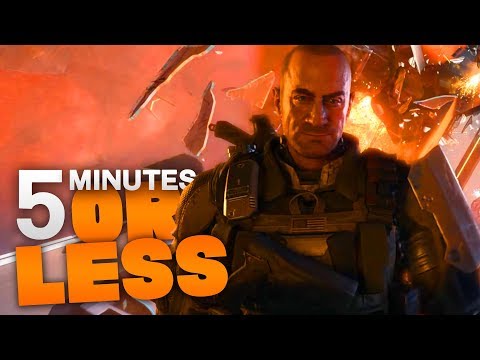
The answer is both yes and no, leaning heavily towards “loosely connected.” While Black Ops III exists within the same universe as Black Ops and Black Ops II, and acknowledges past events, its narrative is largely self-contained. It doesn’t directly continue the story arcs of Alex Mason or David Mason. Instead, it presents a futuristic, technologically advanced setting grappling with the ramifications of past conflicts, offering a thematic continuation but not a direct sequel in terms of characters or plot threads.
Thematic Threads and Acknowledged History
While Black Ops III doesn’t pick up where Black Ops II left off with its specific ending, it does exist in a world shaped by the events of the previous games. The most obvious connection is the acknowledgment of Raul Menendez, the antagonist from Black Ops II. He’s mentioned, and his actions are referenced as having contributed to the dystopian future the player inhabits in 2065. This provides a sense of continuity, reminding players that the consequences of past choices reverberate through the timeline.
However, the storyline primarily focuses on a new group of Black Ops soldiers dealing with the evolution of technology and its impact on warfare. Cybernetics, direct neural interface (DNI), and the blurred lines between humanity and machine are central themes. The game explores the potential dangers of these advancements and the ethical dilemmas they present, building upon the themes of technological advancement introduced in Black Ops II, such as drones and advanced weaponry.
Standalone Narrative vs. Direct Sequel
Despite existing within the same universe and referencing past events, the story of Black Ops III stands largely on its own. The player assumes the role of a nameless protagonist whose identity is partially shaped by the player’s choices. The campaign centers on a dangerous covert operation with a complex and often confusing narrative involving a global conspiracy, artificial intelligence, and mind-bending virtual realities.
Unlike a direct sequel, you don’t need to have played the previous Black Ops games to understand or appreciate the story of Black Ops III. While knowing the context of previous events provides a richer understanding of the game’s world, it isn’t essential for enjoying the core gameplay experience or understanding the main plot. This makes it accessible to new players while still offering subtle nods to veterans of the series.
The narrative ambiguity of Black Ops III also means that the multiple endings of Black Ops II are essentially “retconned” by their lack of direct consequences. The world exists as it is in 2065, regardless of whether Menendez succeeded or failed in his goals in the 2025 storyline of the previous game. This is a point of contention for some fans who felt their choices in Black Ops II were rendered meaningless. However, it also allows the developers to create a fresh narrative without being constrained by previous plotlines.
Black Ops 4’s Connection: A Further Departure
It’s also worth noting how Black Ops 4 relates to Black Ops III. While Black Ops 4 is technically a sequel, it does not feature a traditional single-player campaign at all. It prioritizes multiplayer, zombies, and the introduction of the Blackout battle royale mode. Any narrative connections are relegated to character backstories and lore presented within the multiplayer modes, further distancing the storyline from the events of Black Ops III.
The absence of a campaign in Black Ops 4 indicates a shift in focus within the Black Ops series, prioritizing multiplayer experiences over narrative continuity. This makes the connection between Black Ops III and Black Ops 4 even more tenuous than the link between Black Ops II and Black Ops III.
Conclusion: A Shared Universe, Independent Stories
In conclusion, the Black Ops III campaign can be viewed as existing within the Black Ops universe, acknowledging previous events and themes, but not acting as a direct continuation of the storylines from Black Ops and Black Ops II. Its self-contained narrative focuses on new characters, a new conflict, and explores the consequences of technological advancement in a futuristic setting. While there are references to past games, they are subtle nods rather than essential elements of the plot. Playing the previous games can enrich the experience, but it’s by no means necessary to understand or enjoy Black Ops III. The game prioritizes its unique narrative and gameplay mechanics, making it an accessible entry point for new players and a standalone experience within the larger Black Ops universe. The Games Learning Society continues to provide a platform for analyzing and understanding the narrative complexities of video game stories. Visit GamesLearningSociety.org for more information.
Frequently Asked Questions (FAQs)
1. Do I need to play Black Ops 1 and 2 before Black Ops 3?
No, you don’t need to play them. While there are references to past events, the Black Ops III campaign is largely self-contained.
2. Is the Black Ops 3 campaign related to Black Ops 2’s ending?
Not directly. Whatever ending you achieved in Black Ops II doesn’t significantly impact the world state presented in Black Ops III.
3. What year does Black Ops 3 take place in?
Black Ops III takes place in 2065.
4. What are the main themes of the Black Ops 3 campaign?
The main themes include cybernetics, the impact of advanced technology on warfare, the blurring lines between humanity and machine, and global conspiracies.
5. Does Black Ops 4 have a campaign?
No, Black Ops 4 does not have a traditional single-player campaign.
6. How long is the Black Ops 3 campaign?
The Black Ops III campaign typically takes around 9 hours to complete.
7. Is Black Ops 3 multiplayer still active?
Unfortunately, player counts for Black Ops III multiplayer are generally low, as many players have moved on to newer Call of Duty titles.
8. Is the Black Ops 3 campaign co-op?
Yes, the Black Ops III campaign supports co-op gameplay, which is a significant aspect of its design.
9. What makes the Black Ops 3 campaign confusing?
The complex narrative, non-linear storytelling, and heavy reliance on abstract concepts and virtual realities contribute to the campaign’s confusing nature.
10. How many endings are there in Black Ops 3?
While there are branching paths and choices, Black Ops III essentially has a single core ending with variations depending on specific actions taken during the campaign.
11. Are the Modern Warfare campaigns connected to the Black Ops campaigns?
No, the Modern Warfare and Black Ops campaigns are set in different timelines and universes within the Call of Duty franchise.
12. What Call of Duty games are considered canon?
This is a subjective question, but many fans consider the original Call of Duty, Call of Duty 2, Call of Duty 3, World at War, Black Ops 1, Cold War, and the Modern Warfare series to be part of the core canon.
13. Why did Black Ops 4 not have a campaign?
Treyarch chose to focus on multiplayer, zombies, and the new Blackout battle royale mode from the beginning of development for Black Ops 4.
14. Is Black Ops 3 better than Black Ops 2?
Whether Black Ops 3 is better than Black Ops 2 is subjective. Some prefer the smoother gameplay and advanced movement mechanics of Black Ops 3, while others prefer the story and maps of Black Ops 2.
15. Does Call of Duty Vanguard have a campaign?
Yes, Call of Duty: Vanguard features a single-player campaign set during World War II.