Is Chaos;Child After Chaos;Head? A Deep Dive into the Science Adventure Series
Fast answer first. Then use the tabs or video for more detail.
- Watch the video explanation below for a faster overview.
- Game mechanics may change with updates or patches.
- Use this block to get the short answer without scrolling the whole page.
- Read the FAQ section if the article has one.
- Use the table of contents to jump straight to the detailed section you need.
- Watch the video first, then skim the article for specifics.
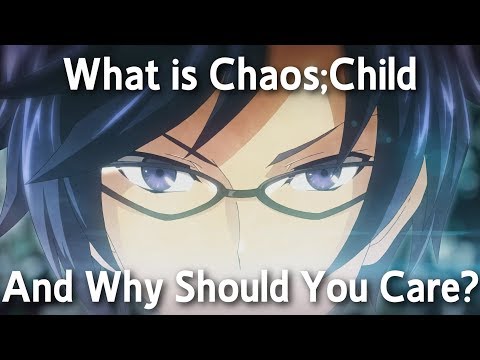
Yes, Chaos;Child is indeed set after Chaos;Head. Specifically, it takes place in Shibuya in 2015, which is six years after the events of Chaos;Head. This temporal gap is significant, as the events of Chaos;Head, which included a devastating earthquake that nearly leveled the area, directly impact the setting and some themes in Chaos;Child. The two are connected by more than just being in the same universe, as the narrative in Chaos;Child references the events and even a character from Chaos;Head. Let’s delve deeper into the connection between these two entries in the Science Adventure series and explore frequently asked questions about them.
The Connection Between Chaos;Head and Chaos;Child
A Thematic Sequel
Although the core characters and plot lines are distinct, Chaos;Child acts as a thematic sequel to Chaos;Head. Both delve into similar territory such as the power of delusions and their potential to manifest in reality. However, they explore these themes through different lenses and with new characters. While Chaos;Head focuses on Takumi Nishijo and his struggles with paranoia and delusions, Chaos;Child centers on Takuru Miyashiro, a high school student and aspiring journalist who finds himself embroiled in a series of bizarre murders eerily similar to the “New Gen” crimes from six years before, which were key in Chaos;Head.
Shared Universe, Different Perspectives
Crucially, both games are part of the larger Science Adventure Series, which also includes well-known titles like Steins;Gate and Robotics;Notes. They all share the same fictional universe but focus on different themes. Chaos;Head and Chaos;Child concentrate on perception and delusion, Steins;Gate on time travel and science, and Robotics;Notes on robotics and augmented reality. Despite these different thematic focuses, the shared universe allows for subtle connections and Easter eggs that add depth for fans.
Key Differences in Narrative
It’s important to understand that while connected thematically and chronologically, the narratives of Chaos;Head and Chaos;Child are largely independent. There is a notable exception with the inclusion of Takumi Nishijo in a brief cameo in episode 0 of the Chaos;Child anime, which acts as a summary of the events of Chaos;Head, and where Takuru even mentions idolizing Takumi. However, players should not expect to see a large crossover of the cast from Chaos;Head to the direct narrative of Chaos;Child.
Frequently Asked Questions (FAQs)
Here are 15 frequently asked questions (FAQs) regarding Chaos;Head and Chaos;Child, providing further insight into their relationships and place within the Science Adventure series:
1. What is the chronological order of the Science Adventure series entries?
The primary entries are in order: Chaos;Head, Steins;Gate, Robotics;Notes, and Chaos;Child. While there are various spin-offs and side stories, this is the main chronological order in terms of core narratives.
2. Is Chaos;Head NoAH the same as Chaos;Head?
Chaos;Head NoAH is an enhanced version of the original Chaos;Head visual novel, adding new content and clarifying some story elements. However, it is considered a retcon as it places the story of Chaos;Head in 2009 rather than the original setting.
3. Do I have to play Chaos;Head before Chaos;Child?
It is not strictly necessary to play Chaos;Head to understand Chaos;Child, as they have independent storylines. However, having played Chaos;Head will provide valuable context for some of the themes and recurring elements in Chaos;Child and will enrich the experience for those looking to get everything out of the lore.
4. Is Chaos;Child connected to Steins;Gate?
Yes, all entries in the Science Adventure Series, including Chaos;Child and Steins;Gate, take place in the same fictional universe. Chaos;Child is set approximately five years after the events of Steins;Gate, on the Steins Gate worldline. There are also some subtle references between the two games, and a character in Chaos;Child even mentions working with Kurisu Makise.
5. What are the main themes of Chaos;Head and Chaos;Child?
Chaos;Head focuses on the theme of perception, and how an individual’s delusions can shape their reality. Chaos;Child expands upon this, exploring the manifestation of delusions into physical phenomena and their impact on reality, and on the people suffering from Chaos Child Syndrome.
6. Why was Chaos;Head Noah banned?
Chaos;Head NoAH features very mature content, with themes that touch on violence, sexual content and disturbing imagery. This is believed to be the primary reason why Valve banned it.
7. What is Chaos Child Syndrome?
Chaos Child Syndrome is a condition described in the game, causing patients to experience delusions that alter their sight, hearing, and even touch. Scientists call this phenomenon Delusion Synchronization, where individuals are trapped in their own “dream-like world.”
8. Who is the villain in Chaos;Child?
The main antagonist in Chaos;Child is Shuuichi Wakui, a teacher and advisor to the Newspaper club who hides his true nature as an assassin employed by the Committee of 300.
9. Does Chaos;Child have a happy ending?
The True Ending of Chaos;Child is intended to be happy, as it cures the Chaos Child Syndrome and allows the characters to live happily. However, it comes at a cost as the protagonist, Takuru Miyashiro, sacrifices himself to achieve it.
10. What is the significance of the “New Gen” murders?
The “New Gen” murders are the serial killings that occur in Chaos;Head. Their influence is still seen in Chaos;Child as a series of similar killings begins to happen, pushing the plot along as it connects the games.
11. Was the Chaos;Head anime adaptation good?
The general consensus is that the Chaos;Head anime adaptation is not very good. It suffered from poor pacing and failed to fully develop the plot and characters. This stands in stark contrast to the highly praised Steins;Gate anime adaptation.
12. Who is the main antagonist in Chaos;Head?
The main antagonist of Chaos;Head is Gen’ichi Norose, the president of N.O.Z.O.M.I.
13. How important is the translation of Chaos;Head NoAH?
The translation of Chaos;Head NoAH has faced significant criticism for its inconsistent terminology, mistranslations, and lack of character voice. This can detract from the player experience.
14. Is there a prequel to Steins;Gate?
Technically, Steins;Gate 0 is considered a prequel to Steins;Gate, even though chronologically, it takes place after a crucial event of the original story, in an alternative timeline that is not the main timeline.
15. What is the “gaze of God” concept in Chaos;Head?
The “gaze of God” is a major theme in Chaos;Head reflecting Takumi’s fear of being judged. This motif highlights his insecurities and his struggle with societal judgment.
Conclusion
In summary, Chaos;Child is indeed a sequel to Chaos;Head, chronologically taking place six years after the events depicted in the first game. While both titles share a common universe and thematic elements, they offer unique narratives and character dynamics. Understanding their relationship, as well as the wider context of the Science Adventure series, allows for a more engaging and profound gaming or watching experience for fans of the series.