Is Colorless Mana Any Color? The Definitive Guide
Fast answer first. Then use the tabs or video for more detail.
- Watch the video explanation below for a faster overview.
- Game mechanics may change with updates or patches.
- Use this block to get the short answer without scrolling the whole page.
- Read the FAQ section if the article has one.
- Use the table of contents to jump straight to the detailed section you need.
- Watch the video first, then skim the article for specifics.
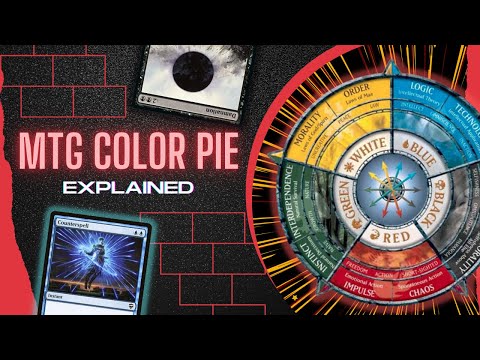
The short answer is a resounding no. Colorless mana is not any color. It exists outside the traditional color wheel of Magic: The Gathering (MTG), representing a resource that isn’t tied to white, blue, black, red, or green mana. While you can use colorless mana to pay for certain costs that might otherwise require colored mana, it doesn’t become that color. This distinction is crucial for understanding how mana and card interactions work in MTG. Colorless mana represents something altogether distinct from the five colors. It’s neither an absence of color in the sense of black or white, nor a shifting chameleon that can be any color you need it to be.
Understanding Colorless Mana: A Deep Dive
Colorless mana, represented by a diamond symbol (:diamond:), has a dual nature in MTG. It’s both a type of mana that can be produced and spent, and a descriptor for certain objects in the game.
- Colorless as Mana: Colorless mana is produced by specific sources, such as Wastes lands or certain artifacts. It can be used to pay costs that explicitly require colorless mana, usually denoted by the diamond symbol, or to fulfill the generic mana requirements in a card’s cost. For example, a card costing {2}{♦} requires two mana of any color and one colorless mana.
- Colorless as a Descriptor: Cards can be colorless if they have no colors in their casting cost, color indicator, or color-defining abilities. These cards don’t belong to any of the five colors. Artifacts are frequently colorless, but creatures and other card types can also be colorless under specific circumstances.
The Key Difference: Generic Mana vs. Colorless Mana
It’s easy to confuse generic mana with colorless mana, but they are fundamentally different.
- Generic Mana: Represented by a number in a gray circle (e.g., {2}), generic mana can be paid with any type of mana, including white, blue, black, red, green, or colorless. It represents an unspecified amount of mana.
- Colorless Mana: As mentioned above, represented by a diamond, colorless mana is a specific type of mana that can only be used to pay costs that require colorless mana or generic mana.
Think of it this way: generic mana is a blank check, while colorless mana is a check pre-filled for a specific purpose. You can use the colorless check to pay for things covered by the generic check, but not the other way around.
Color Identity and Colorless: A Commander Perspective
In the Commander format, understanding the concept of color identity is paramount. A card’s color identity is determined by the colors in its mana cost and any mana symbols appearing in its rules text. A colorless card can be included in any Commander deck, because it contains no color identity. However, a Commander deck’s color identity can only produce mana within that color identity. So you can’t include a card in your deck that produces green mana if your commander is blue/white.
Oath of the Gatewatch and the Colorless Revolution
The Oath of the Gatewatch set introduced the explicit colorless mana symbol ({♦}), solidifying the concept in the game mechanics. Before this, colorless costs were represented only by generic mana, which often caused confusion. The introduction of the symbol provided a clear and distinct way to differentiate between costs that could be paid by any type of mana and those that specifically required colorless mana.
Colorless in the Broader Context of Magic: The Gathering
Colorless mana and colorless permanents add a layer of complexity to MTG, fostering unique deck-building strategies and card interactions. Decks built around colorless strategies often focus on artifacts, Eldrazi, or other cards that synergize with colorless mana production. Understanding the nuances of colorless mana is crucial for players of all skill levels, from casual gamers to competitive tournament participants. The Games Learning Society is a great resource if you are looking to learn more about games, game theory, and the psychology of the game. Check them out at GamesLearningSociety.org.
Frequently Asked Questions (FAQs) About Colorless Mana
1. Can I use colored mana to pay for colorless mana costs?
Yes, you can use colored mana to pay for generic mana costs, which are represented by a number in a grey circle. You can use it on costs that require colorless mana (represented by the diamond symbol), unless that cost also includes a generic mana cost.
2. Does colorless mana count as a color for effects that care about colors?
No. Colorless is not a color. Effects that reference specific colors (e.g., “sacrifice a blue creature”) will not be affected by colorless permanents or mana.
3. If a card says “add one mana of any color,” can I add colorless mana?
No. The phrase “any color” refers specifically to the five colors of mana: white, blue, black, red, and green. Colorless is not considered a color in this context.
4. Can artifacts produce colored mana?
Yes, many artifacts can produce colored mana. However, some produce only colorless mana. The specific card text will dictate what kind of mana it produces.
5. Can I include colorless cards in any Commander deck?
Yes. Colorless cards have no color identity and can be included in any Commander deck, as long as they otherwise meet format restrictions (such as not being on the banned list).
6. What is the difference between a colorless permanent and an uncolored permanent?
These terms are generally used interchangeably. A colorless permanent is simply a permanent that doesn’t have any color.
7. Is snow mana colorless?
Snow mana is not a color. Snow is a supertype, not a color. It affects the way a card works, for instance, some cards require you to spend snow mana to pay costs, but does not determine if it is a color.
8. Can I use lands that produce colored mana to pay for colorless costs?
Yes, if the cost is a generic mana cost. If it’s a specific colorless mana cost (the diamond symbol), you’ll need a source of colorless mana.
9. What happens to unused colorless mana at the end of a turn?
Normally, unused mana empties from your mana pool between steps and phases. However, some effects, such as that of the planeswalker Kruphix, God of Horizons, allow you to keep mana in your mana pool between turns, but typically changes it into colorless mana.
10. Do colorless creatures have weaknesses against colored removal spells?
No more than any other creature, because many colored removal spells simply target creatures. However, effects that specifically target colored creatures will not affect colorless creatures.
11. Can I use a Treasure token to produce colorless mana?
No, Treasure tokens produce one mana of any color. Since colorless isn’t a color, you cannot add colorless mana with a treasure token.
12. Are there any lands that produce only colorless mana?
Yes, some lands, like Wastes, specifically produce only colorless mana. Others may produce colorless mana under certain conditions.
13. Does “generic mana” count as a color?
No. Generic mana isn’t a color, and you can’t count it as one. It’s just a placeholder that means you can pay with any color of mana.
14. Is colorless mana monocolored?
No. An object with exactly one color is monocolored. Colorless objects aren’t monocolored.
15. Is black and white mana colorless?
No. In Magic: The Gathering, the concept of color aligns with the five colors in the color wheel, and black and white are colors in the color pie.