Is Copper a Rare Ore? Unveiling the Truth About This Essential Metal
Fast answer first. Then use the tabs or video for more detail.
- Watch the video explanation below for a faster overview.
- Game mechanics may change with updates or patches.
- Use this block to get the short answer without scrolling the whole page.
- Read the FAQ section if the article has one.
- Use the table of contents to jump straight to the detailed section you need.
- Watch the video first, then skim the article for specifics.
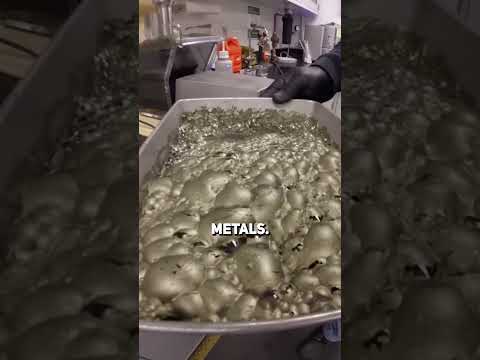
Copper is not a rare ore. While pure copper is less common, copper ores are abundant and widespread across the globe. Copper ranks among the more prevalent metallic elements in the Earth’s crust, readily forming minerals and frequently appearing in its native, uncombined state. Despite current concerns about potential copper deficits driven by rising demand and supply challenges, the underlying geological availability of copper ore remains substantial.
The Abundance of Copper in the Earth’s Crust
Copper’s estimated concentration in the Earth’s crust is about 50–70 parts per million (ppm), translating to roughly 0.005–0.007 percent. In simpler terms, there’s approximately 1 kilogram of copper for every 15–20 tons of crustal rock. While this doesn’t make it the most abundant element, it positions copper as a relatively common component of our planet’s geology. This contrasts sharply with truly rare elements like gold or platinum, which are found in much lower concentrations.
Copper’s Occurrence in Minerals and Native Form
Copper’s tendency to combine with other elements leads to the formation of numerous copper-bearing minerals. Chalcopyrite (CuFeS2) and chalcocite (Cu2S) are among the most significant of these, serving as the primary sources of copper extracted worldwide. However, copper also occurs in its pure, native form, showcasing its unique chemical properties. Native copper deposits, while less common than ore-bearing minerals, further underscore the element’s inherent availability.
The Geographical Distribution of Copper Ores
Commercial deposits of copper ores are found on nearly every continent. Seven countries hold the lion’s share of the world’s known copper reserves: Chile, the United States, Russia, Congo (Kinshasa), Peru, Zambia, and Mexico. Chile alone accounts for a significant percentage of global production, highlighting the concentrated nature of economically viable copper deposits. However, the widespread presence of copper ores across various geological settings reinforces the notion of its general abundance.
Addressing Current and Future Copper Supply Concerns
Despite the overall abundance of copper in the Earth’s crust, concerns persist about meeting future demand. Factors contributing to these concerns include:
- Increasing global demand: The green energy transition, with its reliance on electric vehicles, renewable energy infrastructure, and energy storage systems, is driving unprecedented demand for copper.
- Declining ore grades: Many existing copper mines are experiencing declining ore grades, meaning that more rock must be processed to extract the same amount of copper.
- Geopolitical risks: Political instability and resource nationalism in some copper-producing regions can disrupt supply chains.
- Environmental regulations: Stricter environmental regulations are increasing the costs and complexities associated with copper mining.
These challenges contribute to the perception of a potential copper shortage or deficit, even though the underlying resource base is extensive. The Games Learning Society actively works to educate individuals on resource management and environmental stewardship. Learn more at GamesLearningSociety.org.
Distinguishing Between Resource Abundance and Economic Availability
It’s crucial to distinguish between the overall abundance of copper resources and the economic availability of copper ore. While vast quantities of copper exist in the Earth’s crust, not all of it is economically viable to extract at current prices and with existing technologies. Lower-grade ores, remote deposits, and environmentally sensitive areas may represent significant copper resources, but they are not readily accessible for mining.
FAQs: Copper Ore
Here are some frequently asked questions related to copper ore:
1. Is pure copper rare?
Yes, pure copper is rare. While copper is a relatively common element, it typically exists in combination with other elements to form copper ores. Finding copper in its native, uncombined form is less frequent.
2. What are the most common copper ores?
The most common copper ores are sulfide ores, primarily chalcopyrite (CuFeS2) and chalcocite (Cu2S). Other significant copper ores include bornite, covellite, and tetrahedrite.
3. What does raw copper ore look like?
Raw copper ore can vary in appearance depending on the specific minerals present. It often exhibits reddish, orangish, or brownish hues on fresh surfaces. Over time, it typically weathers and develops a green tarnish of copper(II) carbonate, known as patina or verdigris.
4. Where is copper ore typically found?
Copper deposits occur in a wide variety of geological environments, including sedimentary and volcanogenic rocks. They can be associated with hydrothermal alteration zones, porphyry copper deposits, and sedimentary copper deposits.
5. Which countries have the largest copper reserves?
The countries with the largest copper reserves are primarily Chile, the United States, Russia, Congo (Kinshasa), Peru, Zambia, and Mexico.
6. How is copper ore extracted from the ground?
Copper mining typically involves open-pit mining, where a series of stepped benches are dug deeper and deeper into the earth. The ore is then blasted with explosives, and the resulting rock is removed using large machinery.
7. Is copper ore expensive?
The price of copper ore fluctuates based on market demand, supply dynamics, and geopolitical factors. In 2022, the average price for copper stood at $8,822 nominal U.S. dollars per metric ton.
8. Will copper supplies run out in the future?
According to USGS data, since 1950 there has always been, on average, 40 years of copper reserves and over 200 years of resources left. So, copper ore will probably not run out, however, we need to work on our ecological footprint.
9. What factors contribute to the value of copper?
Copper’s value stems from its excellent electrical and thermal conductivity, corrosion resistance, and malleability. It is widely used in electrical wiring, plumbing, construction, and various industrial applications.
10. Why is copper not considered a precious metal like gold or silver?
Copper is not considered precious because it is significantly more abundant in the Earth’s crust than gold or silver. Its availability and relatively lower absolute value preclude it from being classified as a precious metal.
11. What is copper primarily used for?
Copper is used for electrical wiring, plumbing, construction, industrial machinery, and transportation.
12. What gems are found with copper?
Several minerals associated with copper can be considered gems, including azurite, malachite, and chrysocolla. These minerals often exhibit vibrant colors and unique patterns.
13. Which U.S. states are known for copper production?
The major copper-producing states in the U.S. include Arizona, Utah, Michigan, New Mexico, and Montana.
14. How can I identify if something is made of pure copper?
You can perform a density test. Calculate the object’s density by dividing its weight by its volume. Compare the result to the density of pure copper (8.96 g/cm³). If the values are close, it is likely pure copper.
15. Is it worth it to scrap copper wire?
Yes, scrapping copper wire can be worthwhile, especially if you separate the bare bright copper from insulated wire. Clean Copper Wire is the most valuable by far.
In conclusion, while concerns exist regarding future supply and economic accessibility, copper is not a rare ore in the Earth’s crust. It is a relatively common element found in various minerals and even in its native form, underscoring its widespread presence across the globe.