Is Demon’s Souls a Good Starting Point for the Souls-Like Genre?
Fast answer first. Then use the tabs or video for more detail.
- Watch the video explanation below for a faster overview.
- Game mechanics may change with updates or patches.
- Use this block to get the short answer without scrolling the whole page.
- Read the FAQ section if the article has one.
- Use the table of contents to jump straight to the detailed section you need.
- Watch the video first, then skim the article for specifics.
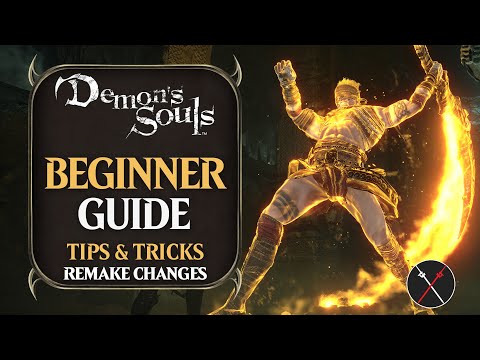
The question of whether Demon’s Souls is a good entry point into the notoriously challenging Souls-like genre is complex, and the answer isn’t a simple yes or no. While it’s often touted as the origin of this beloved subgenre, its age and unique design choices make it a different beast compared to its spiritual successors like the Dark Souls trilogy and Elden Ring. Therefore, the short answer is: it can be a good starting point, but it comes with significant caveats.
Demon’s Souls is a double-edged sword for newcomers. On one hand, it lays the groundwork for the core mechanics found in later Souls games, offering a slower, more methodical combat experience. It allows you to acclimatize to the deliberate pace, punishing difficulty, and emphasis on pattern recognition that characterize the genre. It’s also, arguably, less mechanically complex than, for example, Dark Souls 3 or Sekiro. On the other hand, it features some frustrating mechanics and lacks some of the quality of life improvements found in newer games. This can make the experience feel more obtuse and unforgiving for a first-timer. So, while not the easiest Souls game, its unique character makes it a compelling, if challenging, starting point.
Essentially, it hinges on your tolerance for some of the older game design features. For those seeking a more modern, accessible entry, Elden Ring is generally recommended, while Demon’s Souls appeals more to those willing to explore the roots of the genre and embrace its quirks. If you’re drawn to historical context and prefer to experience the genre in chronological order, then perhaps it’s worth wrestling with its unique challenges.
Understanding the Pros and Cons
Why Demon’s Souls Can Be a Good Starting Point
- Foundational Mechanics: Demon’s Souls introduces the core elements of the genre, such as stamina-based combat, challenging enemy encounters, and the unique death and soul retrieval system. This gives players a fundamental understanding of how the series operates.
- Slower Pace: Combat is generally slower and more deliberate than in later games. This can be beneficial for newcomers, allowing them to learn enemy patterns more easily and be less overwhelmed by rapid attacks.
- Level Design Nuances: While often seen as less interconnected than Dark Souls, Demon’s Souls unique world system, with its individual archstones and hub-like world, can be easier for beginners to digest than the sprawling, interconnected worlds in the Dark Souls series.
- Historical Context: Experiencing where it all began is a treat for many gamers. It lets you understand the evolution of the genre and appreciate how much FromSoftware has refined their formula.
- Unique World Tendency: This mechanic, while sometimes frustrating, adds a layer of complexity and replayability unique to the game. It influences enemy difficulty and opens different pathways and rewards depending on player actions.
Why Demon’s Souls Can Be a Poor Starting Point
- Lack of Quality of Life Features: Compared to later titles, Demon’s Souls lacks many quality of life improvements like easy warping and respec options. This can lead to frustrating moments for players accustomed to more modern conveniences.
- Punishing Difficulty: Demon’s Souls doesn’t hold back with its difficulty. Its often-challenging boss encounters and demanding level design can be daunting to newcomers. Death has a real weight and can be quite punishing.
- World Tendency System: While interesting, the World Tendency mechanic can make the game significantly harder if players die repeatedly in human form. Understanding the nuances of this system is crucial but not always intuitive for new players.
- Grindy Elements: The game has a level-based progression system which can be a little frustrating for some players who might need to farm souls to increase character stats and to make the later challenges easier.
- Armor Ineffectiveness: A big drawback of the game is how useless armor can be and that a more complex and thought-out character build can be very rewarding.
Which Souls Game is Best to Begin With?
While Demon’s Souls does have merit for starting the journey, Elden Ring is generally considered the most beginner-friendly Souls game. Its open-world design gives players a lot of freedom to choose their battles, level up, and explore at their own pace. It also offers a wider range of builds, weapons, and magical abilities, making it more forgiving for new players. Elden Ring’s combat can be more varied and allows for more approaches to combat.
Dark Souls 1, with its interconnected world, can also be a good starting point, but its learning curve may be slightly steeper. Its less forgiving nature might be off-putting to players who are just beginning. Dark Souls 3 is more mechanically demanding and generally considered more difficult than both Dark Souls 1 and Demon’s Souls, making it less suitable for newcomers.
Frequently Asked Questions (FAQs)
1. Is Demon’s Souls Harder than Dark Souls?
Demon’s Souls can be argued as harder in some ways, but easier in others. Tanking is not really an option in Demon’s Souls due to armor’s ineffectiveness, but powerful builds can make most of the game easier. The world tendency system also adds to the game’s difficulty, and death can feel more punishing.
2. Is Demon’s Souls a Remake of the Original?
Yes, the Demon’s Souls on PlayStation 5 is a remake, not a remaster. It’s rebuilt from the ground up by Bluepoint Games with enhanced graphics, sound, and gameplay.
3. What is the Best Class for a Beginner in Demon’s Souls?
The Royalty class is often recommended for beginners. It begins with a powerful ranged magic attack, a rapier that can be used while blocking, and a valuable healing item, making it safer and easier to progress in the early game.
4. Is Demon’s Souls Grindy?
Yes, Demon’s Souls has grindy elements. Players will often need to replay areas to gather souls for leveling up and purchasing consumable items and supplies.
5. Are the Bosses in Demon’s Souls Easy?
Some say Demon’s Souls bosses are easier compared to later games, especially after the first boss. However, some bosses can still be very challenging, particularly for first-time players. The general sentiment is that the level design tends to be more difficult than the bosses themselves.
6. How Long Does It Take to Beat Demon’s Souls?
On average, Demon’s Souls takes about 23 hours to complete the main story. Completing all aspects and seeing all the content will take about 57 hours.
7. Can I Change My Class in Demon’s Souls?
No, Demon’s Souls does not offer a respec option. Your initial class choice and level-up decisions are final, making it important to plan builds carefully.
8. Is Demon’s Souls Connected to Dark Souls?
No, Demon’s Souls is not connected to the Dark Souls series in terms of lore or story. They are separate universes with distinct narratives.
9. Is World Tendency a Frustrating Mechanic?
While unique and interesting, the World Tendency mechanic can be frustrating. Dying in human form can make the game significantly harder, while achieving pure white or black tendency can be complex and time-consuming.
10. Is Demon’s Souls Popular?
Despite initial slow sales, Demon’s Souls is a highly popular and influential game, recognized for being the progenitor of the Souls-like genre. Its popularity grew through word of mouth.
11. How is Demon’s Souls Level Design?
Demon’s Souls features a level structure that is different from the interconnected world of Dark Souls. It uses a hub-like system of Archstones which connects levels, and these level designs are linear and distinct, which can be more easily managed by new players.
12. Is Demon’s Souls too Hard to Enjoy?
While challenging, Demon’s Souls is not too hard to enjoy. Some players find the difficulty satisfying and rewarding, while others might get frustrated by its unique mechanics and design choices. It’s very much dependent on individual preference.
13. Why is Demon Souls so Difficult?
The difficulty in Demon’s Souls comes from punishing mistakes, its challenging enemies, bosses, and the souls-loss mechanic upon death. The game also has a tendency to punish players who are unaware of how mechanics, like World Tendency, works.
14. What’s Different About Demon’s Souls Gameplay Compared to other Souls games?
Demon’s Souls has differences in gameplay such as the tendency mechanic, an emphasis on specific build types, and armor being less effective. It has some more simplistic, or less refined, gameplay that can be more unforgiving than later Souls games.
15. What Should I Do After Beating Demon’s Souls?
After completing Demon’s Souls, players can try other Souls-like games, such as the Dark Souls trilogy, Bloodborne, or Elden Ring, to further explore the genre. Alternatively, they could delve deeper into Demon’s Souls and its New Game+ mode to find items and conquer more challenges with a levelled character.
In conclusion, Demon’s Souls is a historically significant game and a challenging, but ultimately rewarding, entry point to the Souls-like genre for players willing to embrace its unique design, mechanics, and difficulty. However, if you’re looking for a more modern and streamlined introduction, Elden Ring might be the more suitable choice. The ideal starting point ultimately depends on your preferences, tolerance for older game design, and willingness to face steep learning curves.