Is Ezio Auditore Based on a Real Person? Unraveling Fact from Fiction
Fast answer first. Then use the tabs or video for more detail.
- Watch the video explanation below for a faster overview.
- Game mechanics may change with updates or patches.
- Use this block to get the short answer without scrolling the whole page.
- Read the FAQ section if the article has one.
- Use the table of contents to jump straight to the detailed section you need.
- Watch the video first, then skim the article for specifics.
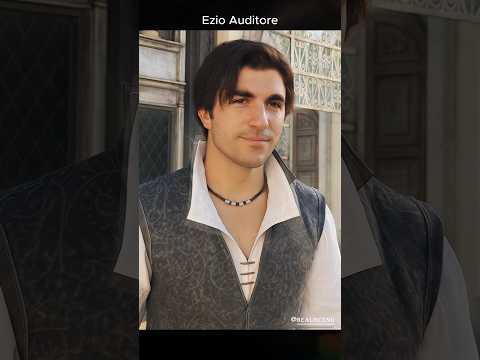
The answer, in short, is no. Ezio Auditore da Firenze, the charismatic and iconic protagonist of Assassin’s Creed II, Brotherhood, and Revelations, is not based on a single, specific historical figure. While the Assassin’s Creed franchise masterfully weaves historical events and figures into its narratives, Ezio himself is a fictional character, conceived and developed by the creative minds at Ubisoft. However, to simply dismiss him as entirely fabricated would be a disservice to the depth and complexity of his creation. Ezio’s character draws inspiration from the historical context of Renaissance Italy, the political intrigue of the era, and the general cultural milieu of the time.
The Fictional Assassin Within a Real World
While Ezio isn’t a historical person in the literal sense, his story is deeply embedded in historical reality. The world he inhabits, the places he visits, and the people he interacts with are often based on real historical counterparts.
Renaissance Italy: A Canvas for Ezio’s Story
The Italian Renaissance, with its vibrant art, groundbreaking scientific advancements, and cutthroat political landscape, provides the perfect backdrop for Ezio’s adventures. Cities like Florence, Venice, and Rome, meticulously recreated in the games, were real centers of power and influence during the 15th and 16th centuries. Ezio’s journey takes him through these iconic locations, allowing players to experience a virtual version of Renaissance Italy.
Historical Figures: Real People in Ezio’s World
Ezio interacts with numerous historical figures throughout his journey. Leonardo da Vinci, a close friend and ally, provides Ezio with inventions and assistance. Other characters, such as the Medici family, Pope Alexander VI (Rodrigo Borgia), and Niccolò Machiavelli, play significant roles in Ezio’s life, either as allies or adversaries. The inclusion of these real historical figures enhances the sense of authenticity within the game world and allows for a more engaging and educational experience. It allows players to explore history interactively, which can be deeply beneficial. Explore more on similar topics at the Games Learning Society website.
Inspiration from the Italian Identity
The creation of Ezio’s personality is rooted in the image of the Italian Renaissance man. The focus on family, the search for honor, and the love for beauty and culture are some of the hallmarks of the Italian identity that helped shape Ezio’s persona. While he might not be based on a real person, Ezio epitomizes many characteristics attributed to the Renaissance Italian.
The Creation of a Legend
Ezio’s enduring popularity is a testament to the careful crafting of his character. He is not simply a generic action hero; he is a complex and relatable individual with his own flaws, motivations, and personal growth throughout the series.
A Relatable Character
Ezio begins as a carefree young man who seeks vengeance for the deaths of his father and brothers. Over the course of the trilogy, he matures into a wise and experienced leader, grappling with questions of morality, purpose, and legacy. This arc from a young, impetuous youth to a wiser, older mentor, allows players to connect with his character on a deeper level.
The Allure of the Assassin’s Creed
Ezio’s story is intertwined with the ongoing conflict between the Assassins and the Templars. This struggle for power and control, often depicted as a battle between freedom and order, provides the narrative framework for the game. The Assassin’s Creed, with its emphasis on free will, justice, and the pursuit of knowledge, resonates with many players and adds a layer of philosophical depth to the experience.
Legacy of a Video Game Icon
In conclusion, while Ezio Auditore is not based on a single real person, he’s a product of his time, born from a real historical context, real-world cultural values, and creative imagining. He represents the heart and soul of Assassin’s Creed for many fans, his name now synonymous with the series.
Frequently Asked Questions (FAQs) About Ezio Auditore
1. Was the Assassin Order a real historical group?
Yes, the Assassin Order in Assassin’s Creed is loosely based on a real-life group called the Nizari Ismailis, a Shia Muslim sect active during the Middle Ages. They were known for their political assassinations.
2. Is Altaïr Ibn-La’Ahad a real historical figure?
No, Altaïr Ibn-La’Ahad is also a fictional character from the Assassin’s Creed franchise. Similar to Ezio, he is not based on a specific historical individual.
3. Is the Auditore family a real Italian family?
The article mentions the name “Auditore” does exist as a surname, with families found in the USA and Canada. However, there’s no evidence to suggest the specific Auditore family depicted in the game was based on a real historical family.
4. How old was Ezio when he died in Assassin’s Creed: Embers?
Ezio died at the age of 65 in the short film Assassin’s Creed: Embers.
5. What does Ezio say after assassinating someone?
Ezio often says “Requiescat in pace,” which is Latin for “Rest in peace.”
6. What makes Ezio such a popular character?
Ezio’s popularity stems from his relatable character development, his charismatic personality, and the engaging historical setting of his adventures. Players connect with his journey from vengeance to wisdom.
7. Is Ezio related to Altaïr in any way?
Within the Assassin’s Creed lore, Ezio and Altaïr are not directly related by blood. However, Desmond Miles is a descendant of both of them.
8. Who was the first Assassin in the Assassin’s Creed universe?
According to the storyline, Bayek and Aya (from Assassin’s Creed Origins) are considered the first true Assassins, as they founded the Hidden Ones, the precursor to the Assassin Brotherhood. However, characters like Darius predate them in following the beliefs of what would become the Brotherhood.
9. Did Ezio ever have his ring finger removed?
No, Ezio never had his ring finger removed. He used a modified hidden blade that did not require the removal of the finger.
10. How old was Altaïr when he died?
Altaïr died at the age of 92.
11. Who would win in a fight between Ezio and Altaïr?
This is a matter of debate among fans. Ezio’s experience and agility might give him an edge, but Altaïr’s strength and mastery of the hidden blade are formidable.
12. Is Ezio’s story historically accurate?
While the Assassin’s Creed games draw inspiration from historical events and figures, they also take significant creative liberties. Ezio’s personal story is fictional, but it is set against a backdrop of real historical events and locations.
13. What is Ezio’s personality type?
According to the text, Ezio is often considered to be an INFP personality type, known for being idealistic, loyal, and charismatic.
14. What is the significance of the eagle in relation to Ezio?
The name “Ezio” itself means “eagle” in Italian. The eagle is a recurring symbol throughout his story, representing his freedom, strength, and keen vision.
15. How does Assassin’s Creed utilize historical settings for educational purposes?
Assassin’s Creed games can provide an engaging and immersive way to learn about history. By exploring accurately recreated historical locations and interacting with historical figures, players can gain a deeper understanding of the past. However, it’s crucial to remember that the games are fictionalized interpretations of history, and further research is always recommended to verify information. Further, the GamesLearningSociety.org explores the educational value of such games in more detail.