Are Fallout: New Vegas and The Outer Worlds Connected? Examining Shared DNA and Distinct Universes
Fast answer first. Then use the tabs or video for more detail.
- Watch the video explanation below for a faster overview.
- Game mechanics may change with updates or patches.
- Use this block to get the short answer without scrolling the whole page.
- Read the FAQ section if the article has one.
- Use the table of contents to jump straight to the detailed section you need.
- Watch the video first, then skim the article for specifics.
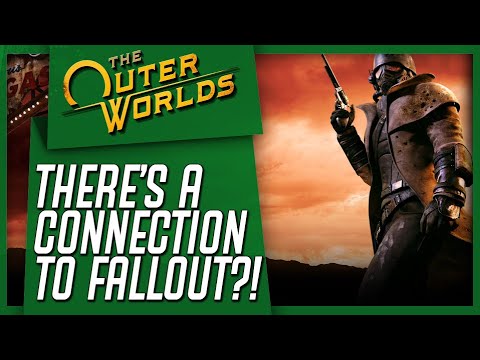
The straightforward answer is no, Fallout: New Vegas and The Outer Worlds are not directly connected. They exist within separate and distinct universes. While both games share unmistakable DNA, stemming from the involvement of Obsidian Entertainment, their narratives, lore, characters, and settings are entirely independent. Think of it as two siblings inheriting similar traits from the same parents, but ultimately forging their own unique paths in life. They share a design philosophy, but not a fictional connection.
The Shared Obsidian DNA: Where the Confusion Comes From
The reason for the persistent question of connectivity lies in the significant overlap of talent behind both games. Obsidian Entertainment, renowned for its RPG prowess, developed Fallout: New Vegas and The Outer Worlds. Many of the same writers, designers, and artists worked on both projects. This shared creative lineage manifests in similar gameplay mechanics, a focus on player choice and consequence, dark humor, and a penchant for morally gray characters. The tone and atmosphere often feel familiar to players of both franchises.
However, thematic similarities and shared development teams do not equate to a shared universe. It’s akin to noticing stylistic similarities between two paintings by the same artist. The artist’s hand is evident, but each painting represents a distinct scene and narrative.
Surface-Level Similarities: Misleading the Eye
Several elements contribute to the perceived connection:
- Retro-futuristic aesthetics: Both games embrace a retro-futuristic design, though with different interpretations. Fallout leans into a 1950s vision of the future warped by nuclear apocalypse, while The Outer Worlds presents a more polished, satirical take on corporate-dominated space colonization.
- Faction-based gameplay: Both games feature complex faction systems, where your choices and actions can significantly impact your standing with different groups, leading to diverse story outcomes.
- Companion mechanics: The ability to recruit companions with unique backstories, skills, and personal quests is a core feature of both games, adding depth and replayability.
- Morally ambiguous choices: Players are consistently faced with difficult decisions that lack clear-cut “right” or “wrong” answers, forcing them to grapple with the consequences of their actions.
While these commonalities are undeniable, they are ultimately design choices and thematic preferences, not evidence of a canonical link. Obsidian used these familiar elements to create compelling gameplay, but these are separate universes with their own distinct narratives.
Debunking the Theories: Why a Connection Doesn’t Hold Up
Numerous theories have attempted to link the two games, but none withstand scrutiny:
- Pre-War America is Halcyon? The timelines don’t align, and the sociopolitical structures are vastly different. Pre-War America in Fallout is on the brink of nuclear war, while the Halcyon colony in The Outer Worlds is grappling with corporate greed and resource mismanagement.
- Experiments with FEV? Fallout‘s Forced Evolutionary Virus (FEV) and The Outer Worlds‘ scientific advancements are completely different in origin, application, and effect. One focuses on mutation, and the other on genetic modification.
- Space Exploration in Fallout? While there are some references to space exploration in Fallout lore, it’s clear that the technology and the scope of space travel are not comparable to what’s seen in The Outer Worlds.
- Shared Companies? The corporations in The Outer Worlds like Spacer’s Choice and Auntie Cleo’s are new entities. While they are similar to companies from the Fallout Universe on a thematic level, they are not the same brands.
Ultimately, any attempt to force a connection between Fallout: New Vegas and The Outer Worlds requires significant stretching of lore and ignoring established world-building elements.
Appreciating The Outer Worlds For What It Is: A Spiritual Successor
Instead of searching for a non-existent connection, it’s far more rewarding to appreciate The Outer Worlds as a spiritual successor to Fallout: New Vegas. It takes the best elements of Obsidian’s design philosophy – player agency, compelling narratives, and darkly humorous world-building – and applies them to a fresh and exciting setting. Rather than being held back by established lore, The Outer Worlds has the freedom to forge its own identity and create its own unique legacy.
If you are interested in learning more about game development and design philosophies, consider visiting the Games Learning Society at https://www.gameslearningsociety.org/.
Frequently Asked Questions (FAQs)
1. Did Obsidian ever confirm a connection between the games?
No, Obsidian Entertainment has explicitly stated that Fallout: New Vegas and The Outer Worlds are separate universes. There has never been any official indication or suggestion of a connection.
2. Could future DLC or sequels bridge the gap?
It’s highly unlikely. While anything is technically possible in fiction, introducing a connection at this point would require retconning established lore and undermining the distinct identities of both franchises. The focus remains on expanding each universe independently.
3. Are there Easter eggs referencing Fallout in The Outer Worlds, or vice versa?
While there might be subtle nods or in-jokes referencing Obsidian’s other works (a common practice in game development), these are just fun Easter eggs and not evidence of a canonical link. These nods are mostly surface-level and don’t suggest a universe connection.
4. Are the gameplay mechanics between the two games purposefully similar?
Yes, the gameplay mechanics share similarities due to the shared development team and design philosophy of Obsidian Entertainment. This is intentional, as Obsidian aimed to create a familiar yet distinct RPG experience. The purpose of these similar mechanics is to provide a level of comfort for fans of the studio.
5. Is The Outer Worlds just Fallout in space?
No, while The Outer Worlds shares some thematic and mechanical similarities with Fallout, it is a distinct game with its own unique setting, story, and characters. Calling it “Fallout in space” is an oversimplification that ignores its own creative merits. The game is more than just a “Fallout clone.”
6. What are the key differences in setting between the two games?
Fallout is set in a post-apocalyptic wasteland ravaged by nuclear war, while The Outer Worlds takes place in a colonized star system dominated by mega-corporations. The societal structures, environments, and overall tone are significantly different.
7. How do the companion systems compare?
Both games feature robust companion systems, but their roles and interactions differ. In Fallout, companions often serve as moral compasses or offer practical support, while in The Outer Worlds, they are more deeply integrated into the main narrative and have more impactful personal quests.
8. Are the corporations in The Outer Worlds the same as those in Fallout?
No, the corporations in The Outer Worlds are entirely new entities created for that game’s setting. While they share thematic similarities with the corporations in Fallout, such as ruthlessness and a focus on profit, they are not the same companies.
9. Is the humor in both games similar?
Both games employ dark humor and satire, but to different degrees. Fallout uses humor to highlight the absurdity of the post-apocalyptic world, while The Outer Worlds uses it to critique corporate greed and social inequality.
10. Does the player character have a similar level of customization?
Yes, both games offer extensive character customization options, allowing players to create unique characters with distinct skills, perks, and backstories.
11. Is there a “canon” ending to either game that would solidify a connection?
No, both Fallout: New Vegas and The Outer Worlds feature multiple endings that depend on player choices and actions. There is no definitive “canon” ending that would establish a connection between the universes.
12. If not connected, why do I get the same “feeling” when playing both?
This “feeling” stems from the shared creative vision of Obsidian Entertainment. They have a distinct style of RPG design that emphasizes player agency, moral ambiguity, and compelling storytelling, which is evident in both games.
13. Did the same writers work on both games?
Yes, many of the same writers and designers worked on both Fallout: New Vegas and The Outer Worlds, contributing to the thematic and stylistic similarities between the games.
14. Which game came first, and did that influence the other?
Fallout: New Vegas was released in 2010, while The Outer Worlds was released in 2019. Fallout: New Vegas certainly influenced the development of The Outer Worlds, as Obsidian learned valuable lessons from the experience of creating a Fallout game and applied those lessons to their new IP.
15. Where can I find more information about the development of these games?
You can find information on the development of both games through interviews with the developers, behind-the-scenes documentaries, and articles on gaming websites. Additionally, resources from organizations like the Games Learning Society can provide valuable insights into game design and development processes.
In conclusion, while the influence of Fallout: New Vegas is undeniable in The Outer Worlds, the games remain separate entities. Enjoy them each for their unique stories and gameplay!