Is PlayStation a Japanese Company? Untangling the Global Reach of a Gaming Icon
Fast answer first. Then use the tabs or video for more detail.
- Watch the video explanation below for a faster overview.
- Game mechanics may change with updates or patches.
- Use this block to get the short answer without scrolling the whole page.
- Read the FAQ section if the article has one.
- Use the table of contents to jump straight to the detailed section you need.
- Watch the video first, then skim the article for specifics.
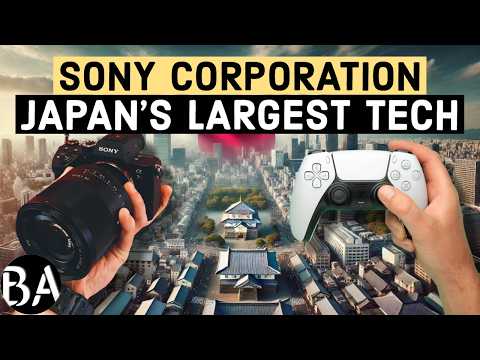
The question of whether PlayStation is a Japanese company is more complex than a simple yes or no. While it originated in Japan and is deeply rooted in the culture of its parent company, Sony, the global landscape of its operations has evolved significantly over the years. The short answer is: PlayStation, as a brand and operating entity, is not solely a Japanese company, but rather a multinational entity with strong Japanese roots. While the PlayStation brand is owned by Sony Interactive Entertainment (SIE), a subsidiary of Sony Group Corporation (Sony), SIE’s headquarters are in San Mateo, California. This structure highlights the truly global nature of the brand, even though the influence of Japanese innovation remains central to its identity.
The Evolution of PlayStation: A Global Journey
The journey of PlayStation began with the launch of the original console in Japan in December 1994. This was a pivotal moment for the video game industry, establishing Sony as a major player. The console’s subsequent release in North America in September 1995 marked the beginning of PlayStation’s international expansion. At its inception, Sony Computer Entertainment, Inc. (SCEI), was jointly established by Sony and Sony Music Entertainment Japan to handle ventures in the video game industry, cementing its early Japanese identity.
Over time, SCEI evolved into Sony Interactive Entertainment (SIE). This restructuring saw the establishment of a global headquarters in California, signifying a shift towards a more international focus. While the Japanese branch, Sony Interactive Entertainment Inc., remains a direct subsidiary of Sony Corporation, the overall strategic and operational direction for PlayStation comes from the US headquarters. This signifies that while the parent company, Sony, is decidedly Japanese, the PlayStation business is directed and managed from California, a fact that complicates the classification of PlayStation as solely a Japanese company.
The Complexities of Global Operations
The production and distribution of PlayStation consoles further highlight its multinational nature. While the initial assembly was predominantly in Japan, production has since expanded to countries like China. This strategic diversification of manufacturing has become a common practice in the global tech industry, and it’s part of why classifying PlayStation’s nationality is so complex. The PS5, for instance, is assembled in both Japan and China, illustrating the integration of global supply chains into the manufacturing process.
Furthermore, the game development and content production for the PlayStation platform is a truly international affair. Games are developed by studios all over the world, further blurring the lines of national identity for the PlayStation brand. While some games are internally developed by Sony Interactive Entertainment studios which are international with some in Japan, many other major titles come from independent studios across the globe. This broad network of development means that the games on a PlayStation console are as much reflective of diverse cultural input as they are of Japanese design philosophy.
The Ownership of PlayStation and Sony
Understanding the ownership structure further clarifies PlayStation’s relationship with Japan. Sony Interactive Entertainment LLC (SIE), which owns the PlayStation brand, is, in turn, owned by Sony Group Corporation. Sony Group Corporation is a publicly traded Japanese multinational conglomerate, which firmly establishes the Japanese ownership of the ultimate parent company. However, the management and strategic operations of PlayStation are based out of the United States, creating a nuanced situation where the brand’s ownership is Japanese, yet its operations are decidedly global.
The corporate structure also highlights the distribution of influence within Sony. Although the parent company is Japanese, its American subsidiary, Sony Corporation of America, manages the entertainment divisions including Sony Pictures Entertainment Inc., another American subsidiary that handles Sony’s film, television, and music ventures. The fact that PlayStation operates under a similar structure in the video games field demonstrates a calculated global expansion that extends beyond Japan’s borders.
PlayStation: A Global Brand with Japanese Roots
In summary, PlayStation is not a Japanese company in the simplest sense. While it originated in Japan and its parent company, Sony, is a Japanese multinational conglomerate, PlayStation’s operations are managed and strategically directed from California by Sony Interactive Entertainment. This global structure, coupled with international manufacturing and content development, makes it more accurate to describe PlayStation as a global brand with strong Japanese roots. The spirit of Japanese innovation and the technological expertise of Sony continue to inform the core of the PlayStation, but its global footprint and operational structure are decidedly international.
Frequently Asked Questions (FAQs)
1. Did PlayStation originate in Japan?
Yes, the first PlayStation console was released in Japan in December 1994. This marked the beginning of the PlayStation brand and its impact on the video game industry. It was then launched in North America in September 1995.
2. Is Sony a Japanese company?
Sony Group Corporation is a Japanese multinational conglomerate headquartered in Tokyo, Japan. It is the parent company of Sony Interactive Entertainment, which owns the PlayStation brand.
3. Where is PlayStation’s headquarters located?
While Sony Interactive Entertainment Inc. is a subsidiary of Sony in Japan, Sony Interactive Entertainment’s (SIE) headquarters are located in San Mateo, California. This is where the overall direction and management of the PlayStation brand occurs.
4. Is the PS5 made in Japan?
The PlayStation 5 (PS5) is manufactured in both Japan and China. Sony has strategically diversified its production locations to mitigate supply chain risks.
5. Did PlayStation leave Japan?
PlayStation has not left Japan, though some restructuring has occurred within Sony’s Japanese studios. There was a time when Sony didn’t renew most of the contracts for their Japanese studio except for Team Asobi. The company had decided that this studio was not profitable enough to continue original game development. While a production entity is based in Japan, the brand’s operations are managed from California.
6. Is PlayStation owned by Americans?
PlayStation is owned by Sony Interactive Entertainment (SIE), which is a subsidiary of Sony Group Corporation, a publicly traded Japanese company. While SIE has its global headquarters in California, the ultimate ownership is with its Japanese parent company.
7. Who created PlayStation?
The concept of PlayStation came from Ken Kutaragi, a Sony executive often referred to as “The Father of the PlayStation”. He managed one of the company’s hardware engineering divisions.
8. Is the PlayStation brand available in China?
Yes, the PlayStation is officially available in China, but the hardware is region-locked. Games have to be government-vetted and are limited.
9. What is Sony Computer Entertainment Inc. (SCEI)?
Sony Computer Entertainment Inc. (SCEI) was jointly established by Sony and Sony Music Entertainment Japan in 1993 to manage the company’s ventures into the video game industry. It was the predecessor to Sony Interactive Entertainment (SIE).
10. Who is the current CEO of PlayStation?
Jim Ryan, the head of PlayStation and CEO of Sony Interactive Entertainment, is stepping down in March 2024. He is to be replaced by Hiroki Totoki, the president and chief operating officer of Sony, who will take on the interim CEO role starting April 1st, 2024.
11. What other industries is Sony involved in?
Sony is involved in diverse industries, including electronics, entertainment (film, music, and television), and financial services. It’s a multinational conglomerate with a broad reach.
12. Is Sony Pictures Entertainment Japanese?
Sony Pictures Entertainment Inc. is an American entertainment subsidiary of the Japanese multinational technology and media conglomerate Sony. It is based in Culver City, California.
13. Does China own Sony?
No, Sony Group Corporation is a Japanese company. Although Sony has manufacturing and marketing operations in China, they do not own the company.
14. Is Nintendo a Japanese or Chinese company?
Nintendo Co., Ltd. is a Japanese multinational video game company headquartered in Kyoto, Japan.
15. Who are the largest shareholders of Sony?
The largest individual shareholder of Sony is Primecap Management Co, owning 1.69% of the company’s shares. However, the majority of Sony’s ownership (92.59%) is by retail investors.