PS5 vs. GTX 1080: A Graphics Showdown – Who Wins?
Fast answer first. Then use the tabs or video for more detail.
- Watch the video explanation below for a faster overview.
- Game mechanics may change with updates or patches.
- Use this block to get the short answer without scrolling the whole page.
- Read the FAQ section if the article has one.
- Use the table of contents to jump straight to the detailed section you need.
- Watch the video first, then skim the article for specifics.
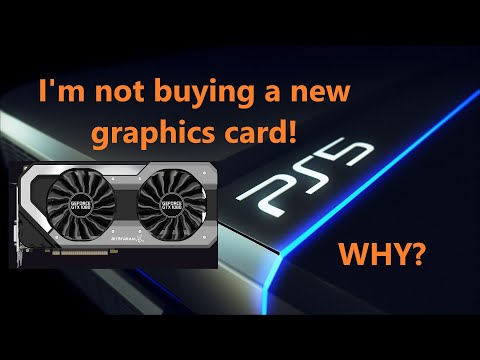
Yes, the PS5’s graphics capabilities are generally considered better than the GTX 1080. While the GTX 1080 was a top-tier card in its time, the PS5 benefits from newer RDNA2 architecture and optimizations specifically tailored for console gaming. This allows the PS5 to achieve comparable or even superior performance in many modern games, especially when considering features like ray tracing and variable refresh rate (VRR) support, which the GTX 1080 lacks. Let’s delve into the specifics.
Comparing Apples and Oranges: Understanding the Nuances
Directly comparing a console to a graphics card isn’t always straightforward. They exist within different ecosystems. The PS5 is a complete, closed system, meaning games are optimized to run specifically on its hardware. A PC, on the other hand, offers greater flexibility and customizability but requires individual game optimization for a wider range of hardware configurations.
Raw Power vs. Optimized Performance
The GTX 1080 boasts impressive raw power, a significant selling point back in 2016. However, raw power isn’t everything. The PS5’s integrated hardware and software design allows developers to squeeze more performance out of its components than might be possible on a PC with similar or even slightly more powerful parts. This includes clever memory management, optimized APIs, and other system-level tweaks.
Architecture Matters
The PS5 uses AMD’s RDNA2 architecture, which brings several advantages over the older Pascal architecture of the GTX 1080. RDNA2 is more efficient and supports advanced features like ray tracing and variable rate shading (VRS), which can significantly enhance visual fidelity and performance. The GTX 1080, while powerful in its time, simply can’t compete with these modern features.
The Ray Tracing Divide
Ray tracing is a game-changer in visual realism, simulating how light interacts with objects in a scene to create more realistic reflections, shadows, and global illumination. While the GTX 1080 can technically perform some software-based ray tracing, it’s extremely demanding and results in significantly reduced frame rates. The PS5, with its hardware-accelerated ray tracing, can handle these effects much more efficiently, leading to a better overall gaming experience.
Beyond the Graphics Card: The System as a Whole
It’s crucial to remember that graphics performance is only one piece of the puzzle. The PS5 benefits from:
- Custom SSD: This significantly reduces loading times and allows for faster streaming of game assets.
- Optimized Software: The console’s operating system is designed specifically for gaming, minimizing overhead and maximizing performance.
- Integrated System Design: All components are designed to work together seamlessly, leading to better overall efficiency.
A PC gamer might counter by saying that these advantages can be replicated or even surpassed on a PC with a fast NVMe SSD, optimized drivers, and high-end components. This is true, but achieving comparable performance on a PC often requires a significantly higher investment than purchasing a PS5.
Practical Examples: Games and Performance
In many modern games, the PS5 can deliver comparable or even better visual fidelity and performance than a GTX 1080-equipped PC. Games are increasingly optimized for the console’s architecture, leveraging its unique features and advantages. While the GTX 1080 can still run many modern games, it may require lower settings to maintain acceptable frame rates, and it won’t be able to take advantage of features like ray tracing.
For example, a game heavily optimized for PS5 might showcase superior lighting effects and texture detail compared to the same game running on a GTX 1080, even if both are targeting similar frame rates. This is due to the PS5’s ability to leverage its RDNA2 architecture and optimized software.
Making the Decision: Which is Right for You?
Ultimately, the “better” option depends on your individual needs and preferences.
- PS5: A cost-effective and convenient solution for console gaming, offering excellent performance and access to exclusive titles.
- PC with a Modern GPU: Offers greater flexibility, customizability, and access to a wider range of games, but requires a higher upfront investment and more technical expertise.
If you are primarily interested in playing console-exclusive titles and want a hassle-free gaming experience, the PS5 is an excellent choice. If you prefer the flexibility of a PC and are willing to invest more time and money to achieve the best possible performance, then a PC with a modern GPU is the way to go. For educators interested in leveraging games for learning, understanding the hardware on which students play is valuable. Resources like Games Learning Society can provide insights into the intersection of games and education.
Frequently Asked Questions (FAQs)
1. What graphics card is equal to the PS5?
The PS5’s GPU performance is roughly equivalent to an Nvidia RTX 3060 non-Ti or an AMD Radeon RX 6600 XT.
2. What graphics card is better than the PS5?
To consistently outperform the PS5 in terms of graphics, you would need at least an AMD RX 5700 XT or an Nvidia RTX 3060. For more demanding titles, an RTX 3060 Ti or higher would be preferable.
3. Is the GTX 1080 better than the PS4 GPU?
Yes, the GTX 1080 is significantly more powerful than the PS4 GPU. The GTX 1080 has approximately 12 times the raw power of the original PS4.
4. Is the PS5 faster than a GTX 1080 Ti?
In many modern games, the PS5 can match or exceed the GTX 1080 Ti’s performance, especially when considering features like ray tracing and optimized console development.
5. Is the PS5’s 1080p better than the GTX 1080’s 4K?
4K is almost four times higher resolution than 1080p. While the GTX 1080 can output in 4K, it depends on the game’s settings and optimization. The PS5 is designed to output 4K but games may use upscaling or dynamic resolutions to achieve higher frame rates.
6. What is the GTX 1080 Ti equivalent to?
The RTX 2070 Super and RTX 2080 are closest in performance to the GTX 1080 Ti.
7. Is the GTX 1080 still a high-end graphics card?
While the GTX 1080 was a high-end card in its time, it’s now considered a mid-range card. Newer generations of GPUs offer significantly better performance and features.
8. What does a GTX 1080 compare to in modern GPUs?
A GTX 1080 performs similarly to an RTX 3050 in many modern games, although the RTX 3050 benefits from features like DLSS and ray tracing.
9. What is a good upgrade from a GTX 1080?
A good upgrade from a GTX 1080 would be an RTX 3060 or an RX 6600 XT, offering a significant performance boost and access to newer features.
10. Are the PS5 graphics really better than a GTX 1080?
In many modern games, the PS5 can deliver comparable or even better graphics due to its optimized architecture and software. However, a PC with a high-end GPU can still outperform the PS5.
11. Is an RTX 3080 equivalent to a PS5?
The RTX 3080 is significantly more powerful than the PS5’s GPU, offering superior performance in most games.
12. What is the highest quality the PS5 can play?
The PS5 can output up to 8K UHD (7680 x 4320), although most games are rendered at 4K or lower and then upscaled.
13. Is the PS5 more powerful than a PC?
The PS5 is comparable to a mid-range gaming PC. While it offers excellent performance for its price, high-end PCs with powerful GPUs can significantly outperform it.
14. Is the PS5 equivalent to an RTX 2070?
The PS5’s GPU is roughly equivalent to an RTX 2070 Super in terms of rasterization performance.
15. Is the GTX 1080 good for 4K gaming?
The GTX 1080 can handle 4K gaming, but it may require lower settings to maintain acceptable frame rates, especially in demanding modern games.