Is Raichu a Rare Card? A Deep Dive into Pikachu’s Evolved Form
Fast answer first. Then use the tabs or video for more detail.
- Watch the video explanation below for a faster overview.
- Game mechanics may change with updates or patches.
- Use this block to get the short answer without scrolling the whole page.
- Read the FAQ section if the article has one.
- Use the table of contents to jump straight to the detailed section you need.
- Watch the video first, then skim the article for specifics.
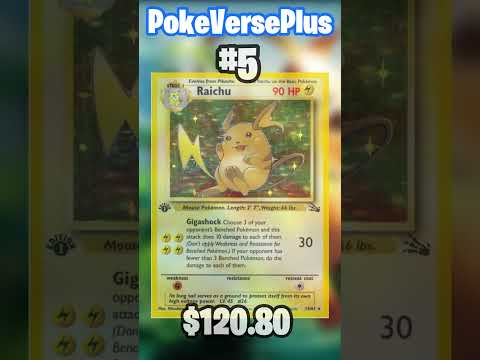
The short answer is: it depends! While not all Raichu cards are rare, some Raichu cards are highly sought after and command significant value in the Pokémon TCG (Trading Card Game) market. Their rarity stems from a combination of factors including set release, print run, promotional status, and condition.
Deciphering Raichu Card Rarity: A Comprehensive Guide
Raichu, the evolved form of the beloved Pikachu, has graced the Pokémon TCG since its inception. However, the value and desirability of a Raichu card vary dramatically depending on the specific printing. Understanding the nuances that determine a Raichu card’s rarity is crucial for collectors.
Factors Influencing Rarity
Several factors contribute to a Raichu card’s rarity:
-
Set of Origin: Cards from older sets, particularly those from the Base Set, Jungle, and Fossil eras, often hold more value, especially if they are in good condition. These sets had smaller print runs compared to modern expansions.
-
Print Run: Sets with limited print runs or those that were printed in smaller quantities naturally yield rarer cards.
-
Rarity Symbol: The symbol in the bottom right corner of a Pokémon card (circle, diamond, star, or variations thereof) indicates its rarity within a set. Typically, stars denote rarer cards, but this isn’t a definitive indicator of overall value, especially for older sets.
-
Holographic vs. Non-Holographic: Holographic versions of cards are generally more desirable than their non-holographic counterparts. A holographic Raichu from an early set is likely to be worth more than a non-holographic version.
-
Error Cards: Cards with printing errors, misprints, or unique variations can be incredibly rare and valuable to collectors.
-
Promotional Cards: Cards distributed as part of special events, tournaments, or collaborations often have limited availability, making them highly sought after.
-
Condition: The condition of the card significantly affects its value. Cards graded as Mint (Gem Mint 10 by PSA or Beckett) will fetch the highest prices. Cards with significant wear and tear will be worth considerably less.
Identifying Potentially Rare Raichu Cards
Here are a few examples of Raichu cards that have gained notoriety for their rarity and value:
-
Base Set Raichu (Holographic): While not as rare as the coveted Charizard, a well-maintained Base Set Raichu can still command a decent price.
-
Shining Raichu (Neo Destiny): Part of the Shining Pokémon subset, these cards feature a holographic Pokémon with a different color palette. Shining Raichu is a beautiful and valuable addition to any collection.
-
Skyridge Holo Raichu: The Skyridge set is known for the rarity of its holofoil cards and this Raichu is no exception.
-
The “Prerelease” Raichu (Jungle): This card is often mislabeled as a misprint or error. Some Jungle Raichu cards have a “Prerelease” stamp on them. It isn’t known for certain how these cards were distributed, but it’s speculated these were handed out to stores before the official release of the Jungle set. This is one of the rarest Raichu cards to exist.
Understanding Card Grading
Card grading involves sending your cards to professional grading services like PSA (Professional Sports Authenticator), Beckett Grading Services (BGS), or CGC (Certified Collectibles Group). These companies assess the condition of your card based on factors such as centering, surface, edges, and corners, assigning it a grade from 1 to 10. A higher grade translates to a higher value.
The Future of Raichu Card Values
The Pokémon TCG market is constantly evolving, influenced by factors such as nostalgia, demand, and the release of new sets. Vintage cards generally hold their value well and can appreciate over time, especially if they are in excellent condition. Keep an eye on auction sites, online marketplaces, and Pokémon TCG communities to stay informed about current market trends.
Frequently Asked Questions (FAQs) About Raichu Cards
1. What is the most valuable Raichu card?
Determining the absolute most valuable Raichu card can be difficult, as prices fluctuate depending on the market and the card’s condition. However, the Prerelease stamped Jungle Raichu and pristine examples of Shining Raichu from Neo Destiny often fetch some of the highest prices.
2. How can I tell if my Raichu card is holographic?
A holographic card has a shiny, reflective foil layer on the card’s artwork. This is easily distinguishable from non-holographic cards, which have a matte finish.
3. What does the rarity symbol on a Raichu card mean?
The rarity symbol (circle, diamond, star, etc.) indicates the card’s relative rarity within its specific set. Stars typically denote rarer cards, but this is not a guarantee of high value.
4. What is card grading, and why is it important?
Card grading is the process of having a professional grading service assess the condition of your card and assign it a grade. This grade significantly impacts the card’s value.
5. Where can I get my Raichu card graded?
You can submit your cards to reputable grading services such as PSA, Beckett, or CGC.
6. How much does it cost to get a Pokémon card graded?
The cost of grading a card varies depending on the grading service, the turnaround time you choose, and the declared value of the card. Expect to pay anywhere from $15 to $100+ per card.
7. Is it worth grading a Raichu card?
Whether or not it’s worth grading a Raichu card depends on its condition, rarity, and potential value. If you believe your card is in excellent condition and is a potentially valuable one, grading could increase its value.
8. What are some signs of a fake Raichu card?
Be wary of cards with blurry printing, incorrect fonts, missing details, or unusually thick or thin card stock. Comparing your card to images of authentic cards online can help you spot inconsistencies.
9. Where can I buy and sell Raichu cards?
You can buy and sell Pokémon cards on online marketplaces like eBay, TCGplayer, and Facebook Marketplace, as well as at local card shops and conventions.
10. How can I protect my Raichu cards?
To protect your cards, store them in penny sleeves and toploaders or in a card binder. Keep them away from direct sunlight, moisture, and extreme temperatures.
11. What is the best way to store my Pokémon card collection?
The best way to store your Pokémon card collection is in a cool, dry place, away from direct sunlight. Use acid-free sleeves and binders specifically designed for card storage.
12. Are first edition Raichu cards more valuable?
Generally, first edition cards are more valuable than unlimited edition cards. Look for the “1st Edition” stamp on the left side of the card.
13. How does the condition of a Raichu card affect its value?
The condition of a Pokémon card is a major factor in its value. Cards in near mint or mint condition will command significantly higher prices than cards with noticeable wear and tear.
14. How has Pokémon impacted education?
Pokémon has influenced education in various ways, including enhancing strategic thinking, problem-solving skills, and social interaction. Many educators are exploring the pedagogical potential of games, and organizations like the Games Learning Society at GamesLearningSociety.org promote research and best practices in the field of game-based learning.
15. Where can I learn more about Pokémon card values and collecting?
Stay updated on the Pokémon TCG market by following reputable card grading websites, online forums, and auction sites. Read articles and watch videos from experienced collectors to learn more about card values and collecting strategies.