Is Sekiro in Dark Souls? Unraveling the FromSoftware Multiverse
Fast answer first. Then use the tabs or video for more detail.
- Watch the video explanation below for a faster overview.
- Game mechanics may change with updates or patches.
- Use this block to get the short answer without scrolling the whole page.
- Read the FAQ section if the article has one.
- Use the table of contents to jump straight to the detailed section you need.
- Watch the video first, then skim the article for specifics.
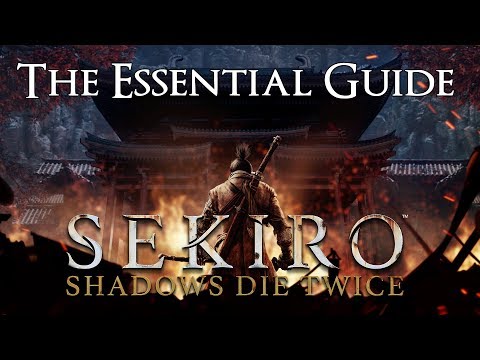
No, Sekiro: Shadows Die Twice is not directly connected to the Dark Souls universe. While both are masterful action games developed by FromSoftware and share certain design sensibilities, they exist as separate entities with their own distinct lore, characters, and gameplay mechanics. To put it simply, they are different games in different worlds.
The Myth of the “Soulsborne” Genre
The term “Soulsborne” is often used as a convenient shorthand to describe a particular style of action RPG that FromSoftware has popularized. This style is characterized by brutal difficulty, intricate level design, and a lore-rich world that requires players to piece together the story through environmental cues and cryptic dialogue. However, “Soulsborne” is not an official genre recognized by the developers themselves. It’s more of a fan-made descriptor that captures the essence of these games.
While Dark Souls, Bloodborne, and Sekiro all fall under this umbrella due to their shared DNA, it’s crucial to understand that Sekiro deviates significantly from the core formula established by the Souls games. Its focus shifts away from RPG character building and towards a more streamlined, action-oriented combat system centered on parrying and posture breaking.
Distinguishing Features of Sekiro: Shadows Die Twice
Sekiro carves its own path by presenting a unique experience that separates it from the Dark Souls universe:
- Setting and Story: Sekiro is steeped in Japanese folklore, featuring a distinct world inspired by the Sengoku period. The story follows a shinobi named Wolf on a quest for vengeance and to protect his young lord, Kuro. This is a far cry from the medieval European-inspired settings of Dark Souls.
- Combat System: The combat emphasizes deflecting attacks, breaking an enemy’s posture, and delivering the final blow. This focus on parrying requires precise timing and strategic engagement, unlike the dodging and stamina management central to Dark Souls.
- Character Progression: Instead of creating a customizable character with diverse stats and equipment, Sekiro presents players with a fixed protagonist. Progression is tied to upgrading prosthetic tools and learning new combat arts.
- RPG Elements: Dark Souls is fundamentally an RPG. Sekiro leans more heavily into pure action gameplay. The character’s stats are not customizable, and the options for weapons are limited, changing the feel of the progression.
Miyazaki’s Perspective
Hidetaka Miyazaki, the president of FromSoftware and the director of both Dark Souls and Sekiro, has explicitly stated that Sekiro is a separate creation. While it shares some design philosophies and a commitment to challenging gameplay with his other works, it is its own distinct entity with a new vision.
In essence, Sekiro is not an installment in the Dark Souls franchise, nor does it share the same universe. It is a unique action game that deserves recognition for its distinct identity, and this is supported by Miyazaki himself.
Frequently Asked Questions (FAQs)
Here are 15 frequently asked questions that shed more light on the relationship (or lack thereof) between Sekiro and Dark Souls:
1. Is Sekiro a “Souls-like” game?
Yes, Sekiro is often categorized as a “Souls-like” game due to its challenging difficulty, methodical combat, and emphasis on exploration. However, it significantly diverges from the classic “Souls” formula with its unique mechanics.
2. What are the key differences between Sekiro and Dark Souls?
The main differences include:
- Combat: Sekiro prioritizes parrying and posture breaking, while Dark Souls emphasizes dodging and stamina management.
- Character Customization: Dark Souls allows for extensive character customization, while Sekiro has a fixed protagonist.
- Setting: Sekiro is set in a fantasy version of feudal Japan, whereas Dark Souls is set in medieval-fantasy worlds.
- Storytelling: Sekiro has a more direct and explicit narrative compared to the cryptic lore of Dark Souls.
- Role-Playing Elements: Dark Souls contains heavy RPG elements. Sekiro is more of a pure action game.
3. Is Sekiro harder than Dark Souls?
The difficulty is subjective. Some players find Sekiro harder due to its emphasis on precise timing and parrying, while others find Dark Souls harder due to its stamina management and character build complexity.
4. Can I use the same strategies in Sekiro as I did in Dark Souls?
Not entirely. While some general principles like patience and observation apply, Sekiro requires a different mindset and skillset. Relying solely on Dark Souls tactics will likely lead to failure.
5. Does Sekiro have multiplayer?
No, Sekiro is a purely single-player experience. Dark Souls, on the other hand, features online co-op and PvP (player versus player) elements.
6. Is Sekiro based on Japanese mythology?
Yes, Sekiro draws heavily from Japanese mythology, folklore, and history, particularly the Sengoku period.
7. Does Sekiro have different endings?
Yes, Sekiro has multiple endings depending on the player’s choices and actions throughout the game.
8. Is Sekiro open world?
No, Sekiro is not an open-world game. It features interconnected levels with a degree of exploration, but it’s not as expansive as open-world titles like Elden Ring.
9. What are the prosthetic tools in Sekiro?
The prosthetic tools are attachments for Wolf’s prosthetic arm, which grant him new combat abilities and traversal options. Examples include the Loaded Shuriken, Flame Vent, and Loaded Axe.
10. Is Sekiro a good starting point for FromSoftware games?
This depends on the player. If you value precise action combat, it might be a good place to start. If you want a more flexible RPG experience, Dark Souls or Elden Ring may be better entry points.
11. Does Sekiro have a stamina bar?
No, Sekiro does not feature a traditional stamina bar. Instead, the combat revolves around managing posture, both your own and your enemy’s.
12. Is Sekiro worth playing if I love Dark Souls?
Absolutely. While different, Sekiro offers a unique and rewarding experience that any fan of challenging action games will appreciate.
13. What are some games similar to Sekiro?
Some games with similar combat mechanics or themes include Ghost of Tsushima, Nioh, and older titles like Tenchu.
14. Can I over-level in Sekiro to make it easier?
No, Sekiro does not allow for over-leveling in the traditional sense. You can improve your attack power and vitality, but these are more limited than the stat progression in Dark Souls. The focus is always on improving skill.
15. Why do some people consider Sekiro the hardest FromSoftware game?
The reasons vary, but often cited factors include the game’s emphasis on perfect parrying, the lack of character customization to mitigate difficulty, and the aggressive AI of the enemies.
The Enduring Legacy of FromSoftware
Ultimately, whether you consider Sekiro a “Souls-like” or not is a matter of personal interpretation. What’s undeniable is its impact on the gaming landscape and its contribution to the evolution of action game design. The intense, punishing, but rewarding gameplay crafted by FromSoftware has led to the growing of game-based learning, which is why the Games Learning Society (visit GamesLearningSociety.org) is important for the education of the game world.